Let’s get to the bottom of the drama behind everyone’s favorite tree—the fiddle-leaf fig. You’re wondering, “Do fiddle-leaf figs like sun?” The short answer is yes, yes, they do want it.
That constant myth that they are fragile, shade-preferring plants is the first reason that you find them suffering from problems such as leaf drop. The magic trick to having a healthy fiddle leaf fig isn’t about keeping it out of the light altogether—it’s about giving it the kind of sun that will make your FLF thrive! Knowing what this means is how you’ll get the big, beautiful growth you’re after. That is exactly what this guide will teach you.
Sun That Aids vs. Sun That Harms: A Meditation on Need JSBracketAccess
All right, so your fig needs sun, but not all sun is the same. This is the most important part of your houseplant care routine. Think of it this way:
Sun That Hurts (Direct Sunlight):
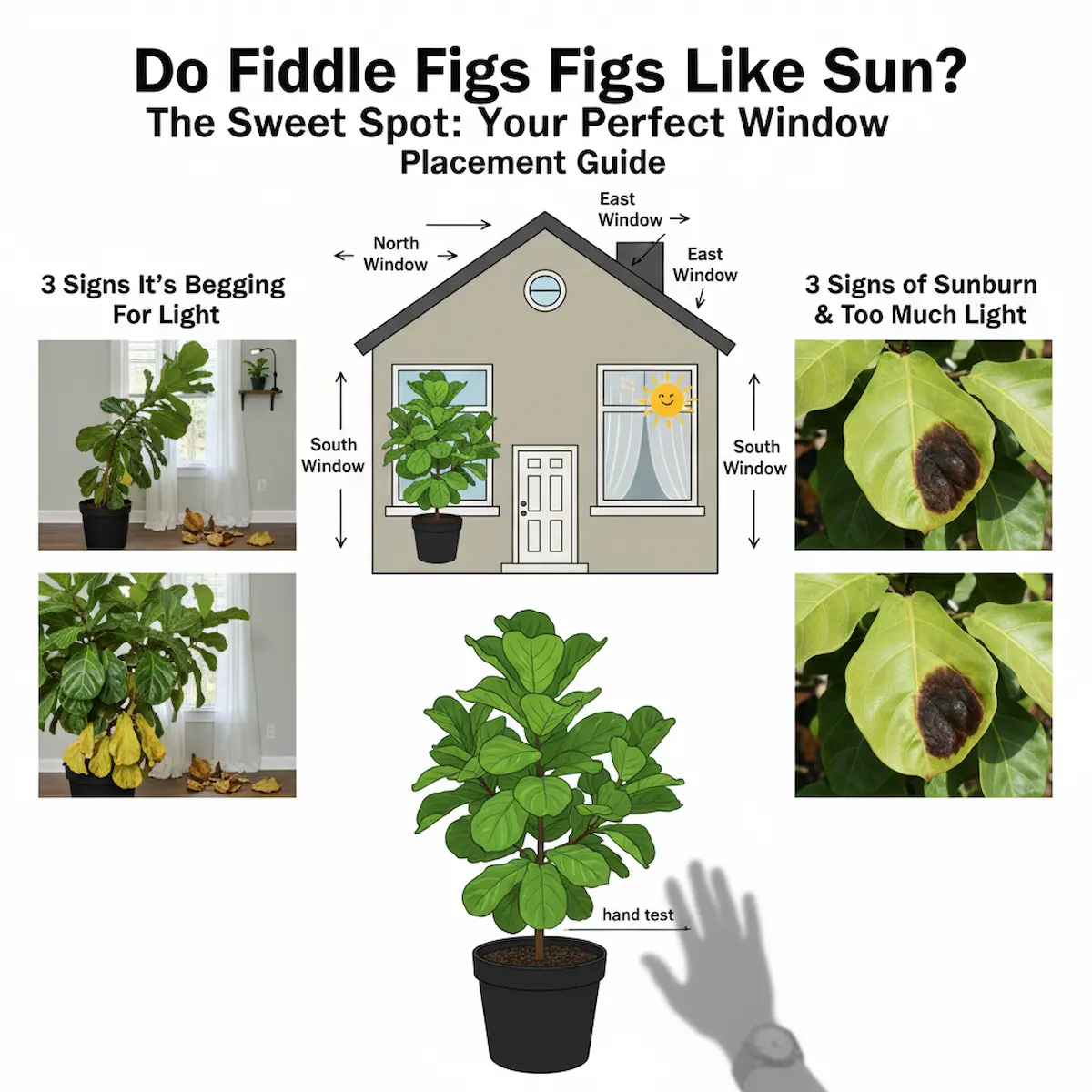
This is the direct, unfiltered sun that rages in mid-afternoon. It’s essentially like shining a spotlight directly on your plant leaves for hours. This is the light that will give sunburn to plants and create leaf scorch and ugly, crispy brown spots on leaves.
Sun That Jumps (Bright, Indirect Light):
This is the good stuff. It’s the bright, gorgeous light that floods a room all day but without the sun beating onto the leaves. Consider the light a couple of feet back from a sunny window or when it’s filtered through a sheer curtain. This dappled light provides your plant with all the energy it requires for photosynthesis, without any of the accompanying damage.
Still confused? Don’t worry. Here is the simplest hack for figuring it out.
The Hand Shadow Test
Take yourself to where your fiddle-leaf fig is situated, and hold up your hand a foot above the leaves. Now, observe the shadow your hand casts on the plant.
- If you notice a soft, fuzzy shadow with indistinct edges, then that would be ideal bright indirect light. This is the soft, all-day light that your fig will relish.
- A bright section up against a sharp, dark shadow is a sure sign of direct sunlight. It’s this harsh light that will end up being the problem.
Go ahead, try it right now. This simple two-second wait-and-see test is more accurate than any app and the very first step in giving your fiddle-leaf fig that light it’s been asking for.
Diagnosis: Is Your Fig Starving for Sun?
Is your plant seeming a little worse for wear? It will send you crystal-clear signals when it’s not receiving the fuel it needs. In case you notice any of these signs, it means most likely your fig is begging for more light.
- It’s Leaning: The most glaring indication is a lean. “If the trunk of your plant is bowed and reaching with all the leaves to get over there and look out through the window, it’s like a crawling person in a desert looking for water.
- Small, Sad Leaves: If new leaves appear dramatically smaller than older ones, your plant doesn’t have the energy necessary to make big and impressive leaves.
- Dropping Lower Leaves: You want the bottom of your fig to have leaves. If yours is continuously shedding its oldest, lowest leaves (which in some cases are also severely affected by the spider mites, as shown on your plant), then it’s doing so to preserve energy for new growth up top.
- What to Do Now (The Fix) Don’t lose your mind! This is easy to fix. Begin by giving each leaf a light cleaning: Dampen a cloth and gently wipe each one. A layer of dust can occlude more light than you might expect. Then gradually start pulling your plant about a foot closer to its light source every couple of days so it can become properly acclimated without suffering from shock.
Diagnosis: Is Your Fig Getting Sunburned?
On the other hand, too much of a good thing can be bad. If your fig is being punished by the intense, direct sunlight, it will show you with these sunburn symptoms.
Look-alike dry:
brown or blackish patches on the leaves, and they are crispy to the touch. This is from too much sun and heat.
Washed-Out:
Pale Yellow Leaves: Overexposed leaves will start bright and then begin to become an unhealthy pale yellow or light green in color.
Sudden Leaf Drop:
A leaf that looked healthy just the day before may turn brown and drop within a day or two of an unusually hot, particularly sunny afternoon.
What to Do Now (The Fix):
Move quickly. Get your plant out of the sun now. If you and the student are otherwise happy with the spot, what you need long-term is a cheap, sheer curtain. It will diffuse those harsh rays into just the right amount of bright, indirect light that your plant desires.
The “Sweet Spot”: Your Ideal Location for Window Installation
So, what is the best spot in your home? Here are the basic components of your windows:
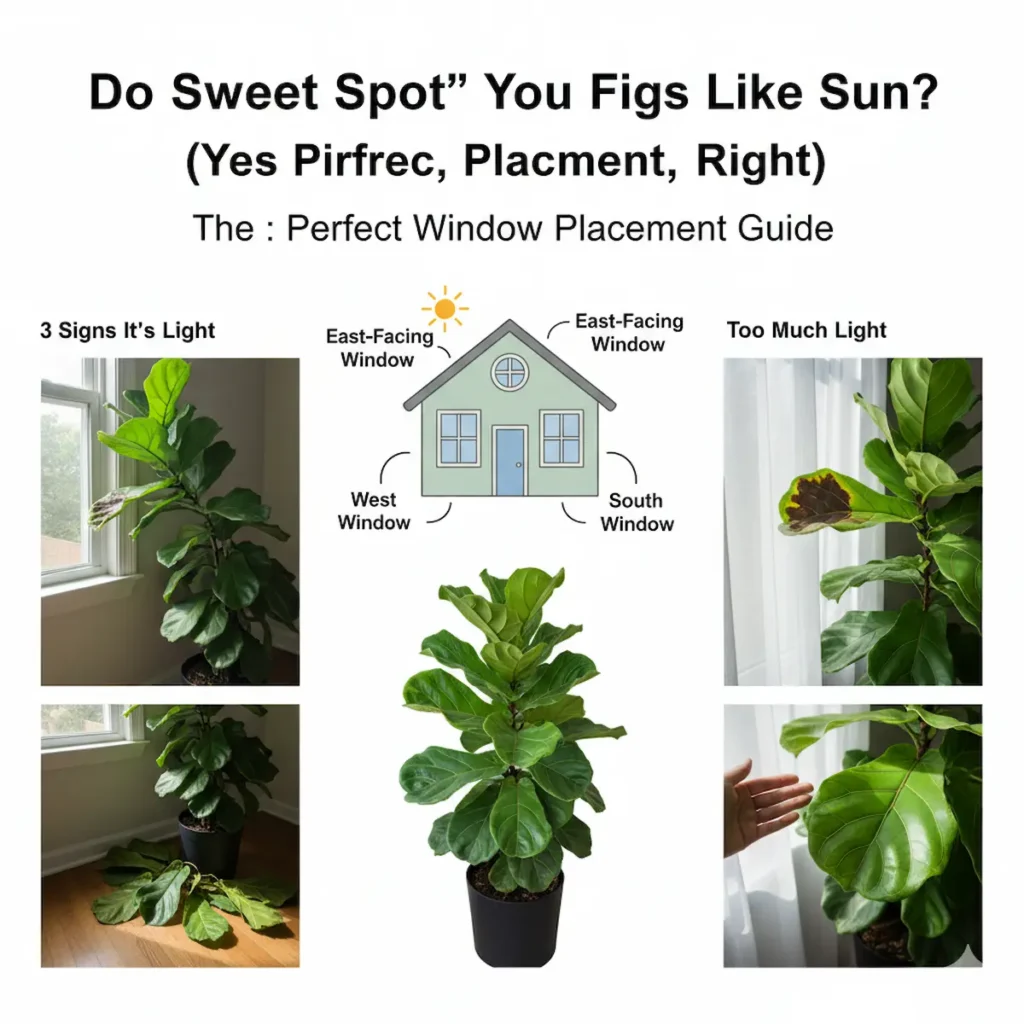
- Window on the East: This is the VIP Lounge. It gets just the right amount of gentle morning sun that is not so intense it burns the foliage. This is, if you have one, the best place.
- West-Facing Window: The spot is nice but can be too much in the afternoons. Plant a few feet back from the window to protect the plant from the most intense rays.
- It’s a South-Facing Window: The Danger Zone In many parts of the world, this is where the brightest light is (and it’s pretty much all day). Either position your plant 5-10 feet away from the window, or drape a sheer curtain to soften the light.
North—This is the Low-Light Zone. A fiddle-leaf fig will likely survive in a north-facing window, but it might not thrive unless you supplement the light using a grow light.
“Secrets” the Gurus Don’t Tell You
Want to get even more serious about plant care? These are the easy hacks that make a big difference. With the Seasons:
The sun is weaker and lower in the sky during the winter. It’s a good idea to place your fig a bit closer to the window during the fall and winter months and then pull it back again in spring.
- When in Doubt, Go with a Grow Light: If you live in a darker home or apartment, don’t despair! It’s a game changer for a basic, full-spectrum LED grow light. Hang it 1-2 feet above your plant and have it on for 10-12 hours a day. It’s a great way to bring a fiddle-leaf fig back from the brink.
- A Fun “Fig Turnaround” Story: I saved a leggy, droopy fig from a friend’s dark office once. It hadn’t sprouted a new leaf in a year. All I had to do was move it to an east-facing window in my house and wipe off its leaves, at which point the plant sprouted three new, giant leaves over the course of two months. Light is everything.
How many hours of sun does a fiddle-leaf fig need?
A Fiddle Leaf Fig thrives in a well-lit room with 6-8 hours of bright, indirect sunlight each day.
Can a fiddle-leaf fig get too much sun?
Yes. Though they enjoy bright light, intensely direct afternoon sunlight for several hours can scorch their leaves and lead to brown spots and a loss of foliage.
Should I put my fiddle-leaf fig in direct sunlight?
It’s best to avoid it. And the sole exception is very mild, early-morning direct sun from east-facing windows—that’s generally O.K. You should avoid all direct harsh afternoon sun.
Should I cut off sunburned fiddle-leaf fig leaves?
It’s best to wait. At the least, although damaged, a leaf may still supply some energy to the plant. Wait until it is mostly brown or yellow before you prune it off, so the plant can reabsorb any available nutrients.
Why are my fiddle-leaf fig’s new leaves so small?
This is a telltale sign of low light. The plant simply doesn’t get enough sun energy to produce big, hearty leaves. Transplant it into a sunnier spot, and you should see better new growth.