A blocked nose always feels worst at the exact moment you lie down to sleep. You end up breathing through your mouth, wake with a dry throat, and morning arrives long before any real rest does. That is why so many people reach for a humidifier for blocked nose relief during cold season, and wonder if it honestly works.
The honest answer is yes, it can help, within limits. A humidifier will not cure a cold or shorten an infection, but moist air can calm swollen nasal passages and thin the mucus that keeps you congested. This guide explains how it works, which type clears a stuffy nose best, and how to run one safely beside your bed.
Does a Humidifier Help With a Blocked Nose?

When the air in your home is dry, the delicate lining inside your nose loses moisture. That lining responds by swelling, and the mucus in your passages turns thick and sticky, so it drains slowly and the blocked feeling keeps building.
A humidifier puts that moisture back into the air. Breathing humidified air helps thin the mucus so it can drain away, and it soothes the irritated tissue so the swelling eases down. The Mayo Clinic notes that a cool-mist humidifier may ease a stuffy nose and the cough that comes with a common cold, simply by adding moisture to the air.
So if you are asking does a humidifier help with congestion, the answer is yes, especially when dry indoor air is part of the problem. Keep expectations realistic, though. The relief is about comfort, not cure. The virus behind a cold still has to run its course, but most people find the nights far more bearable while it does.
Why a Blocked Nose Feels Worse at Night
Congestion follows a daily rhythm, and nighttime is its peak. When you lie flat, blood flows more freely to your head, the tissues inside your nose swell a little more, and mucus that drained fine during the day pools instead of clearing.
Bedroom air makes it harder still. Heating in winter and air conditioning in summer both strip moisture from the air, so every breath dries your passages out further while you sleep. By 3 a.m. the mucus has thickened, your nose feels sealed shut, and you are awake again.
My sister runs a small cool-mist unit on her nightstand all winter, and she says the difference shows up at exactly that hour. She used to wake up completely stuffed, and now she mostly sleeps straight through.
Cool Mist vs. Warm Mist: Which Is Better for Congestion?
For congestion, cool mist is the clear winner. The FDA recommends cool-mist humidifiers to decrease nasal congestion and make breathing easier, and it cautions that warm mist can actually cause nasal passages to swell, which is the opposite of what you want.
Warm-mist units and steam vaporizers also boil water, which is a burn risk if the unit tips, especially in a child’s room. For a humidifier blocked nose sufferers can safely run all night beside the bed, cool mist is the practical pick.
Cool mist and warm mist humidifiers differ in cost, noise, and upkeep, so weigh those factors before you buy.
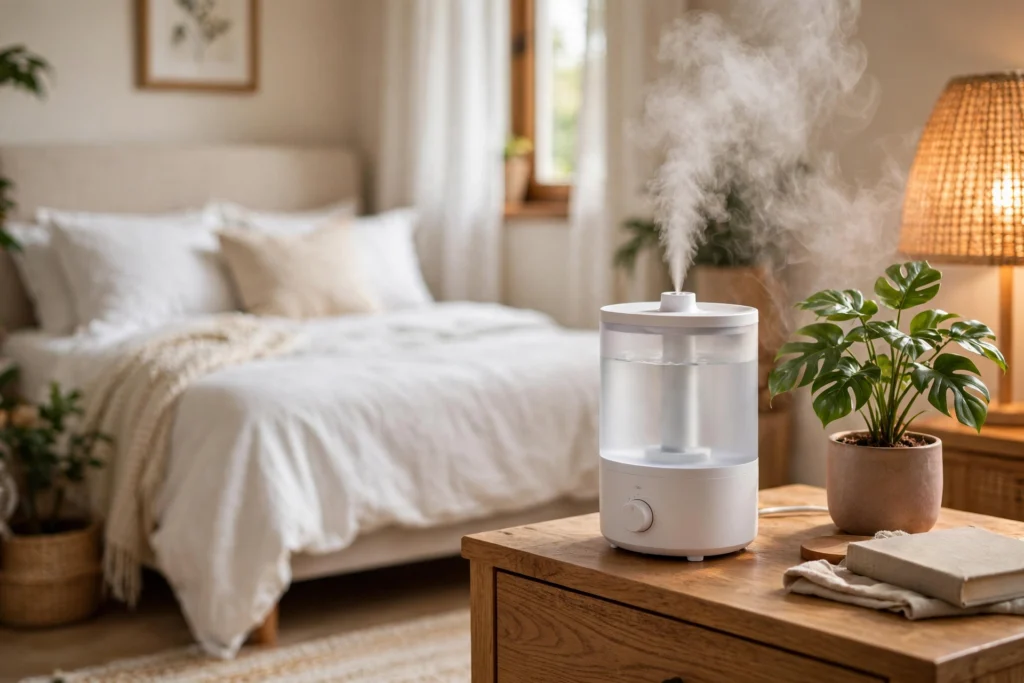
How to Use a Humidifier for a Stuffy Nose, Step by Step
Setting up a humidifier for stuffy nose relief takes about five minutes, and the details matter more than the device itself.
- Place it close, not personal. Set the unit on a nightstand or dresser roughly 3 to 6 feet from your head, slightly raised, never blowing mist straight at your face. Our notes on where to place a humidifier cover the rooms and surfaces that work best.
- Fill it fresh. Use distilled or low-mineral water where you can. It leaves less white dust on furniture and less scale inside the tank.
- Target 30% to 50% humidity. A small hygrometer costs a few dollars and removes the guesswork. Below 30% your nose still dries out; above 50% you start feeding mold and dust mites.
- Start before bed. Switch the unit on 30 to 60 minutes before you get into bed, then let it run through the night so the air is already comfortable when congestion peaks.
- Empty it every morning. Tip out the leftover water, wipe the tank dry, and refill fresh at night. Standing water is where the trouble starts, as the next section explains.
The One Mistake That Makes Congestion Worse
A dirty humidifier can quietly undo everything. The EPA warns that cool-mist units can disperse bacteria, mold, and minerals from a neglected tank straight into the air you breathe. Instead of clearing your nose, you end up inhaling the very irritants that swell it.
Humidity that stays too high causes the second half of the problem. A room kept above 50 to 60 percent invites mold growth and dust mites, both common allergy triggers, and allergy congestion stacks on top of your cold.
The fix is a simple rhythm: rinse the tank daily, and deep-clean it every three days or so. Our step-by-step guide on how to clean a humidifier shows the full vinegar routine in about fifteen minutes.
Who Should Talk to a Doctor First
Most healthy adults can use a bedroom humidifier without a second thought, but a few people should check in with a doctor or pharmacist first.
If you or your child has asthma or significant allergies, the Mayo Clinic advises talking to a healthcare professional before using one, because the extra moisture can flare symptoms in some people. For babies and toddlers, pediatric guidance is simple: cool mist only, and keep the unit well out of reach.
Simple Extras That Help Alongside Your Humidifier
A humidifier works best as part of a small team rather than on its own. These simple steps pair well with it:
- Saline spray or rinse to loosen mucus directly inside the nose.
- A steamy shower before bed for a quick burst of moist air.
- Plenty of fluids, which help keep mucus thin from the inside.
- An extra pillow to raise your head so passages drain more easily.
- A warm compress across the nose and cheeks to ease sinus pressure.
When a Blocked Nose Needs a Doctor
Most blocked noses from a cold clear within a week. Book an appointment instead if the congestion is not improving after 7 to 10 days, or if it keeps coming back week after week.
Seek care sooner if you develop a high fever, facial pain or pressure, swelling around one eye, blood in the nasal discharge, or any trouble breathing or wheezing. Those signs point to something a humidifier was never meant to treat, such as a sinus infection.
Quick Questions About Humidifiers and Blocked Noses
Will a humidifier help with a stuffy nose?
Yes, in most cases. By keeping the air and your nasal lining moist, a humidifier helps thin mucus and calm swelling, which is what makes a stuffy nose feel blocked in the first place. It eases the symptom rather than curing the cold behind it.
How long before a humidifier helps congestion?
Most people notice breathing feels easier the very first night, because the air around the bed is no longer drying their passages out. The fuller benefit builds over two or three nights of steady use at the right humidity.
Can a humidifier make a blocked nose worse?
It can, in two situations. A dirty tank can blow mold and bacteria into the air, and humidity pushed above about 50 to 60 percent feeds dust mites and mold. Keep the unit clean and the room in the 30 to 50 percent range, and it stays on your side.
Should I run a humidifier all night for congestion?
Yes, nighttime is when it helps most, because congestion peaks when you lie flat and bedroom air is at its driest. Run it on a low or medium setting, keep the tank clean, and check the humidity in the morning.
The Bottom Line
A humidifier for blocked nose relief is a comfort tool, and a genuinely good one when you use it well: cool mist, close to the bed, humidity held between 30 and 50 percent, and a tank you actually keep clean. It will not shorten your cold, but it can give you back your nights while the cold runs its course.
Still shopping for the right unit? Our humidifier buying guide matches sizes and types to each room, and our overview of humidifier benefits for your health, skin, and home covers what else the added moisture does around the house.