Spider plant care is one of the easiest wins in indoor gardening. The spider plant (Chlorophytum comosum) is famous for its arching, striped leaves, its dangling baby plantlets, and its talent for surviving a little neglect. If you have ever killed a fussy houseplant, this is the plant that rebuilds your confidence. My cousin keeps one on her kitchen windowsill, waters it whenever she remembers, and it still throws out babies like it is showing off.
Spider Plant Care at a Glance
| Need | What works best |
|---|---|
| Light | Bright, indirect light |
| Water | When the top inch of soil is dry |
| Soil | Loose, well-draining potting mix |
| Temperature | 65–75°F (18–24°C) |
| Humidity | Average household humidity, 40–50% |
| Feeding | Half-strength liquid fertilizer, spring and summer only |
| Repotting | Every 1–2 years, or when roots crowd the pot |
Spider Plant Light Requirements
Spider plant light requirements are simple: bright, indirect light is ideal. A spot a few feet back from a sunny window, or right beside an east-facing window, is perfect. The plant tolerates lower light, too, but growth slows and the white stripes on variegated types can fade to plain green.
Direct afternoon sun is the one thing to avoid. Harsh sun scorches the leaves, bleaching the stripes and crisping the tips within days. If your plant sits in a hot south- or west-facing window, move it back a foot or two, or hang a sheer curtain between the glass and the leaves. Outdoors, the same rule applies: bright shade, never full midday sun. Rotate the pot a quarter turn every week so it grows evenly instead of leaning toward the window. The Royal Horticultural Society’s spider plant growing guide agrees that bright, indirect light is the sweet spot.
How Often Should You Water a Spider Plant?
Water your spider plant when the top inch of soil feels dry. For most homes, that means about once every 7 to 10 days in spring and summer, and every 10 to 14 days in fall and winter. If the top inch feels dry, water deeply until water runs out of the drainage holes, then empty the saucer.
Spider plants store water in their thick, fleshy roots, so they forgive a missed watering far more easily than soggy soil. Overwatering is the fastest way to kill one: roots sitting in wet soil rot, leaves yellow from the base up, and the whole plant goes limp. When in doubt, wait another day.
One more watering tip matters more than the schedule: the kind of water. Spider plants are sensitive to fluoride and salts in tap water, and those chemicals collect in the leaf tips — the main cause of brown tips. If your tips keep browning, switch to rainwater, distilled water, or tap water left uncovered overnight.
Best Soil for Spider Plant
The best soil for spider plant is a standard indoor potting mix that drains well. Nothing fancy is required: a good general-purpose mix with some perlite mixed in does the job. The mix should hold moisture for a few days but never stay soggy, and the pot must have drainage holes.
Aim for a loose, loamy mix with a near-neutral pH. If your bagged mix feels dense and peaty, stir in a handful of perlite or orchid bark to open it up. Skip heavy garden soil entirely; it compacts in pots, suffocates the roots, and stays wet far too long.
Temperature and Humidity
Spider plants like normal room temperatures, ideally 65–75°F (18–24°C) during the day and a little cooler at night. Keep them above 50°F (10°C) — cold drafts from an air conditioner or an open winter window can yellow the leaves. Keep them away from radiators and heating vents, which dry the air and crisp the leaf edges.
Average household humidity of 40 to 50 percent suits them fine. If your home is very dry in winter, a pebble tray with water under the pot or a nearby humidifier helps. A simple rule: if you are comfortable in the room, your spider plant probably is too.
Feeding: Less Is More
Feed lightly and only in the growing season: a balanced liquid houseplant fertilizer at half strength, once a month from spring through late summer. Stop entirely in fall and winter, when growth slows.
Too much fertilizer causes the very problems people try to fix: brown leaf tips, salt buildup in the soil, and fewer babies. If you see a white crust on the soil surface, flush the pot with plain water and skip the next two feedings.
Repotting Spider Plant
Repotting spider plant babies and mature plants follows the same rhythm: every one to two years, or sooner if you see roots circling the drainage holes, water running straight through the pot, or growth stalling completely. Spring is the best time to repot, just as the plant wakes up for the growing season.
Choose a pot only one to two inches wider than the old one. Spider plants actually flower and make more babies when they are slightly snug, so a huge pot works against you. Gently tip the plant out, shake off loose old soil, set it at the same depth in fresh mix, and water well.
Spider Plant Care Indoors: Where to Place It
Spider plant care indoors is mostly about picking the right spot and then leaving the plant alone. Hanging baskets are the classic choice because the arching leaves and dangling plantlets need room to trail. A high shelf, a plant stand near a bright window, or a bathroom with a window all work well.
Indoors, spider plants are safe around cats and dogs — they are non-toxic to pets, which is one more reason they are a favorite first houseplant. Outdoors, they can live on a shaded porch in USDA zones 9 to 11, but they must come inside before the first frost.
Why Are the Tips of My Spider Plant Brown?
Brown tips are the most common spider plant complaint, and they rarely mean the plant is dying. The usual causes, in order, are fluoride and salts in tap water, low humidity or dry air, and too much fertilizer. Water quality is the culprit most of the time.
Fix it in three steps. First, switch to rainwater, distilled water, or tap water left out overnight. Second, trim the brown tips with clean scissors, following the natural pointed shape of the leaf. Third, flush the soil with plain water once to wash out built-up salts, then hold off fertilizer for a month. New growth should come in clean and green.
Spider Plant Babies: What to Do With Them
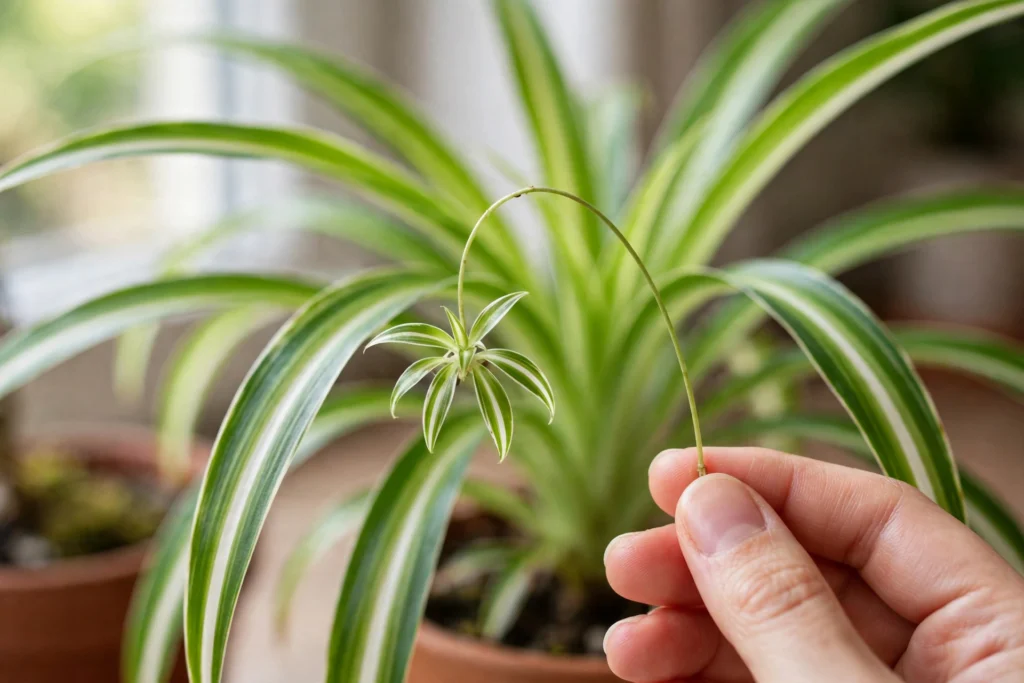
Those little plantlets dangling from long stems are called spiderettes — the plant’s way of multiplying. Once a baby has a few small roots of its own, you can snip it off and root it in a small pot of moist soil or a jar of water. Or simply leave the babies attached — a mature plant trailing a dozen plantlets is a beautiful sight.
Do not rush to remove every baby — a full, trailing plant is a sign your care routine is working.
Common Problems, Solved Fast
Yellow leaves: A few old, lower leaves yellowing is normal. Many yellow leaves at once usually means overwatering — let the soil dry out before watering again.
Pale, faded leaves: The plant needs more light, or more water. Move it closer to a bright window and check the soil moisture.
No babies: The plant is likely too young, too dark, or in too big a pot. Give it brighter indirect light and let it get slightly snug in its pot.
Limp, drooping leaves: Usually thirst, or roots that have rotted from overwatering. Check the soil: dry means water now; soggy means stop watering and let it dry out.
Most spider plant problems trace back to water or light. Fix those two things first, give the plant two weeks, and it usually sorts itself out.
Frequently Asked Questions
How often should I water a spider plant?
Water when the top inch of soil feels dry — usually every 7 to 10 days in spring and summer, and every 10 to 14 days in winter. Water deeply until it drains from the bottom, and never let the pot sit in standing water.
How much light do spider plants need?
Bright, indirect light is best, such as a few feet from a sunny window or beside an east-facing window. They tolerate low light but grow slowly, and direct afternoon sun scorches the leaves.
Why are the tips of my spider plant brown?
Brown tips are usually caused by fluoride or salts in tap water, low humidity, or too much fertilizer. Switch to rainwater or distilled water, trim the brown ends with clean scissors, and flush the soil with plain water.
How do I repot a spider plant?
Repot every one to two years in spring, moving up just one to two inches in pot size. Use fresh, well-draining potting mix, set the plant at the same depth, and water well.
Do spider plants like humidity?
Average household humidity of 40 to 50 percent is fine. Very dry winter air can crisp the leaf tips, so a pebble tray or a nearby humidifier helps, but daily misting is not needed.
Can spider plants live outside?
Yes, in USDA zones 9 to 11 they can live outdoors year-round in bright shade. In colder regions they can spend summer on a shaded porch, but they must come indoors before temperatures drop below 50°F (10°C).
A spider plant asks for very little — bright indirect light, water when the top inch dries, and decent drainage — and gives back a lot: green arches, a trail of babies, and a plant that forgives a beginner’s mistakes.
If you enjoy easy houseplants, our fiddle leaf fig care guide walks through a slightly fussier favorite step by step, and our look at the truth about sansevieria clears up the myths around another beginner-friendly plant. For the rest of the home, our genius home garden tips will help you upgrade your backyard and indoor spaces together.