INTRO
A dehumidifier for centipedes is one of the most honest pest fixes you can buy: it attacks the reason centipedes moved in, not the centipedes themselves. If you have ever flipped on a basement light and watched a long-legged house centipede race across the wall, you know where they like to live: damp, dark corners where the air stays wet and the insects they hunt are plentiful. Dry out those rooms, and the centipedes lose their shelter and their food. This guide covers the right humidity level, the size each room needs, and the routine that keeps them from coming back.
Why Centipedes Show Up in Your Home
House centipedes come indoors for three things: moisture, food, and shelter. With no waxy, waterproof coating, they lose water fast in dry air and survive only where humidity stays high. That is why you find them in basements, crawl spaces, bathrooms, and under sinks, almost never in a dry living room.
They are hunters, too: Penn State Extension lists their diet as silverfish, firebrats, carpet beetle larvae, cockroaches, spiders, and other small arthropods. A basement full of centipedes is usually a basement full of the insects they eat, and those insects need damp conditions too. Frequent sightings can warn of a bigger moisture problem hiding behind the walls.
They enter through cracks in the foundation and floor slab, gaps around pipes, uncapped block walls, floor drains without water traps, and gaps under doors. The good news is that house centipedes are harmless to people and pets: no disease, no damage to your home, and bites are rare and minor. They look frightening, but they are really just a symptom. Fix the dampness, and the symptom fades.
Does a Dehumidifier Get Rid of Centipedes?
Yes, over time, for a reason most pest advice misses. It will not kill centipedes on contact or evict the ones already living inside a block wall. What it does is make your basement, crawl space, and bathrooms far less livable for them, while also drying out the habitat their prey needs to breed, so the population shrinks over a few weeks instead of growing.
Here is the honest part: a dehumidifier is not an exterminator. It will not stop a centipede from wandering in through a gap under the door, and spraying alone will not keep them away if the basement stays wet. Dry air reaches baseboards, wall voids, and cracks behind storage boxes, places sprays never touch.
Most homeowners see much less activity within 2 to 4 weeks. Full results usually take 6 to 12 weeks, because eggs already laid in cracks still hatch once. Keep the machine running every damp season.
What Humidity Level Keeps Centipedes Away?
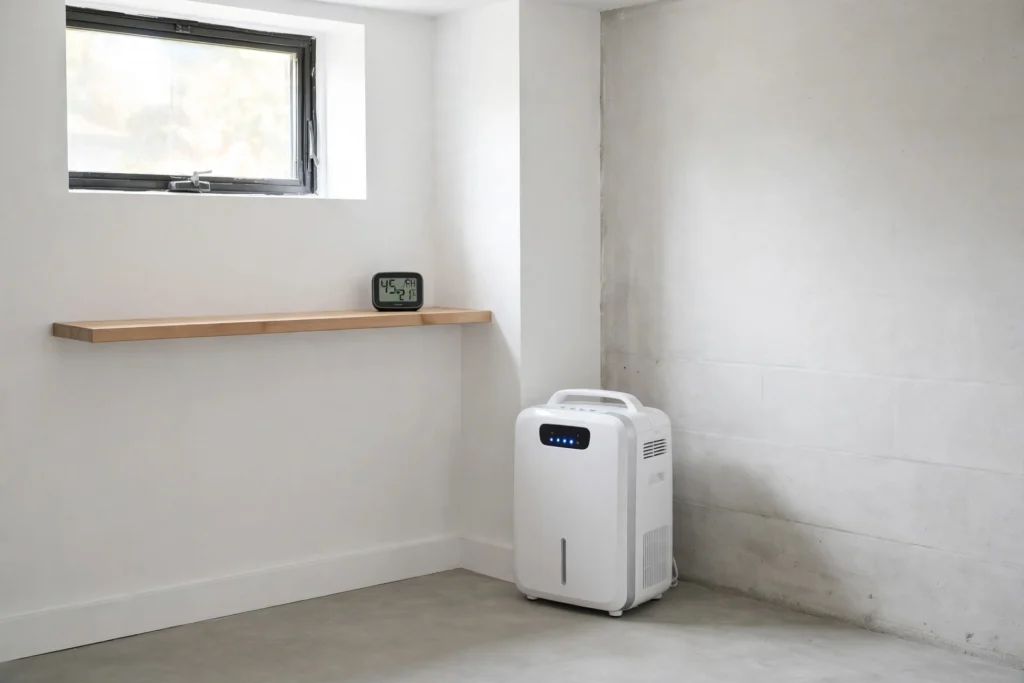
Aim for a steady 45 to 50 percent relative humidity in basements, crawl spaces, and bathrooms. The EPA recommends 30 to 50 percent indoors, and that same range makes a home unfit for centipedes and the insects they eat.
Consistency matters more than the exact number. A basement that drops to 45 percent during the day but climbs to 70 percent at night still suits them, so set the humidistat once and let it hold the line. Check the real reading with a separate hygrometer at the far end of the room, not the number on the machine, which reports the air at its own intake.
The same target applies everywhere. A bathroom that stays above 60 percent after showers is a centipede stop on the same map; our guide to a dehumidifier for bathroom moisture explains the small-room setup.
How to Get Rid of Centipedes in Your House
Four steps, in this order — skip one, and the others work half as well.
- Dry the air. Run a dehumidifier in the basement or crawl space at 45 to 50 percent. Fix leaks first: dripping pipes and sweating ductwork will defeat any machine. In the bathroom, run the exhaust fan during and after every shower.
- Take away the food. This is the step most people skip. Put sticky insect traps, also called monitors, near walls in dark corners for a week or two. What you catch tells you what they are eating. Then remove their food and shelter: swap cardboard boxes for sealed plastic bins, move stored paper off damp floors, and vacuum along baseboards weekly. Our silverfish guide explains how the same routine works on their favorite meal.
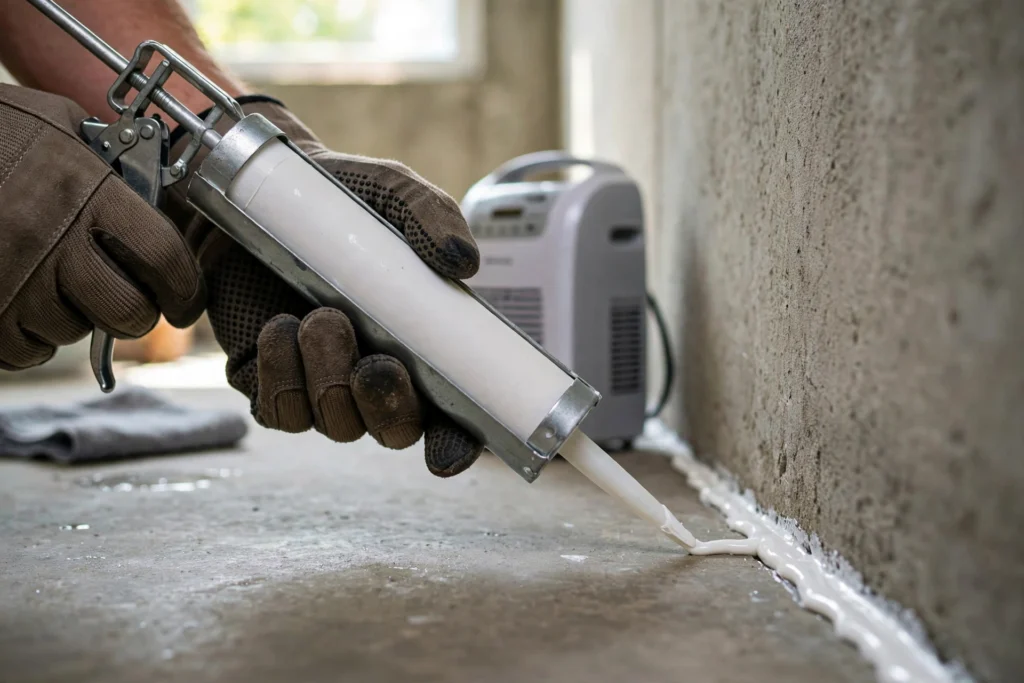
- Seal the entry points. With caulk and filler, seal cracks in floor slabs and block walls, gaps around pipes, and wall-floor joints. Screen basement floor drains and cover sump pumps. Outside, grade the soil away from the foundation and clear mulch and woodpiles away from the house.
- Keep it dry all season. A dehumidifier is a season-long habit, not a weekend project. Set up continuous drainage to a floor drain so the machine never stops on a full bucket, and clean the filter every few weeks. If the dampness starts under the house rather than in the basement, a dedicated unit for that space is the better fit, as our dehumidifier for crawl space guide explains.
What Kills Centipedes?
For the centipedes you can already see, a few options help, but they only support drying the house. Sticky traps catch centipedes and show you what they are eating, so place them along walls where you have seen activity. Food-grade diatomaceous earth in a thin line in dry corners damages their exoskeleton on contact, and boric acid dust works the same way in cracks. Keep both dry, since wet dust does nothing, and away from kids and pets.
Sprays are the weakest tool in this fight. Synthetic pyrethroid sprays labeled for indoor use can kill centipedes on contact, but their long legs hold their bodies clear of treated surfaces, and the harborage is inside wall voids the spray never reaches. Penn State Extension lists reducing humidity with dehumidifiers among its recommended control steps. For the full guidance, see Penn State Extension’s house centipede page.
If sightings stay frequent after two to three months, call a licensed pest control professional: a hidden leak may be feeding the problem.
Best Dehumidifier for Centipedes: What to Look For
Match the machine to the room, not the pest.
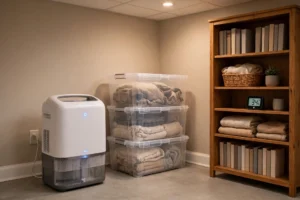
Basement: this is where most centipede problems anchor, so it gets the biggest unit. A 50-pint compressor dehumidifier with a built-in pump is the usual pick for a damp basement. The pump drains continuously, so the machine never stops on a full bucket. Look for a humidistat you can set to 45 to 50 percent and an Energy Star rating.
Crawl space: a low-profile unit, usually 12 to 14 inches tall, that slides through the access hatch and fits between joists. It should work down to about 33 degrees Fahrenheit, with automatic defrost, and drain continuously.
Bathroom: a compact 20-pint portable unit is plenty for most bathrooms, and a mini thermoelectric unit covers a small powder room. A drain hose to the tub or sink means no bucket to empty. Keep it on a GFCI-protected outlet, away from splashes.
Whole house: if several rooms feel damp at once, one ducted system may beat running several portables. It dries every room at once and drains itself; our complete whole house dehumidifier guide explains sizing and costs.
Whatever size you buy, check the pint rating at standard AHAM test conditions, not the bigger number on the box, and give the unit 12 to 18 inches of clearance from walls. An undersized unit runs nonstop and still leaves the room damp.
My mother kept a broom by the basement door for a year, sweeping up one centipede at a time, until a 50-pint dehumidifier and a weekend of caulking ended the nightly sightings. The broom is still there, but she has not needed it in months.
Frequently Asked Questions
Does a dehumidifier get rid of centipedes?
Over time, yes, especially combined with sealing. House centipedes lose water quickly and need damp shelter, and the insects they eat also thrive in humid basements. Holding 45 to 50 percent humidity makes the space hostile to both, though it will not quickly clear centipedes inside block walls.
What humidity level keeps centipedes away?
Aim for a steady 45 to 50 percent relative humidity, checked with a separate hygrometer. Consistency matters more than the exact figure: a basement that swings up to 70 percent at night still suits them.
How long does it take for centipedes to go away after dehumidifying?
Expect noticeably fewer sightings within 2 to 4 weeks, and a collapsed population by 6 to 12 weeks. The air dries in days, but the population declines gradually, and earlier eggs will still hatch once.
Are house centipedes dangerous?
No. They are harmless to people and pets: no disease, no damage to your home, and bites are rare and minor. They look frightening, but they are predators of other insects, not of you. Large numbers warn about moisture and prey insects, not danger.
Why do I keep seeing centipedes in my bathroom?
Bathrooms stay damp after every shower, and centipedes follow the moisture. They come up through floor drains without water traps and gaps around pipes. Run the exhaust fan during and after showers, fix any drips, and use a small dehumidifier to hold the room under 50 percent.
Final Thoughts
A dehumidifier for centipedes is not a quick kill, and that is exactly why it works. Sprays clear the centipede you can see and leave the damp void and food supply untouched. Dry air takes away the two things that keep centipedes indoors: moisture and prey. Hold 45 to 50 percent humidity, seal the cracks, clear the clutter, and give it a few weeks. The rooms stop being habitat, and the centipedes leave on their own.
If the dampness reaches beyond one room, a single system may serve the whole house better.