The asplenium bird’s nest fern is the houseplant that looks like it was designed, not grown. A rosette of wide, glossy, apple-green fronds rises from a fuzzy brown center, each new frond unfurling like a scroll — and the whole shape really does look like a nest. It is one of the easiest tropical plants to keep happy indoors, as long as you respect its two non-negotiables: steady humidity and a dry crown.
Botanically it is Asplenium nidus, a tropical epiphyte native to the rainforests of Southeast Asia, Australia, and the Pacific Islands. In the wild it grows on tree branches, not in soil, which explains almost everything about how it wants to be treated at home. Indoors, its fronds usually reach 2 to 3 feet, though a happy plant can stretch past 4 feet over a few years.
This guide covers bird’s nest fern care from end to end: the light it loves, how often to water, the humidity sweet spot, soil, feeding, repotting, and the two problems that kill most of these plants — crown rot and crispy brown edges. It is also safe around cats and dogs, which makes it one of the best statement plants for a busy family home.
What Is a Bird’s Nest Fern?
The bird’s nest fern (Asplenium nidus) gets its name from the way its fronds grow. They sprout from a central rosette, a dense nest-like cup of dark, hairy fibers, and arch outward in every direction. Young fronds emerge tightly curled from that center, which is why the plant’s Latin name nidus means “nest.”
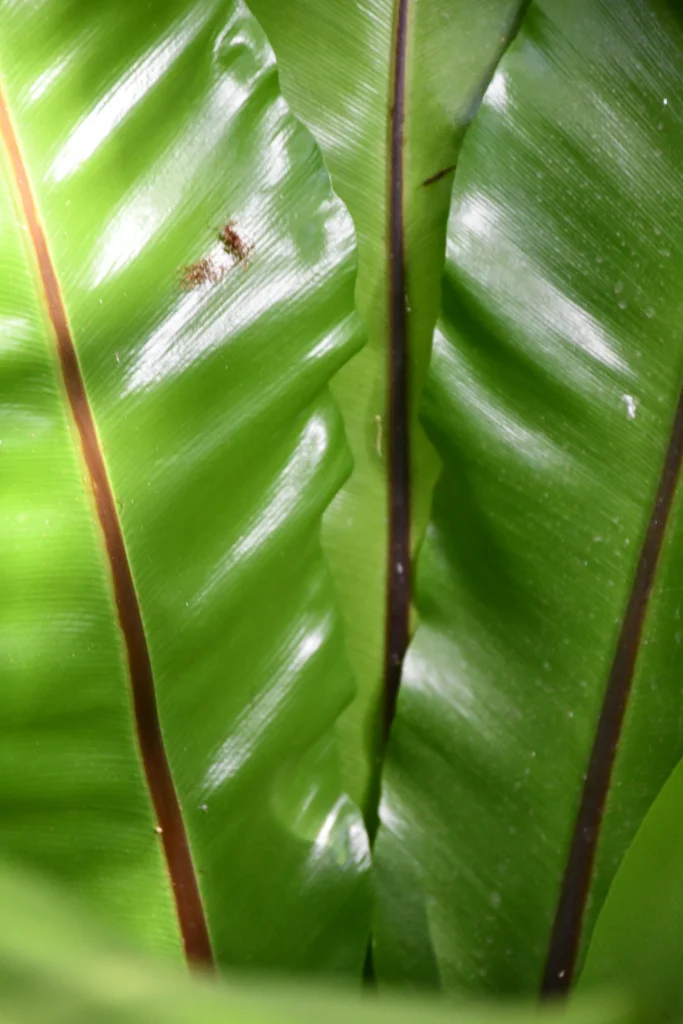
Unlike most ferns, its fronds are solid and undivided — long, smooth, slightly wavy blades with a waxy shine — so it reads more like a tropical sculpture than a feathery fern. It grows slowly, about 6 to 12 inches a year indoors, and it can live for many years with basic care.
There are a few popular varieties, including the standard Asplenium nidus, the crested ‘Crispy Wave’ with ruffled edges, and the Japanese bird’s nest fern (Asplenium antiquum), which has narrower, more upright fronds. The care below fits all of them.
How to Care for Ferns: The Bird’s Nest Basics
How to care for ferns comes down to copying their forest home, and the bird’s nest fern is no exception. In a rainforest it sits in the dappled shade of a tree canopy, its roots gripping bark, with warm air and frequent rain keeping everything gently moist. Your job is to recreate that: bright but indirect light, soil that stays lightly damp, humid air, and warmth.
Here is the whole routine at a glance:
- Light: bright, indirect light; an east or north window is ideal.
- Water: when the top inch of soil feels dry, usually every 7 to 10 days.
- Humidity: 50 to 80 percent; average indoor air is barely enough.
- Temperature: 65 to 80°F (18 to 27°C); never below 55°F.
- Soil: loose, airy, well-draining mix that still holds some moisture.
- Feeding: half-strength liquid fertilizer, monthly in spring and summer only.
Get those six right and the plant mostly takes care of itself. The sections below explain each one in detail, including the one mistake that kills more bird’s nest ferns than anything else.
Light: Bright, Indirect, Never Harsh
A bird’s nest fern wants the brightest indirect light you can give it. Think of the light under a leafy tree: strong enough to read by comfortably at noon, but never a sharp beam landing on the leaves. An east-facing window with gentle morning sun is perfect, and a few feet back from a south or west window works too.
Direct midday or afternoon sun scorches the fronds, leaving pale, bleached patches and crispy brown edges that never heal. On the other hand, a dark corner will keep the plant alive but barely growing, with small, pale fronds. If your only windows face south or west, hang a sheer curtain or set the pot back two or three feet from the glass.
This is one plant where a north-facing window is genuinely fine. It tolerates medium to low light better than most tropical houseplants, which is why it does well in bathrooms and bedrooms that never see direct sun.
How Often Do You Water Ferns?
How often do you water ferns is the question every new owner asks, and for the bird’s nest fern the honest answer is: when the top inch of soil feels dry, not on a calendar. In most homes that means every 7 to 10 days in spring and summer, and every 10 to 14 days in winter, when growth slows and indoor heating dries the air.
Water slowly and evenly around the edge of the pot until water runs freely from the drainage holes, then empty the saucer. The soil should feel like a wrung-out sponge — damp all the way through, never soggy. Roots sitting in standing water rot quickly, and this plant’s fine, wiry roots are especially sensitive.
Here is the cardinal rule of bird’s nest fern care: never pour water into the central rosette. The fuzzy crown at the center is where new fronds unfurl, and water trapped there rots them from the inside. Crown rot is the most common way owners lose this plant, and it is almost always fatal. Always water the soil, never the crown, and wipe up any splash that lands in the nest.
Humidity: The 50 to 80 Percent Sweet Spot
Humidity is the one thing that separates a thriving bird’s nest fern from a merely surviving one. It wants 50 to 80 percent relative humidity. Average indoor air in winter often drops to 30 or 40 percent, and the first sign of trouble is brown, crispy edges on the fronds.
My cousin keeps hers on a bathroom shelf, and it is the happiest plant in her whole apartment — the steam from the shower does the work for her. A bathroom with a window is genuinely the best room in the house for this fern, and our peace lily care guide covers another humidity lover that thrives in the same spot.
If a bathroom is not an option, group the fern with other plants, set the pot on a tray of pebbles with water kept below the pot’s base, or run a small humidifier a few feet away. Misting the fronds looks helpful but raises humidity for less than two minutes, and wet leaves invite fungal spots — skip it. A cheap digital hygrometer near the plant tells you the real number instead of guessing.
Soil and Potting Mix
As an epiphyte, the bird’s nest fern needs a loose, airy mix that drains fast but still holds a little moisture for its fine roots. Dense, heavy potting soil compacts around those roots and suffocates them, so do not plant it in plain garden soil or a peat-heavy mix straight from the bag.
A reliable blend is 2 parts quality potting mix, 1 part orchid bark or perlite, and 1 part coco coir or peat moss. The bark creates air pockets, the perlite keeps drainage fast, and the coir holds the gentle moisture the roots want. Whatever mix you use, the pot must have drainage holes — a beautiful cachepot with no holes is a slow death sentence for this plant.
Repot only when you must, every 2 to 3 years or when roots circle the drainage holes. Choose a pot just 1 to 2 inches wider than the old one; too much fresh soil stays wet and invites rot. Spring is the best time, at the start of the growing season.
Temperature: Warm and Steady
The bird’s nest fern likes the same temperatures you do: 65 to 80°F (18 to 27°C) is its comfort zone. It will tolerate down to about 55°F, but anything below 50°F damages the fronds, so keep it away from cold drafts, drafty windows in winter, and air-conditioning vents blowing directly on it.
Sudden temperature swings stress the plant more than a steady cool room does. Pick one spot and leave it there — this fern dislikes being moved around, and a plant that sulks after every move is usually reacting to a draft or a change in light, not to your care.
Feeding: Less Is More
Bird’s nest ferns are light feeders and are sensitive to over-fertilizing, which burns the frond tips and leaves salt crust on the soil. Feed only during the growing season, spring through early fall, with a balanced liquid houseplant fertilizer diluted to half the recommended strength, once a month at most.
Never feed a dry plant — water thoroughly first, then follow with the diluted fertilizer. Skip feeding entirely in fall and winter, and skip it for a stressed or recently repotted plant until you see new growth. If the frond tips turn brown even though watering is right, overfeeding is the likely culprit: flush the pot with plain water and hold off feeding for a couple of months.
Common Problems: Brown Leaves, Crown Rot and Pests
Most bird’s nest fern problems trace back to water, light, or humidity, and the pattern tells you the cause. Crispy brown edges mean low humidity or underwatering — raise the humidity first, then check the watering rhythm. Soft, dark brown spots spreading from the base of a frond mean root rot from overwatering; stop watering, let the soil dry, and repot into fresh mix if the roots smell sour.
Crown rot is the serious one. If the center of the rosette turns black or mushy, or new fronds emerge brown and collapse, water has been sitting in the nest. There is no reliable fix once the crown is mushy, so prevention — watering only the soil — is everything. Wipe the center dry if you ever splash it.
Pests are uncommon but watch for scale insects (small brown bumps on the fronds) and mealybugs (white cottony clusters in the crown). Wipe scale off with a cloth dipped in rubbing alcohol, and dab mealybugs the same way, checking weekly until they are gone. Good air circulation and correct watering keep both rare. For the botanical reference behind this guide — native range, soil, and hardiness — see the NC State Extension profile of Asplenium nidus:
Is a Bird’s Nest Fern Safe for Pets?
Yes. The bird’s nest fern is non-toxic to cats, dogs, and humans, so it is a safe choice for homes with pets and children. That is one more reason it earns its place on a low shelf or a coffee table where other plants might be a worry.
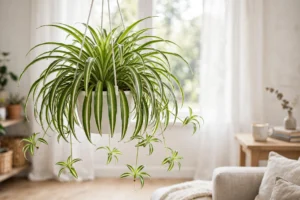
If you are building a pet-safe indoor jungle, pair it with our spider plant care guide — another forgiving, non-toxic plant that thrives in the same bright, indirect light. And if you want a taller statement plant for the same room, our fiddle leaf fig care guide covers a tree that asks for a similar spot but a stricter watering routine.
Frequently Asked Questions
How often to water ferns?
Water a bird’s nest fern when the top inch of soil feels dry, usually every 7 to 10 days in spring and summer and every 10 to 14 days in winter. Always water the soil around the edge of the pot, never into the central rosette. Empty the saucer after watering so the roots never sit in standing water.
How to take care of a fern?
Give it bright, indirect light, soil that stays lightly moist but never soggy, humidity above 50 percent, and temperatures between 65 and 80°F. Feed monthly at half strength in spring and summer only. Keep the crown dry — water in the center rosette causes rot.
How to care for ferns indoors?
Indoors, ferns need the same things they get in a forest: filtered light, humid air, and consistent moisture. Place a bird’s nest fern near an east or north window, group it with other plants or run a humidifier for humidity, and water when the top inch of soil dries out. A bathroom with a window is an ideal spot.
How much water do ferns need?
Ferns need evenly moist soil, not a set amount of water. Soak the pot until water runs from the drainage holes, then let the top inch dry before watering again. How much and how often depends on pot size, light, and humidity — check the soil with your finger instead of following a fixed schedule.
How to keep ferns alive?
The three rules are steady moisture, high humidity, and a dry crown. Never let the soil dry out completely or stay soggy, keep humidity above 50 percent, and never pour water into the center of the plant. Most ferns die from crown rot or crispy edges, and both are preventable.
Do ferns die in the winter?
Most indoor ferns do not die in winter, but they grow much more slowly and are more fragile. Indoor heating drops humidity, so brown edges are common — run a humidifier or move the plant to a bathroom. Water less often in winter, keep the fern away from cold drafts, and stop feeding until spring.
Final Thoughts
The asplenium bird’s nest fern earns its popularity honestly: it is sculptural, pet-safe, tolerant of lower light than most tropical plants, and genuinely low-maintenance once you learn its two rules. Keep the humidity up, keep the crown dry, and it will reward you with a rosette of glossy fronds that only gets more impressive every year.
If you are starting a houseplant collection, this fern pairs beautifully with the two plants in our other care guides: our spider plant care guide for a forgiving plant that fills a shelf with babies, and our fiddle leaf fig care guide for a taller tree that loves the same bright window. Start with the fern, and the rest of the collection follows naturally.