The split leaf philodendron is the plant that makes guests stop and stare. With huge, deeply lobed leaves that can stretch three feet long indoors, it brings instant jungle drama to a living room corner, yet it asks for far less fuss than its size suggests. My neighbor keeps one in a bright corner of her living room, waters it when the top of the soil dries out, and it has doubled in size in two years. This guide covers it all: light, water, soil, humidity, feeding, and quick fixes.
Split Leaf Philodendron at a Glance
| Need | What works best |
|---|---|
| Light | Bright, indirect light, 4–6 hours a day |
| Water | When the top 2 inches of soil are dry |
| Soil | Loose, chunky, well-draining mix |
| Temperature | 65–85°F (18–29°C) |
| Humidity | 60–80% if you can; tolerates 40–50% |
| Feeding | Balanced liquid fertilizer monthly, spring to summer |
| Repotting | Every 1–2 years, in spring |
| Pet safety | Toxic to cats and dogs if eaten |
What Is a Split Leaf Philodendron?
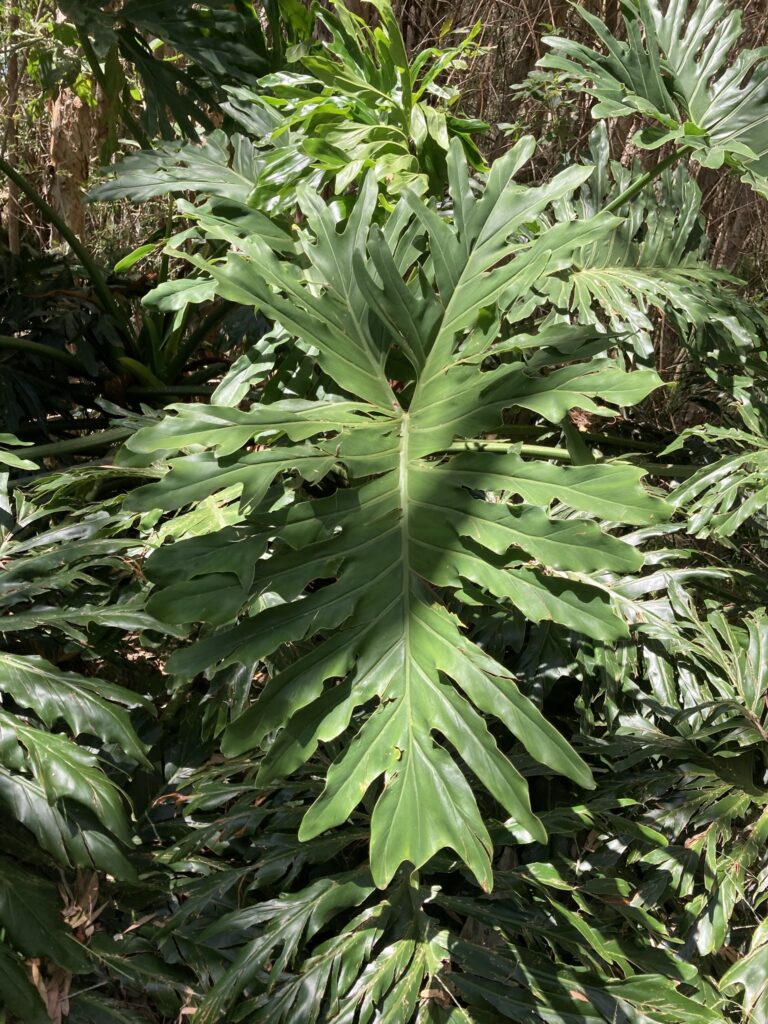
The name split leaf philodendron is used loosely in shops, so it helps to know exactly which plant you have. The true split leaf philodendron is Philodendron bipinnatifidum, reclassified by botanists in 2018 as Thaumatophyllum bipinnatifidum. You will also see it sold as Philodendron selloum, tree philodendron, lacy tree philodendron, and hope philodendron. NC State Extension lists the plant under its current botanical name if you want to check what you bought.
These are all the same plant: a self-supporting, shrub-like tropical from South America that grows a thick trunk instead of climbing, reaching 6 to 10 feet tall indoors. It is often confused with the monstera deliciosa, sometimes sold as philodendron swiss cheese, but monstera is a climber with holes in its leaves, while the true split leaf philodendron has deep lobes, no holes, and a free-standing trunk. Their care is nearly identical, so even if your plant turns out to be a monstera, this guide still serves you well.
Split Leaf Philodendron Light Requirements
Light is the foundation of split leaf philodendron care. Give it bright, indirect light for 4 to 6 hours a day: a spot a few feet back from a sunny window, or beside an east-facing window, is ideal. It survives in medium light, but growth slows and new leaves stay smaller, with shallower splits. If you have grown a fiddle leaf fig, the light needs are similar, and our fiddle leaf fig care guide walks through the same bright, indirect light setup step by step.
Direct sun is the one thing to avoid, because harsh afternoon sun scorches the big leaves, leaving bleached patches and crispy brown edges within hours. If your only sunny spot is a south- or west-facing window, pull the plant back a foot or two or hang a sheer curtain in between. If the room is dim, a grow light for 6 to 8 hours a day keeps growth steady through winter.
How Often to Water a Split Leaf Philodendron
Watering is where most split leaf philodendrons are lost, and almost always from too much water, not too little. Water only when the top 2 inches of soil feel dry to the touch. For most homes that means every 7 to 10 days in spring and summer, and every 14 to 21 days in fall and winter, when growth slows. When you do water, water deeply until it runs freely from the drainage holes, then empty the saucer.
Overwatering is the number one cause of yellow leaves and root rot: soggy soil suffocates the roots within days. Underwatering is easy to fix by comparison, because the leaves droop a little, you water, and they perk back up within hours. Check the soil, not the date, and always use a pot with drainage holes and room-temperature water.
The Best Soil for Split Leaf Philodendron
The best soil for a split leaf philodendron is loose, chunky, and fast-draining, with enough richness to hold some moisture between waterings. Think rainforest floor: airy, organic, and never compacted. A mix that works well is 40 percent good potting soil, 30 percent orchid bark, and 30 percent perlite. The bark and perlite keep air around the roots, which is what stops rot.
Heavy garden soil is the worst choice, because it compacts in a pot, stays wet, and suffocates the roots. Bagged potting mix straight from the bag is often too dense on its own, so stir in perlite or bark until it feels loose in your hand. When you repot, refresh the mix completely rather than topping up the old one.
Temperature and Humidity
This is a tropical plant, and it shows in what it likes: warm and humid. Keep it between 65 and 85°F (18–29°C) year-round. Growth stalls below 60°F, and cold damage starts below 50°F, so keep it away from cold drafts, open winter windows, and air-conditioner blasts.
Humidity is where most owners can do better. A split leaf philodendron is happiest at 60 to 80 percent humidity, though it tolerates average household air around 40 to 50 percent. In dry winter air, group it with other plants, set the pot on a pebble tray with water, or run a small humidifier nearby.
Feeding Your Split Leaf Philodendron
Feed only while the plant is actively growing, from March through September. A balanced liquid fertilizer, such as 20-20-20, diluted to half strength once a month is plenty. This is a big plant with giant leaves, and it is hungry in the growing season, but more fertilizer is not better: salts build up in the soil, burn the roots, and show up as brown leaf edges.
Stop feeding entirely in fall and winter, when the plant is semi-dormant. If you see a white crust on the soil surface, flush the pot with plain water and skip the next two feedings.
Repotting and Support
Repot your split leaf philodendron every one to two years, in spring, or sooner if roots circle the drainage holes or water runs straight through the pot. Move up just 2 to 4 inches in pot diameter, because a huge pot holds too much wet soil and invites rot. A mature plant will eventually need a pot 18 to 24 inches wide.
Unlike climbing philodendrons, this one is self-supporting: it grows a thick, woody trunk and holds itself up, so it needs no moss pole. It will send out thick aerial roots as it matures, and you can tuck them gently back into the soil or let them be. Wipe the big leaves with a damp cloth every few weeks, because dusty leaves photosynthesize poorly.
Pruning and Propagation
Prune only to remove yellowed, damaged, or dead leaves, and never prune to control the size, since cutting healthy growth back just leaves stubs and scars. Cut the leaf stem near the base with clean, sharp shears, and sterilize the blades first so you do not spread disease from plant to plant. To propagate, take a stem cutting with at least one node and a healthy aerial root, let the cut end dry for a day, then root it in water or moist potting mix. Roots usually appear within a few weeks.
Common Problems, Solved Fast
Yellow leaves: Usually overwatering. A few old lower leaves yellowing is normal; many at once means wet roots. Let the soil dry out and hold off water until the top 2 inches are dry.
Brown leaf edges: Usually dry air, too much fertilizer, or salts in tap water. Raise the humidity, flush the soil, and skip a feeding or two.
Drooping leaves: Thirst or cold. Dry soil means water now; soggy soil means stop watering and let it dry.
Small leaves with shallow splits: Not enough light. Move the plant closer to a bright window or add a grow light.
Pests: Spider mites and mealybugs are the usual visitors. Wipe the leaves, rinse the plant in the shower, and treat with neem oil or insecticidal soap away from direct sun.
Is Split Leaf Philodendron Toxic to Pets?
Yes. Like most philodendrons, the split leaf philodendron is toxic to cats and dogs if eaten, because its leaves contain calcium oxalate crystals. Chewing a leaf usually causes drooling, mouth irritation, and an upset stomach. Keep the plant out of reach of curious pets, and if your cat or dog does chew a leaf, call your veterinarian for advice. If you want a completely pet-safe, easy plant instead, our spider plant care guide covers a favorite that is non-toxic to cats and dogs.
Growing a Split Leaf Philodendron Outdoors
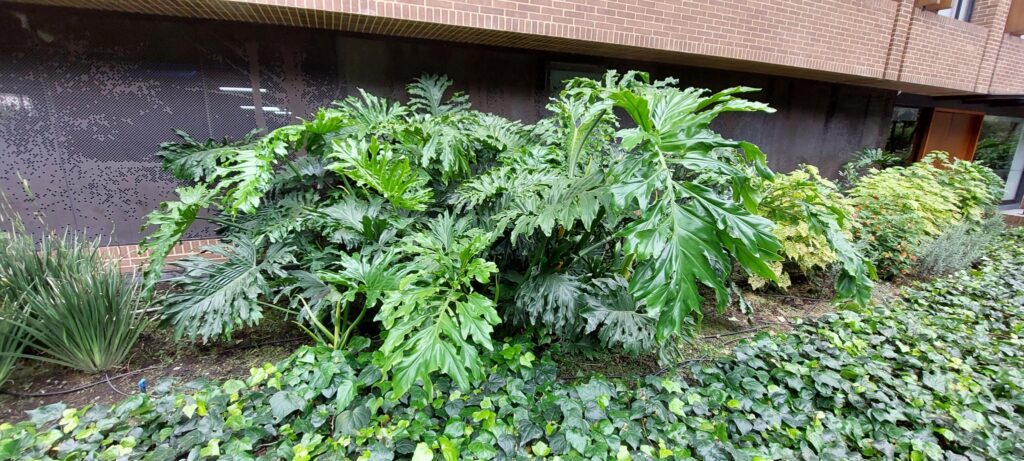
Outdoors, this plant is reliably perennial only in USDA zones 9 to 11, where winter temperatures stay above 25°F (−4°C). In those climates it becomes a landscape shrub with leaves 3 feet long. Everywhere else in the US, it is an indoor plant that can spend summer on a shaded porch, but it must come inside before temperatures drop below 55°F. Outdoors, give it bright shade and shelter from strong wind, because those big leaves tear easily.
Frequently Asked Questions
Is a split leaf philodendron the same as a monstera?
No. The true split leaf philodendron is Philodendron bipinnatifidum (now Thaumatophyllum bipinnatifidum), a self-supporting shrub with deeply lobed leaves and no holes. Monstera deliciosa is a climbing plant whose leaves develop holes. Their care is nearly identical, but they are different species.
Is split leaf philodendron toxic to cats and dogs?
Yes. Its leaves contain calcium oxalate crystals that irritate the mouth and stomach if eaten. Keep it out of pets’ reach, and call your veterinarian if your pet chews a leaf.
A split leaf philodendron asks for the basics, bright indirect light, water when the top of the soil dries, chunky soil, and warm humid air, and pays you back with some of the boldest foliage any houseplant can offer. If you love big tropical houseplants, our bird of paradise plant care guide walks through a taller, bolder favorite, and our asplenium bird’s nest fern care guide covers a sculptural, pet-safe plant that loves the same bright, indirect light.