Hibiscus tea is the ruby-red drink that looks like cranberry juice and tastes tart and fruity. It is made by steeping the dried calyces of the roselle plant, Hibiscus sabdariffa, in hot water — no true tea leaves, no caffeine, just color and tartness. In this guide, you will learn what hibiscus tea is good for, how to make hibiscus tea at home, and the safety notes worth knowing first.
My neighbor keeps a jar of dried hibiscus next to her tea bags and brews a pot whenever friends drop by — the deep red color always gets a comment.
What Hibiscus Tea Actually Is
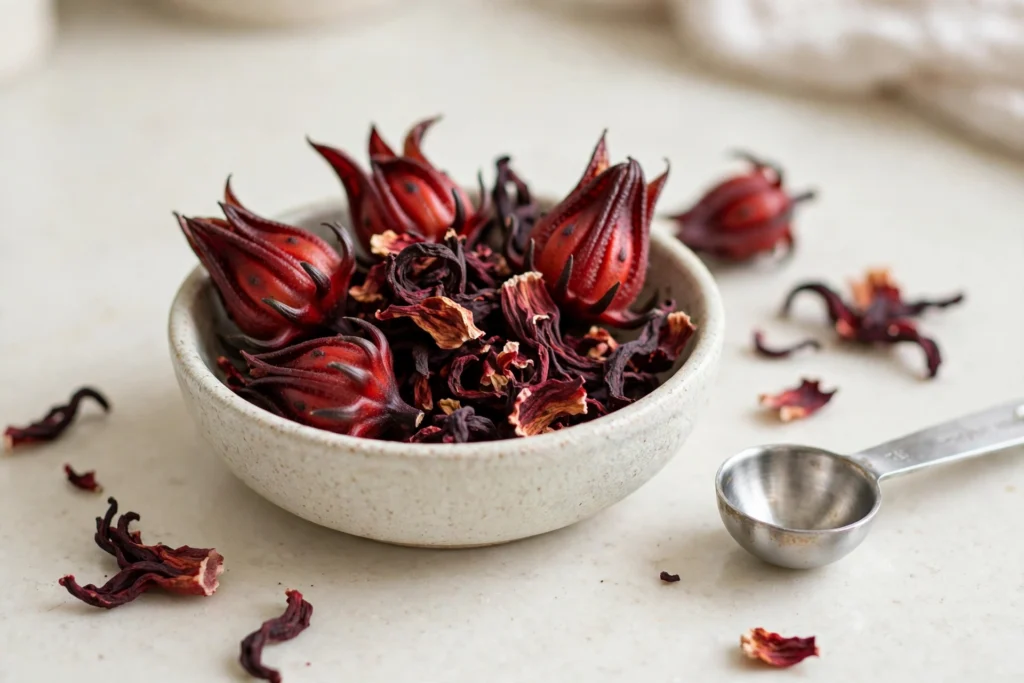
Hibiscus tea is an herbal infusion, not a true tea. True teas come from the Camellia sinensis plant, while this drink comes from the fleshy red calyces — the cup-shaped parts that hold the flower — of Hibiscus sabdariffa, also called roselle.
If you have ever ordered agua de jamaica at a Mexican restaurant, you have already had hibiscus tea. Jamaica drink, as it is often listed on menus, is the same ruby-red infusion, usually served cold and lightly sweetened. In Egypt it is called karkade, and in the Caribbean it shows up as sorrel.
What is hibiscus, then, beyond the drink? It is a large family of flowering shrubs, and only food-grade Hibiscus sabdariffa is used for tea. Our hibiscus benefits guide covers the plant itself — how to grow it and care for it. Can you eat hibiscus flowers? The food-grade dried calyces sold for tea are safe to brew, but do not brew random blooms from an ornamental shrub — garden varieties may be sprayed, or be a different species.
What Hibiscus Tea Tastes Like
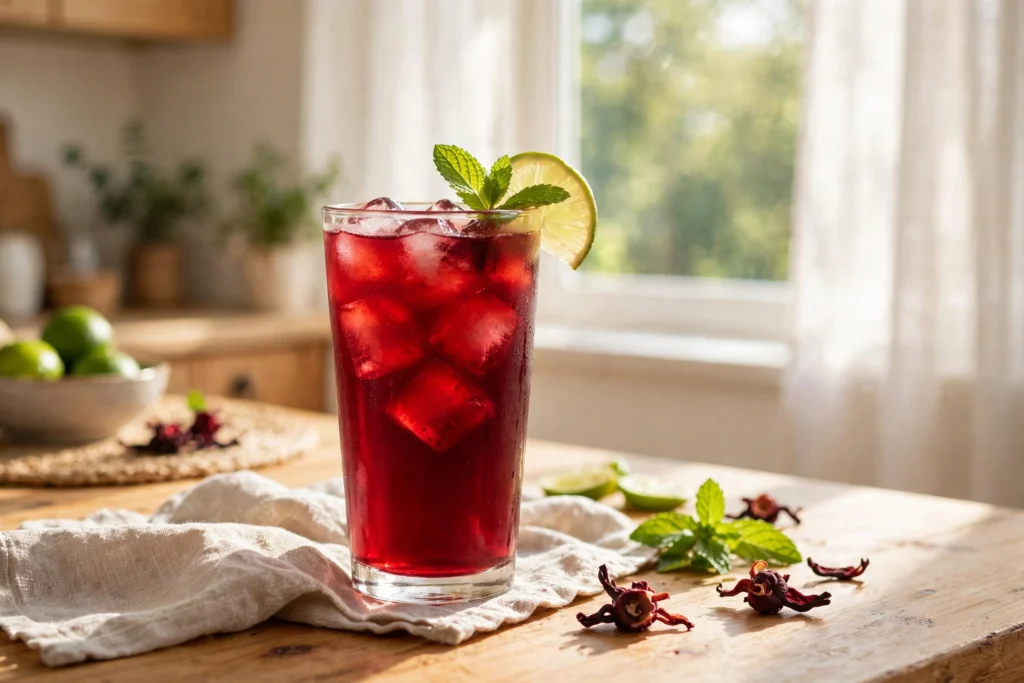
The first thing most people notice is the tartness. Hibiscus tea tastes like cranberry juice with a floral edge — bright, fruity, and a little sour, without the bitterness of black tea. What does hibiscus taste like on its own? Much the same: tart and berry-like. Unsweetened, it is bracingly tart; a spoonful of honey or sugar rounds it out. Served cold with lime and mint, it tastes like a summer drink. Anthocyanins, the pigments that make blueberries blue, give the tea its deep ruby-red hue.
Hibiscus Tea Benefits Worth Knowing
So what is hibiscus tea good for — and what does hibiscus tea do for you beyond tasting good? The honest answer is that the research is promising but modest, and this drink is a healthy habit, not a treatment.
Blood pressure is the best-studied of all the benefits of hibiscus tea. Several small clinical trials found that regular hibiscus tea can modestly lower systolic and diastolic blood pressure in adults with elevated readings. That is why “does hibiscus tea lower blood pressure” gets asked so often, and why “is hibiscus tea good for high blood pressure” is a fair question too. The effect is real but small, takes weeks of regular drinking, and never replaces prescribed medication. If you take blood pressure medicine, talk to your doctor first — the tea can add to the medicine’s effect.
Hibiscus tea is rich in vitamin C and anthocyanins, the antioxidant compounds behind its red color. These plant compounds help fight oxidative stress, which is the same reason hibiscus shows up in so many “is hibiscus tea good for you” conversations. The vitamin C also supports normal collagen production, a modest bonus for skin health.
As a drink, hibiscus tea is a smart swap. Unsweetened, it has almost no calories, counts toward your daily fluid intake, and gives you bold flavor without sugar. Some ask about hibiscus tea for weight loss — the fair answer is that the tea itself does not burn fat, but replacing a daily soda with it genuinely cuts calories. Studies on cholesterol show small improvements in some trials and no change in others, so treat that claim as possible, not proven. For a careful, referenced review, Healthline’s guide to hibiscus tea benefits lays out what is proven, what is mixed, and what comes only from animal studies.
How to Make Hibiscus Tea at Home
Learning how to make hibiscus tea takes about ten minutes, and the method is forgiving. The classic question is “how do you make hibiscus tea” — steep dried hibiscus in hot water, strain, and sweeten to taste.
You will need 2 tablespoons of dried hibiscus flowers (food-grade calyces), 2 cups of freshly boiled water, honey or sugar to taste, and, if you like, a slice of lime or orange, a mint sprig, or a thin slice of ginger.
Bring the water to a boil. Add the dried hibiscus flowers to a heat-safe pitcher and pour the boiling water over them. Steep for 5 to 10 minutes — how long to steep hibiscus tea depends on your taste, with 5 minutes giving a bright, mild cup and 10 minutes a deeper, tarter one. Strain, sweeten to taste, and serve hot, or cool and pour over ice.
That is the whole hibiscus tea recipe in its simplest form: about 1 tablespoon of dried hibiscus per cup of water, steeped 5 to 10 minutes. How to make hibiscus tea from dried flowers is the same process at any scale — a single mug or a full pitcher uses the same steps.
Hot Hibiscus Tea, the Quick Way
For a single hot cup: 1 to 1.5 teaspoons of dried hibiscus per cup, boiling water, steep 5 to 7 minutes, then strain. A slice of ginger adds warmth, and a little honey takes the edge off the tartness. This is the version to reach for on a cold evening — naturally caffeine-free, so it will not keep you up.
Iced Hibiscus Tea and Cold Brew
For iced tea, brew it double strength — twice the hibiscus for the same water — then let it cool and pour it over a tall glass of ice. That answers the “how can I make iced tea” question: stronger brew, full cool-down, plenty of ice, and citrus to finish. Cold brew hibiscus tea is even simpler: combine 1 tablespoon of dried hibiscus per cup of cold water in a jar, refrigerate 8 to 12 hours, strain, and serve. It tastes smoother and less tart, and a pitcher keeps 3 to 4 days in the fridge.
Choosing, Drying, and Storing Dried Hibiscus
Good tea starts with good dried hibiscus. Look for whole dried calyces labeled Hibiscus sabdariffa or “flor de jamaica,” sold for food use — the tea aisle of most grocery stores carries them. Where can I find hibiscus tea? Tea bags are the easiest entry point, but loose dried calyces give a stronger, fresher-tasting brew for less money.
If you grow roselle, harvest the calyces a week or two after the flower fades, while they are still plump and red. How to dry hibiscus flowers for tea: spread them in a single layer in a warm, airy spot out of direct sun for several days, or use a dehydrator on its lowest setting until crisp. Store in an airtight jar away from light — they keep for 6 to 12 months.
How Much Hibiscus Tea to Drink Each Day
How much hibiscus tea per day is sensible? For most healthy adults, one to two cups a day is the sweet spot, and the trials that found blood pressure effects typically used up to three cups daily. Can you drink hibiscus tea every day? Yes — as an unsweetened drink it fits easily into a daily routine. When is the best time to drink hibiscus tea? Whenever you enjoy it most: a morning cup, an afternoon glass over ice, or a warm mug in the evening.
Caffeine, Sleep, and Evenings
Does hibiscus tea have caffeine? No. Pure hibiscus tea is naturally caffeine-free, because it contains no true tea leaves at all — one of the few bold-flavored drinks you can enjoy after dinner. Does hibiscus tea make you sleepy? It is not a sedative — but a warm, caffeine-free cup in the evening is a genuinely relaxing ritual. One note: hibiscus tea is mildly acidic, so a strong brew on an empty stomach may bother you if you have acid reflux. A weaker cup with food is usually fine.
Hibiscus Tea Side Effects and Who Should Skip It
Hibiscus tea side effects are uncommon and usually mild — an upset stomach from a very strong brew, or a rare allergic reaction in people sensitive to plants in the mallow family. The more important cautions are about who should not drink it freely. Is hibiscus tea safe during pregnancy? Most health sources advise avoiding hibiscus in medicinal amounts while pregnant or breastfeeding. Ask your doctor about it rather than deciding from a blog post, this one included.
Blood pressure is the other big caution. If your blood pressure already runs low, or you take blood pressure or diabetes medication, hibiscus can push readings lower and can interact with some medicines, including acetaminophen. Anyone scheduled for surgery is usually advised to stop herbal drinks like this two weeks ahead. None of this makes hibiscus tea dangerous for most people — it makes it a drink to respect, like grapefruit or strong green tea, rather than a glass of water.
Why Hibiscus Tea Earns a Spot in Your Cupboard
Hibiscus tea earns its place for simple reasons: it is beautiful in the cup, it tastes like something — tart, fruity, and refreshing — and it is a genuinely healthy daily drink when you keep the sugar light and the expectations honest. Brew it hot on cold days, keep a pitcher of the iced version in the fridge all summer. If this got you curious about growing more of your own greenery indoors, our spider plant care guide is a friendly next step — a plant almost as hard to get wrong as this tea.
Does hibiscus tea have caffeine?
No. Pure hibiscus tea is naturally caffeine-free because it is made from the dried calyces of Hibiscus sabdariffa, not from true tea leaves. You can drink it in the evening without worrying about sleep.
Is hibiscus tea safe during pregnancy?
Most health sources advise avoiding hibiscus in medicinal amounts during pregnancy and breastfeeding. Ask your doctor before drinking it regularly if you are pregnant, trying to conceive, or breastfeeding.
Does hibiscus tea break a fast?
Plain, unsweetened hibiscus tea has almost no calories, so most people who fast consider it fine to drink during a fast. Adding honey or sugar adds calories and would break a fast.