The snake plant is famous for surviving neglect, but the question every new owner asks is the same: how often to water snake plant, really? The honest answer is not a number of days. In most homes it works out to every two to six weeks, and only when the soil has dried out completely. A plant in a bright, warm room in July may be thirsty in two weeks, while the same plant in a dim corner in January can go six to eight weeks without a drop. This guide gives you the seasonal schedule, the three-second soil test that replaces the calendar, and the warning signs that tell you when you have watered too much or too little.
The Short Answer: Water by Soil, Not by Calendar
A snake plant stores water in its thick, upright leaves, which is why it forgives a forgotten watering far more easily than an extra one. Overwatering kills more snake plants than every other cause combined: the roots sit in wet soil, oxygen runs out, and root rot sets in, often before the leaves show any trouble.
So the rule is simple — water only when the potting mix is dry all the way through the pot, never on a fixed day just because the calendar says so. The calendar is useful for remembering to check the soil, not a reason to water a plant that is still damp. My sister keeps hers on a sunny kitchen windowsill and waters it only when the soil feels bone dry, and hers has doubled in size in two years — proof that restraint beats routine with this plant.
A Seasonal Snake Plant Watering Schedule
| Season | How often to water | What to check first |
|---|---|---|
| Spring and summer | Every 2 to 4 weeks | Top 2 inches of soil dry |
| Fall | Every 4 to 6 weeks | Top half of the pot dry |
| Winter | Every 6 to 8 weeks | Soil dry all the way through |
In the growing season, spring through early fall, the plant is actively making new leaves and using water faster, so the interval shortens. In winter it slows down or goes nearly dormant, and the same pot of soil can stay damp for weeks. North Carolina State Extension puts it plainly in its Dracaena trifasciata profile: allow the soil to dry between waterings from spring to fall, and in winter water only every one to two months. Your home matters as much as the season: a small pot beside a bright window dries far faster than a large pot in a cool, dim bedroom.
How to Tell When Your Snake Plant Needs Water
Forget the schedule for a moment and learn the three checks. Together they answer how often do you water a snake plant better than any app reminder.
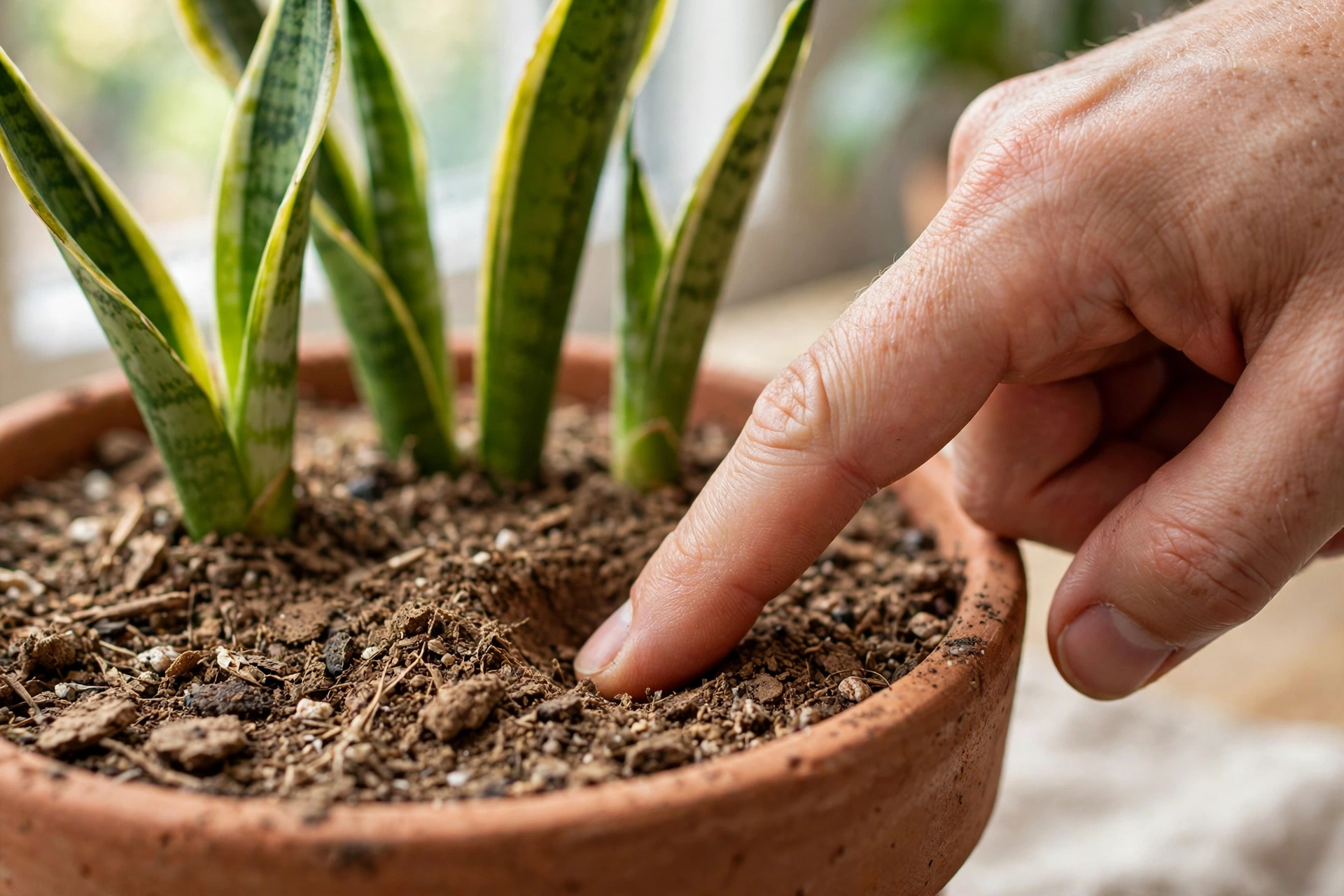
The finger test. Push your finger about two inches into the potting mix. If it comes out dry and crumbly, it is time to water. If soil clings to your finger or feels cool and damp, wait a few more days and test again. In a deep pot, a wooden chopstick or skewer pushed to the bottom works the same way: damp wood means wait.
The lift test. Pick up the pot right after watering and remember the weight. A pot that feels noticeably light has used up its moisture. After a few rounds you will know the dry weight by feel alone, and it becomes the fastest check of all.
The leaves. A thirsty snake plant shows it slowly: leaves wrinkle slightly, feel softer than usual, or curl inward at the edges, and brown, crispy tips creep in. These look very different from overwatering signs — mushy, yellow-brown leaves and a soft base. When in doubt, wait another week: this plant forgives an extra month of drought without a mark, and it does not forgive standing wet.
How Much Water to Give Each Time
When the soil is truly dry, water thoroughly, not timidly. Pour slowly and evenly over the surface until water runs freely from the drainage holes, then let the pot drain completely and empty the saucer after about fifteen minutes. Shallow sips wet only the top inch and leave the deeper roots thirsty, while a pot left sitting in a full saucer keeps the roots wet for days.
How much water a snake plant needs depends on pot size. As a rough guide, a small 6-inch pot takes about one cup, a medium 8 to 10-inch pot takes two to three cups, and a large 12-inch floor pot takes four to six cups, poured in two rounds so the mix absorbs it instead of running straight through. Room-temperature water is best; cold water can shock the roots.
Light, Pot, and Soil: The Three Things That Change Everything
Snake plant light requirements decide how fast the soil dries, which is why light and watering are really one topic. A snake plant in bright, indirect light — a few feet from a sunny window, or an east-facing window with gentle morning sun — uses water faster and may need watering every two to three weeks in summer. The same plant in low light may go five to six weeks between drinks. Snake plants tolerate low light and even survive under fluorescent office lights, but they grow slowly there and need very little water. They do not love harsh, direct afternoon sun, which can scorch the leaves, but a couple of hours of gentle direct sun is fine.
The pot matters just as much. Terracotta is porous and breathes, so soil in a clay pot dries noticeably faster than in plastic or glazed ceramic. A large pot holds more wet mix for longer than a small one, and a pot with no drainage holes is the single most dangerous setup for this plant: excess water has nowhere to go, and root rot follows.
Soil is the third piece. Snake plants want a loose, fast-draining mix — regular potting soil with about a third perlite or coarse bark mixed in works well. Dense, peaty soil straight from the bag stays wet for weeks and makes even careful watering risky. If your mix stays damp for more than a month, repot into a grittier blend in spring, choosing a pot only one or two inches wider than the old one.
Winter Watering: Less Is More
Winter is when most snake plants die from kindness. Growth slows, light drops, and cool rooms keep soil damp far longer, so the interval stretches to every six to eight weeks in a cool room, or four to five weeks if the plant sits in a warm, bright spot near a heater or sunny window. In a room below 60°F, stretching to every eight weeks is safer than following any calendar.
Two winter rules cover almost every mistake. First, never water on a schedule — check the soil, and check it deep, because the surface can look dry while the root zone is still wet.
Second, keep the plant away from cold drafts and never let it sit in a cold, wet pot; cold plus wet is the combination that rots roots fastest. Stop feeding entirely in fall and winter too — a dormant plant cannot use fertilizer, and salts build up in dry soil and burn the leaf tips. Watering in winter as often as in summer, or watering a little bit often instead of soaking thoroughly and then letting the soil dry, are the two errors behind most winter losses.
Overwatering vs Underwatering: Reading the Leaves
Most snake plant problems trace back to water, and the leaves tell you which side you are on. Mushy, translucent leaf bases, yellow-brown leaves that feel soft, or a sour smell from the pot all mean too much water. Stop watering immediately, let the soil dry out completely, and if the base is soft, unpot the plant, trim away any brown, mushy roots, and replant in fresh, dry mix.
Underwatering looks different: leaves wrinkle, feel papery, curl inward, or develop dry brown tips, and older leaves may drop. The fix is simple — a thorough soak, then back to the soil-test routine. A gap opening between the soil and the inside of the pot is another sign the mix has shrunk from dryness. If root rot has spread through the whole base, save what you can: healthy leaves can be cut and rooted in water or soil to start a new plant.
Snake Plant Basics Worth Knowing
If you are new to this plant, a few facts explain why its watering needs are so unusual. A snake plant, also called mother-in-law’s tongue and botanically Dracaena trifasciata (formerly Sansevieria trifasciata), is a succulent-like houseplant native to the dry regions of West Africa, where it evolved to survive long dry spells by storing water in its leaves. Our guide to what is sansevieria covers its background and benefits in full.
Is a snake plant a succulent? Not officially, but it behaves like one: thick, fleshy leaves, very low water needs, and a strong dislike of wet feet. Treat it like a succulent when you water, and you will rarely go wrong.
They are slow growers. Indoors a snake plant typically grows six to twelve inches a year and reaches two to four feet tall over several years, depending on the variety — compact bird’s nest types stay under a foot. With basic care they live for many years, often a decade or more, and a happy plant slowly fills its pot with new shoots, called pups, that you can divide when repotting.
Snake plants are unfussy about humidity — anything from 30 to 60 percent is fine, and misting is unnecessary. They do need drainage, though: a pot without holes, or a saucer that is never emptied, undoes every other good habit. Feed lightly, only in spring and summer, with a balanced liquid fertilizer at half strength once a month at most. And yes, snake plants can live in water: a leaf cutting rooted in a jar will grow roots, but a mature plant kept permanently in water without soil is far more prone to rot than one in a fast-draining mix, so water is best for propagation, not for long-term growing.
Where should the plant live? A bright spot with indirect light is ideal — near an east or south window, a few feet back from the glass. It also tolerates a bedroom or office corner with little natural light, where it will simply grow more slowly and need even less water. Keep it away from cold windows in winter and from heating vents that blast hot, dry air directly onto the leaves.
Final Thoughts
Learning how often to water a snake plant comes down to one habit: check the soil, then water deeply or walk away. Every two to six weeks is the honest range, with the season, the light, and the pot deciding where your plant falls inside it. Once that habit is set, this is one of the easiest houseplants you will ever own — it asks for bright light, a pot that drains, and to be left alone far more often than it asks for water.
If you are building a forgiving indoor collection, pair it with our spider plant care guide — another nearly unkillable plant with a similar easy rhythm — and if you want to see how different the answer is for a thirstier plant, our fiddle leaf fig watering schedule shows a plant that wants water every week. Start with the snake plant, and the rest of the collection follows naturally.
How often should I water my snake plant in winter?
In winter, water a snake plant only when the soil is completely dry, usually every six to eight weeks in a cool room, or every four to five weeks in a warm, bright spot. Growth slows in winter, so the soil stays damp far longer — always check the soil deep in the pot before watering, and never water on a summer schedule.
How do I know if my snake plant needs water?
Push your finger about two inches into the soil — if it feels dry and crumbly, it is time to water. A pot that feels noticeably light when lifted is another reliable sign, and slightly wrinkled or soft leaves mean the plant is drawing on its stored water. If the soil still feels damp, wait a few more days.
Can snake plants live in water?
A snake plant leaf cutting can root and grow in water, so short-term water propagation works well. But a mature plant kept permanently in water is far more prone to rot than one in a fast-draining soil mix, so water is best for starting new plants, not for long-term growing.