A car dehumidifier is one of the cheapest fixes for foggy windows, damp seats, and that stale, musty smell that greets you on cold mornings. It is a small moisture absorber — usually a bag or canister of silica gel, a tub of calcium chloride, or a tiny 12V electric unit — that quietly pulls water vapor out of your cabin air while the car sits parked. It will not fix a leak or dry a flooded footwell on its own, but for everyday condensation it works surprisingly well, and it costs less than a tank of gas.
My sister kept a spare towel on her passenger seat all last winter just to wipe the inside of her windshield every morning, until a ten-dollar silica bag on the dashboard ended the ritual.
Why Your Car Gets Damp in the First Place
Condensation on the inside of a windshield is the same physics as a cold drink sweating on a summer day. Warm, moist air inside the car meets cold glass, and the water vapor turns into droplets. The moisture comes from everyday sources: wet shoes and coats, a spilled coffee, damp floor mats, and even your own breathing on a cold morning. Add a small leak — a worn door seal, a clogged sunroof drain, a cracked trunk seal — and the dampness never really leaves.
The problem is worst when the car sits parked overnight. The cabin cools, the glass gets colder than the air, and moisture in the seats and carpet slowly evaporates into the air, then condenses on the glass. That is why condensation inside a car when parked can be heavy even on a dry night, and why winter mornings are the worst: cold glass, damp mats from snow and slush, and a heater that has not run for hours.
What a Car Dehumidifier Does
A car dehumidifier does one simple job: it absorbs water vapor from the cabin air, a little at a time, so there is less moisture available to condense on the glass. The air inside a midsize car is only about 110 to 119 cubic feet, and at warm, humid conditions it holds roughly two ounces of water vapor. That sounds tiny, but the dampness keeps coming — it evaporates out of the seats and carpet night after night — so a steady absorber matters more than a powerful one.
Does your car already have a dehumidifier? In a way, yes: your air conditioning dehumidifies while it cools, which is why running the AC with the heat on clears a foggy windshield faster than heat alone. The catch is that the AC only works while the engine runs. A car dehumidifier works while the car is parked, which is exactly when the fog forms.
The Three Types of Car Dehumidifiers
Every dehumidifier for cars on the market falls into one of three types, and the type matters more than the brand. A sealed silica canister cannot spill, a calcium chloride tub can, and a 12V electric unit can drain your battery. Here is how they compare.
| Type | How it works | Best for | Watch out for |
|---|---|---|---|
| Reusable silica gel bag or canister | Silica beads trap moisture; recharge in a microwave or oven | Daily drivers, dashboards, under seats | Needs recharging every few weeks |
| Calcium chloride (DampRid and similar) | Crystals absorb moisture and dissolve into brine | Stored cars, trunks, damp garages | Brine can spill if tipped; replace when full |
| 12V electric (Peltier) | Cools a plate so vapor condenses into a tank | Cars with power to spare, humid climates | Drains the starting battery overnight |
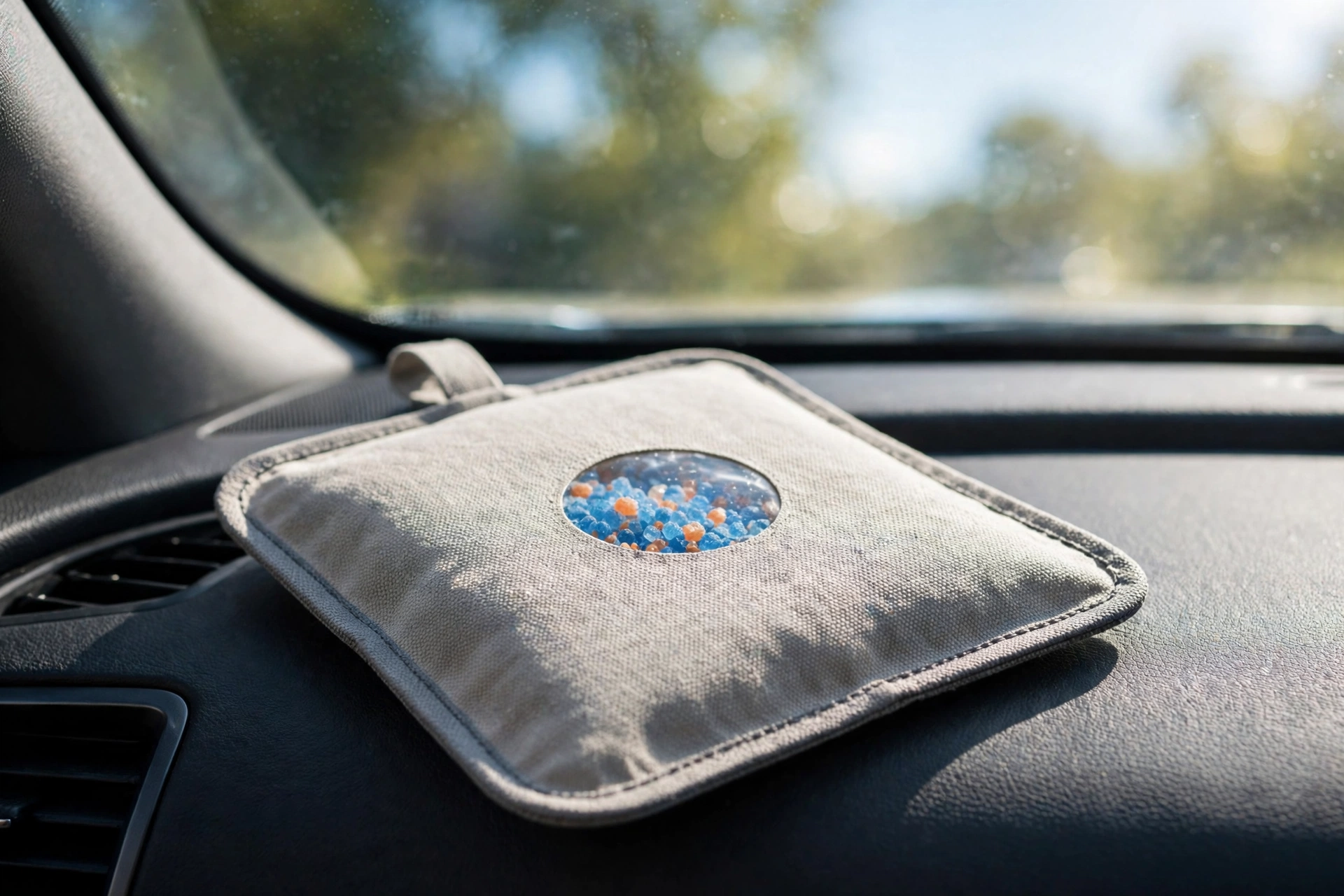
A car dehumidifier bag is the simplest option and the one most drivers should start with. A pouch of silica gel sits on the dashboard, under a seat, or in a door pocket and silently absorbs moisture for weeks. When the indicator beads turn pink, you recharge it — usually a few minutes in the microwave — and use it again. A portable dehumidifier for a car like this needs no power, makes no noise, and cannot leak, which is why it suits a daily driver.
Calcium chloride absorbers such as DampRid for cars pull in more moisture than silica and last up to 60 days per tub, but they turn into salty liquid as they work. That makes them better for a stored car or a trunk than for a dashboard, where a sharp stop could tip brine onto upholstery. Keep them upright, out of reach of children and pets, and replace them when the crystals are gone.
A 12V dehumidifier is a small electric unit that plugs into the cigarette lighter socket and collects water in a tank. An auto dehumidifier like this works faster than a passive bag, but it draws roughly 1.5 to 2 amps, which can flatten a starting battery if left running overnight. Use it only while driving or on a separate power supply, never parked overnight on the car battery.
Do Car Dehumidifiers Really Work
Yes — with honest limits. A car dehumidifier keeps a dry car dry: it cuts morning fog, slows musty smells, and protects leather and electronics from constant damp. What it cannot do is dry out a soaked carpet or beat an active leak. If your footwell is wet after rain, a bag on the dashboard is not the fix; find the leak first, remove the bulk water with towels or a wet-dry vacuum, and only then let the absorber handle the leftover damp.
Will a dehumidifier dry out wet carpet in a car? Partly. Once the standing water is gone, an absorber plus ventilation will pull the remaining moisture out of the carpet over several days. Speed it up by running the heater with the AC on and the windows cracked a little on a dry day. Expect days, not hours: a single bag absorbs a few ounces at a time, and a soaked carpet can hold far more than that.
Where to Put a Car Dehumidifier for the Best Results
Placement is simple: put the absorber where the damp air collects and where it will not slide around. The dashboard works well for a silica bag because sunlight helps it work and you can see the indicator, but never let it block your view of the road. Under the front seat is the safest spot for a canister, and the trunk or parcel shelf suits a second unit if you carry wet gear or store the car for weeks.
One unit is enough for most sedans; use two for an SUV, van, or truck — one up front and one in the back. A moisture absorber for a car works best with the windows closed and the cabin sealed, so the dry air stays inside. And wherever you put it, secure it: a canister rolling under the brake pedal is a real hazard.
How to Dehumidify a Car Step by Step
If your car is already damp, a bag alone is not enough. Work through these steps in order:
- Take out the bulk water. Towel-dry the seats and mats, and use a wet-dry vacuum on soaked carpet.
- Find the leak. Check door seals, sunroof drains, and the trunk seal, and fix what lets water in.
- Air it out. On a dry day, open the doors, run the heater with the AC on and fresh air selected, and let the cabin dry for an hour.
- Place your car moisture absorber. One silica bag on the dashboard or under a seat is enough for most cars.
- Keep it dry. Recharge or replace the absorber on schedule, and check the mats after wet weather.
This is also how to get rid of humidity in a car for good, rather than fighting the same fog every morning: remove the water, fix the entry point, and then maintain the dryness with an absorber.
Getting Moisture Out of a Car in Winter
Winter is when a car dehumidifier earns its keep. Snow melts off boots onto the mats, the glass stays cold for hours, and the heater only runs while you drive. To get moisture out of a car in winter, shake snow off your shoes before getting in, keep a spare set of rubber mats, and run the AC with the heat for the first ten minutes of every drive — the AC strips moisture even in cold weather. A silica bag works more slowly in the cold, so recharge it more often in January and February, and wipe the inside of the glass once so the absorber starts from dry, not wet.
If frost forms on the inside of the windshield, that is condensation that froze overnight. Never pour hot water on it; let the defroster and the AC do the work, and crack a window a finger’s width when you park in a garage to let damp air escape.
Recharging and Replacing a Car Dehumidifier
A reusable silica unit tells you when it is full: the indicator beads change color, usually from blue to pink. Recharge it exactly as the manual says — most bags take a few short rounds in the microwave, while canisters plug into a wall outlet for several hours. A calcium chloride tub is done when the crystals have dissolved; tip the brine out carefully, following local disposal rules, and start a fresh one. A 12V unit just needs its tank emptied every day or two. How long does it take to dehumidify a car? A foggy cabin usually clears noticeably within a few days of steady use, and a damp carpet can take a week or more — patience beats a bigger unit.
Mistakes That Waste Money and Flatten Batteries
The most expensive mistake is running a 12V electric dehumidifier overnight on the starting battery. It can leave you with a dead car in the morning, so treat plug-in units as driving-only tools. The second mistake is putting a full-size home dehumidifier in a car: you can run a small one from an inverter while parked with the engine on, but it is bulky, it needs mains power or a running engine, and it is unsafe loose in a moving car. A passive bag is the right tool for a cabin this small.
The third mistake is scale. A cabin absorber cannot dehumidify a garage: a two-car garage holds hundreds of times more air than a cabin, so if the garage itself stays damp, the car will too. For a damp garage, a full-size unit is the answer — see our guide to a whole house dehumidifier for sizing and costs — and the same sealed-space logic that dries a crawl space applies to a stored car in a damp garage.
When Dampness Means a Bigger Problem
A dehumidifier handles everyday moisture, but some dampness is a symptom. A musty smell that returns within days, visible mold on seats or seatbelts, or a carpet that stays wet after a dry week all point to a leak or hidden mold. Clean any visible mold first — a dehumidifier prevents mold, it does not cure it — and for the EPA’s own mold and moisture guidance, see the U.S. EPA guide to mold, moisture, and your home. Our guide to a dehumidifier for mold explains the same prevention rules for the house, and they apply to a car too: fix the water, clean the growth, then keep it dry.
Final Thoughts
A car dehumidifier is a small, cheap tool that solves a daily annoyance: foggy glass, damp seats, and stale air. Pick a reusable silica bag for a daily driver, a calcium chloride tub for a stored car, and skip the 12V unit unless you have power to spare. Dry the car out once, fix any leak, and let the absorber keep it dry — your windshield will thank you every cold morning.
If the dampness follows you indoors, the same rules apply at home: a dehumidifier for mold keeps damp rooms below the humidity where mold grows, and a dehumidifier for crawl space protects the dampest space in the house.
Do car dehumidifiers work?
Yes, for keeping a dry car dry. A silica bag or canister steadily absorbs moisture from the cabin air, which cuts morning fog on the windshield and slows musty smells. It will not dry a soaked carpet or fix an active leak — remove the bulk water and fix the leak first.
Can I put a dehumidifier in my car?
Yes. A small passive unit such as a silica gel bag or canister is safe in a car and needs no power. Avoid running a 12V electric unit overnight on the starting battery, and do not put a full-size home dehumidifier loose in a moving car.
What is the best car dehumidifier?
For most drivers, a reusable silica gel canister or bag is the best car dehumidifier: it cannot spill, it recharges in minutes, and it costs little. For a car in long-term storage, a calcium chloride tub absorbs more moisture per unit. Choose by how you use the car, not by the biggest capacity number.