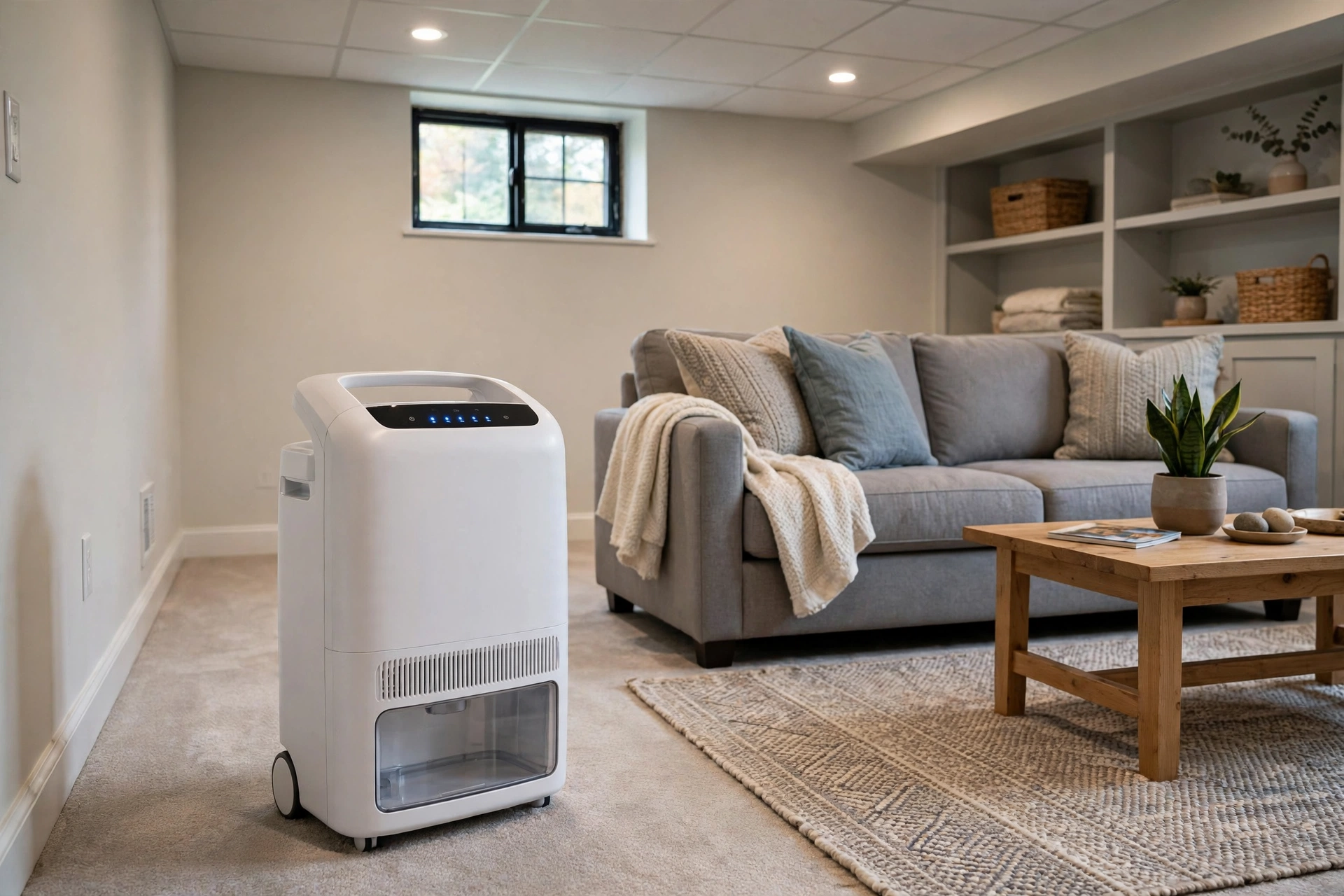
A dehumidifier for bathroom use is one of the simplest fixes for a room that never seems to dry out. Every hot shower fills a small, enclosed space with steam, and when that moisture has nowhere to go, it settles on mirrors, grout, ceilings, and towels. Over time, that dampness turns into mold spots, peeling paint, and a musty smell that no air freshener can hide.
The good news is that most bathrooms are small, so they do not need a big, expensive machine. A compact unit, used alongside a working exhaust fan, can hold humidity in the healthy 30 to 50 percent range recommended by the U.S. Environmental Protection Agency. This guide explains when a bathroom dehumidifier makes sense, what size you need, which type fits your bathroom, and how to use one safely.
Do You Need a Dehumidifier in Your Bathroom?
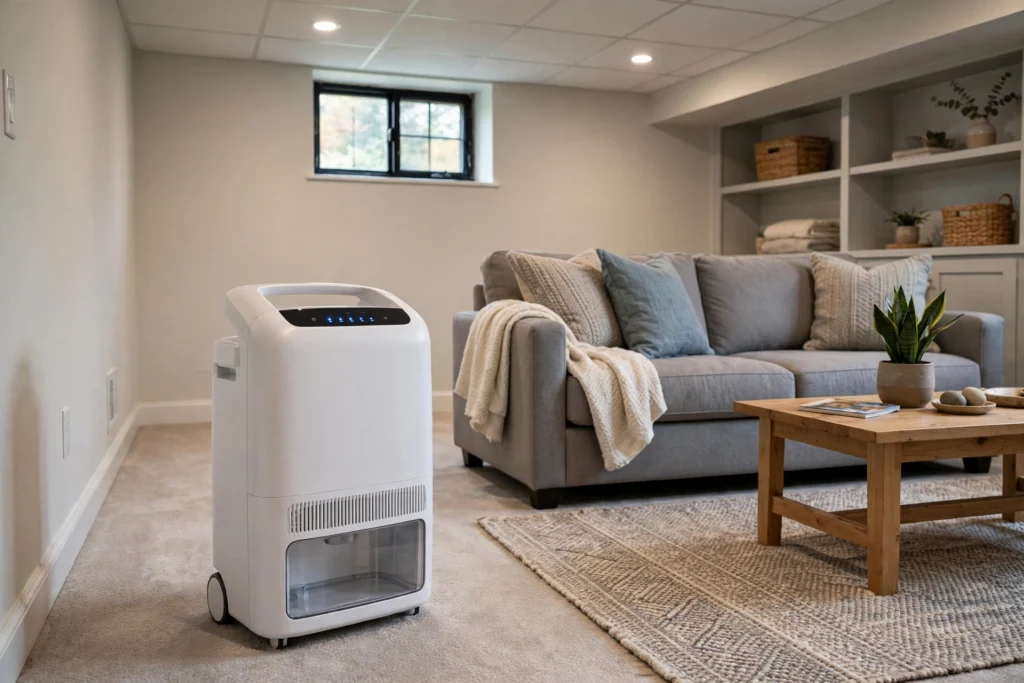
Not every bathroom needs one, but many show clear warning signs. If your mirror stays foggy long after a shower, that is trapped moisture. Black or pink spots on grout, caulk, or the ceiling mean mold and mildew already have what they need to grow. Peeling paint, warped wood trim, and towels that never fully dry between uses all point the same way.
A cheap hygrometer from a hardware store gives you a number instead of a guess. If your bathroom regularly reads above 60 percent humidity, a dehumidifier for bathroom moisture is worth considering. Windowless bathrooms and bathrooms with weak or missing exhaust fans are the most likely candidates.
Exhaust Fan First, Dehumidifier Second
Here is the honest order of operations: fix the exhaust fan first, then add a dehumidifier if the room still stays damp. A fan removes steam at the source, during and right after a shower, which no small machine can match. Run it during your shower and for about 20 minutes afterward, and make sure it vents outside, not into the attic.
A dehumidifier handles the lingering moisture the fan leaves behind. That is exactly where it earns its place: in a bathroom with a weak fan, no window, or heavy daily use, humidity creeps back up between showers. Used together, the fan and the dehumidifier keep the room dry around the clock instead of damp for hours each day.
What Size Dehumidifier for Bathroom Use?
Most bathrooms are under 100 square feet, so sizing is simpler than for a basement or a whole house. A mini dehumidifier that covers 150 to 250 square feet is usually enough for a standard bathroom or powder room. These small units pull roughly 8 to 16 ounces of water a day, which matches the leftover moisture after a fan has done the heavy work.
A larger master bathroom, a bathroom combined with a laundry area, or a room with no fan at all may need more power. In that case, look at a portable compressor unit rated around 20 to 30 pints per day. When in doubt, size up slightly: an undersized unit runs nonstop and still leaves the room damp.
Types of Bathroom Dehumidifiers
A small dehumidifier for bathroom counters and shelves usually uses thermoelectric, or Peltier, technology. These units are quiet, light, and cheap, often under $50, but they remove moisture slowly and suit only small, enclosed spaces.
A portable dehumidifier for bathroom use in a larger or very damp room is usually a compressor model. It costs more and takes up floor space, but it pulls far more water per day and works better in a master bathroom. Desiccant models use a rotating absorbent wheel instead of cold coils, so they keep working in cool rooms where compressor models slow down. Non-electric silica gel absorbers need no power at all, but they only suit tiny spaces like a cabinet, and they must be recharged regularly.
Best Dehumidifier for Bathroom: What to Look For
When you compare the best dehumidifier for bathroom use, start with a built-in humidistat, which lets you set a target humidity and lets the unit switch itself off when it gets there. Auto shut-off when the tank fills is essential, unless you choose a model with a drain hose. A continuous drain hose, run downhill to a tub or sink, means you never have to empty a bucket by hand.
Check the noise rating if the bathroom sits next to a bedroom, since some compressor models hum noticeably. An Energy Star model uses less electricity per pint of water removed, which matters if the unit runs daily. Finally, look for a washable filter and a tank you can reach and clean easily, because a neglected tank grows exactly the mold you bought the machine to fight.
Dehumidifier for Bathroom Mold: Will It Actually Stop Mold?
A dehumidifier for bathroom mold prevention works, but it is important to understand what it can and cannot do. Mold needs moisture to grow, and holding humidity below 60 percent, ideally between 30 and 50 percent, removes that ingredient. That stops new growth and slows existing mold, which is a real win for grout, ceilings, and caulk.
It will not, however, remove mold that is already there. Clean visible patches first with detergent and water, dry the surface completely, and fix any leak feeding the problem. My cousin kept scrubbing black spots off her bathroom ceiling every few months, until a small dehumidifier and a habit of running the fan after every shower finally broke the cycle. For the EPA’s own mold and moisture guidance, see the U.S. EPA guide to mold, moisture, and your home.
Where to Place It Safely
Safety matters more in a bathroom than in any other room, because water and electricity share a small space. Always plug the unit into a GFCI-protected outlet, which shuts off power instantly if it detects a fault. Keep the dehumidifier away from the tub, shower, and sink, where splashes can reach it, and never place it where it could fall into water.
Give the unit 12 to 18 inches of clearance from walls and furniture so air can flow in and out freely. If your bathroom has no safe outlet placement, a practical alternative is to run the dehumidifier just outside the bathroom with the door open after a shower. It still pulls damp air from the room, without sitting in the wettest spot in the house. Always check the manufacturer’s manual first, since some models warn against very humid rooms.
How to Use and Maintain Your Bathroom Dehumidifier
Daily use is simple: run the unit after showers until humidity drops to 30 to 50 percent, then let the humidistat take over. Empty the tank before it fills, or set up the drain hose so you never have to think about it. A full tank stops the machine, and standing water in a dirty tank can grow mold.
Clean the filter every two to four weeks during heavy use, and wipe the tank monthly to prevent slime. Check the drain hose for kinks or clogs every few months, and give the coils a gentle clean at the start of the humid season. For a deeper maintenance routine, our guide to cleaning a dehumidifier explains the full schedule.
Dehumidifier vs Bathroom Fan: Which Is Better?
A fan and a dehumidifier do different jobs, so the honest answer is that they work best together. A fan vents steam outside quickly during and after a shower, but it does nothing once it switches off. A dehumidifier keeps working quietly in the background, holding humidity down between showers and overnight.
If you can only have one, keep or fix the fan first, since it is cheaper and removes the biggest burst of moisture. If your bathroom has no fan, no window, or no outside vent, a dehumidifier becomes the main tool instead of the backup. In a damp basement, the same logic applies on a bigger scale, as our guide to basement moisture control explains.
Frequently Asked Questions
Can you put a dehumidifier in a bathroom?
Yes, with sensible precautions. Use a GFCI-protected outlet, keep the unit away from splashes and direct water, and check the manufacturer’s guidance for your model. If no safe spot exists inside the room, run it just outside with the door open.
Do dehumidifiers work in bathrooms?
Yes. They pull excess moisture from the air, which lowers humidity, reduces condensation on mirrors and walls, and makes it much harder for mold and mildew to grow. They work best alongside a working exhaust fan.
Can a dehumidifier replace a bathroom fan?
Not fully. A fan removes steam fast during a shower, while a dehumidifier maintains low humidity over time. Together they give the best result, but a dehumidifier alone is a good option for a bathroom with no outside vent.
How long should I run a dehumidifier in the bathroom?
Run it for two to four hours after a hot shower, or until humidity falls back to 30 to 50 percent. A model with a humidistat can be left to switch itself on and off automatically, which saves electricity.
What size dehumidifier do I need for a small bathroom?
A mini unit covering 150 to 250 square feet is enough for most small bathrooms. For a large master bathroom or a room with no fan, step up to a portable compressor model rated around 20 pints per day.
Will a dehumidifier get rid of mold?
It prevents new mold by removing the moisture mold needs, but it does not clean existing mold. Scrub visible mold off hard surfaces first, dry the area completely, and let the dehumidifier stop it from coming back.
Final Thoughts
A dehumidifier for bathroom dampness is a small purchase that solves a stubborn daily problem. Fix the fan first, size the unit to your room, place it safely away from water, and keep the filter and tank clean. Do that, and mirrors clear faster, grout stays cleaner, and the musty smell stops coming back.
If dampness reaches beyond one bathroom, a single system may serve the whole house better, as our complete whole house dehumidifier guide explains.