Your couch is probably the hardest-working piece of furniture in your home — and the one that gets cleaned the least. Crumbs, pet hair, skin oils, and mystery stains build up quietly until one day the sofa looks tired and smells a little… lived-in. The good news: proper couch cleaning at home is not hard, not expensive, and does not require a professional for most sofas. You just need the right order of steps — because with upholstery, the sequence matters more than the scrubbing.
This guide walks you through the exact routine: how to read your couch’s cleaning code, how to deep clean fabric and cushions, how to get stains and smells out, when steam is worth it, and the honest answer to when you should call a professional instead.
My neighbor swore her gray sofa was “just a dark gray now” — one proper deep clean later, it turned out the original color was light silver. The dirt had simply moved in gradually.
Step 1: Read the Cleaning Code Before Anything Touches Your Couch
Every sofa hides a secret, and it is printed on the tag under the cushions or along the bottom frame: a cleaning code that tells you exactly what your fabric can handle. Skip this step and even plain water can leave permanent rings.
- W — Water-based cleaners are safe. Most fabric sofas are W or WS.
- S — Solvent-based cleaners only. Water will stain this fabric.
- WS — Either water-based or solvent cleaners are fine.
- X — Vacuum or brush only. No liquids at all — professional cleaning recommended.
No tag? Test any cleaner on a hidden patch (the back, low near the floor) and wait 10 minutes. If the color holds and no ring forms, proceed. This two-minute habit is the difference between couch cleaning and couch ruining — and it leads straight into the step most people rush.
Step 2: Vacuum Like You Mean It
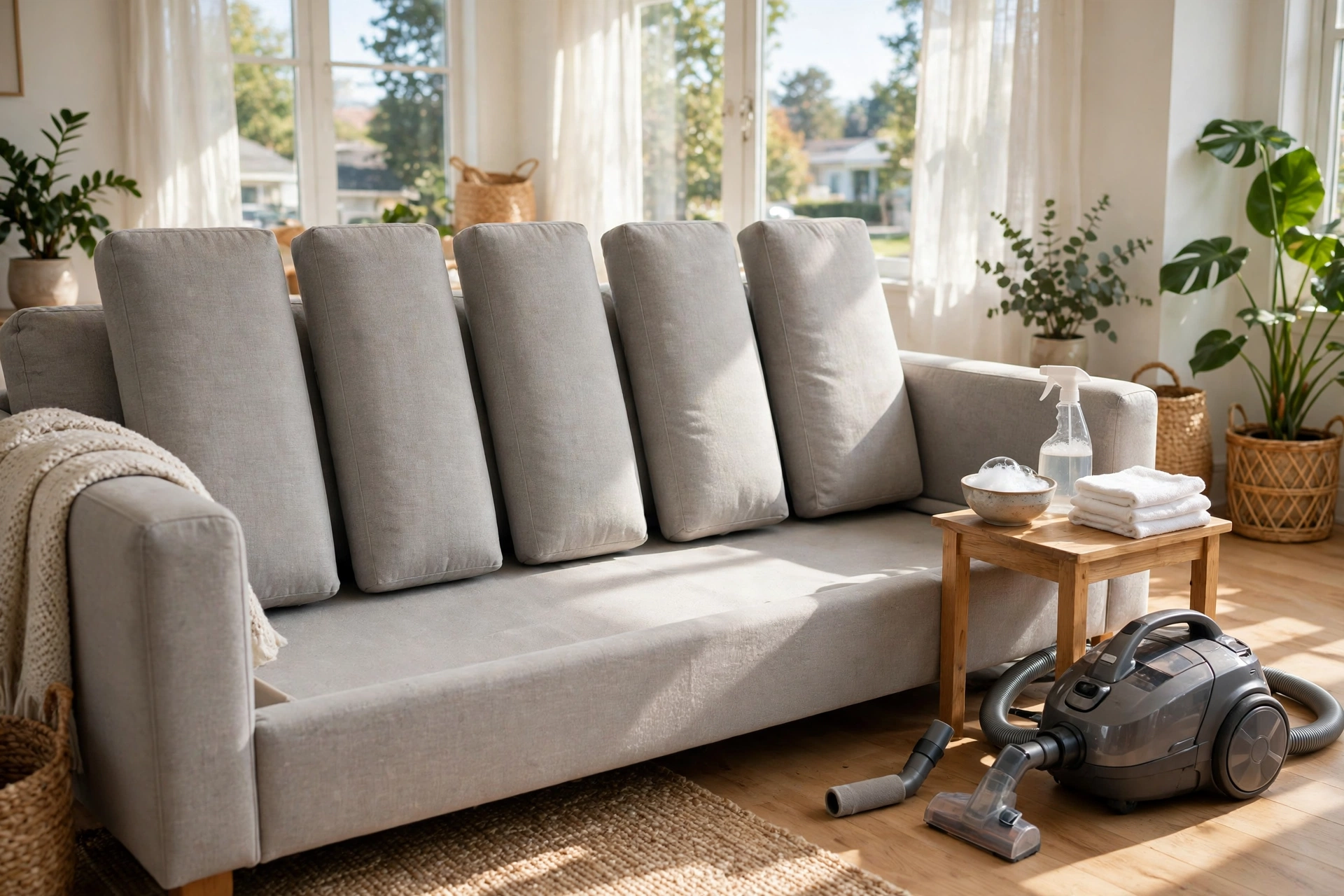
Loose dirt plus water equals mud, and mud ground into fabric becomes a stain you created yourself. So before any liquid appears, vacuum the whole couch slowly with the upholstery attachment: cushions (all six sides), seat backs, armrests, and deep into the crevices where coins and crumbs retire. A stiff brush run over the fabric first loosens embedded grit and pet hair the vacuum would skate over.
Removable cushions? Take them outside and give each one a few firm pats — you will be surprised what falls out. Now the surface is ready for the cheapest miracle in this whole guide.
Step 3: Deodorize With Baking Soda (The 30-Minute Reset)
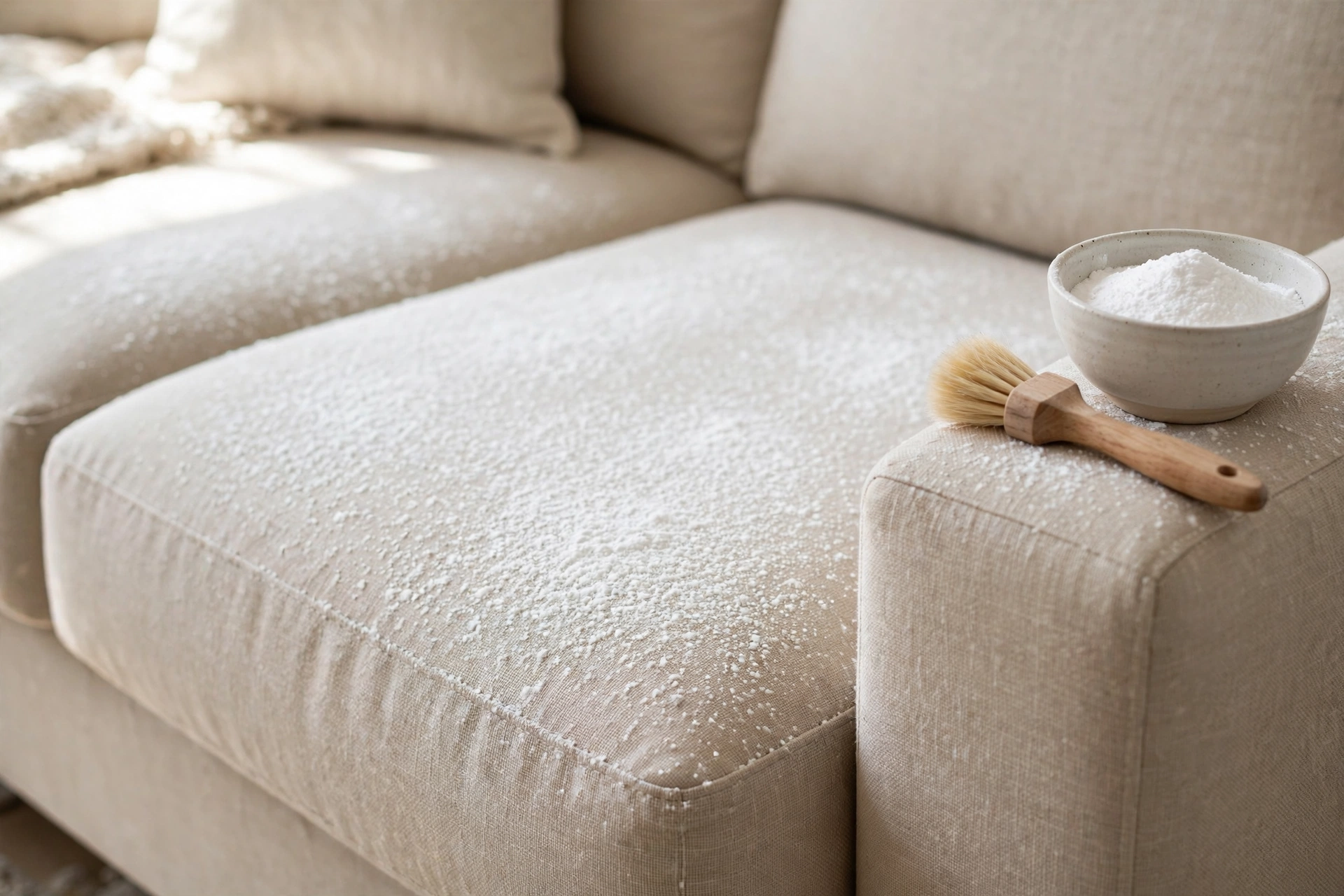
Sprinkle plain baking soda to clean couch odors — generously, over every fabric surface, and let it sit for at least 20–30 minutes (an hour is better; overnight is best for pet smells). Baking soda absorbs moisture and neutralizes the acids that make a sofa smell stale, and it even loosens light surface grime. Vacuum it all up slowly.
Honest limit: baking soda handles smells and surface freshness, not ground-in dirt or visible stains. For those, you need the main event.
Step 4: Deep Clean a Fabric Couch (W and WS Fabrics)
Here is the best way to clean a couch with water-safe fabric — the method behind most professional results:
- Mix the solution: 1 teaspoon of mild dish soap in 1 cup of warm water, whipped to a foam. You will mostly use the suds, not the liquid — less water in the fabric means faster drying and no rings. (A homemade upholstery cleaner alternative: 2 cups warm water + 2 tablespoons white vinegar + 2 tablespoons baking soda + a few drops of natural soap.)
- Work in sections: one cushion or panel at a time. Dip a clean white cloth in the suds and blot and lift — never rub in circles, which shreds fibers and drives stains deeper.
- Rinse with a second cloth: dampen a fresh cloth with plain water and blot away soap residue. Leftover soap is sticky and attracts new dirt within weeks — the reason many “cleaned” couches look dirty again so fast.
- Dry completely: press a dry towel over each section, then air-dry with a fan or open windows. Expect 6–12 hours before the couch is fully dry and back in service.
For S-code fabrics, swap the suds for a solvent upholstery cleaner or rubbing alcohol lightly misted from a spray bottle, blotted the same way. And whatever your code, the cushions deserve their own strategy — they take the most abuse and hide the most dirt.
How to Clean Couch Cushions (Without Ruining Them)
How to clean couch cushions depends on one thing: do the covers come off?
- Removable covers: check the tag — many are machine washable on a cold, gentle cycle. Wash inside-out, zip them closed first, and put them back on slightly damp so they stretch smoothly instead of shrinking small. Air-dry only.
- Fixed cushions: clean them in place with the suds method above, working top-down, and prop them upright against the couch frame afterward so air circulates on all sides while drying.
- The foam inside: if the insert itself smells, sprinkle it with baking soda for a few hours outdoors in shade, then vacuum. Never soak foam — it takes days to dry and can mildew.
Cushions sorted, one enemy remains: the stain that has been staring at you since last Thanksgiving.
Getting Stains Out of a Couch (By Type)
How do you get stains out of a couch without spreading them? Blot from the outside edge inward, work fast on fresh spills, and match the treatment to the stain:
- Food and drink: lift solids, blot, then suds method. Coffee and wine respond to a vinegar-water spray before the soap.
- Grease and body oils (armrests, headrests): sprinkle baking soda or cornstarch, wait 15–20 minutes to draw the oil out, vacuum, then suds.
- Pet accidents: blot thoroughly, then use an enzyme cleaner — it breaks down the proteins that cause both the stain and the smell that invites repeat accidents. Regular soap alone will not do this.
- Ink: dab rubbing alcohol on a cloth and blot gently; never pour it on.
Stains clean, the couch looks new — but is it actually clean? After flu season or with babies and pets on board, looks are not the whole story.
How to Disinfect a Couch (After Illness, Babies, or Pets)
To disinfect a couch safely, match the method to the fabric code again. Steam (below) is the most fabric-friendly disinfectant for W/WS fabrics — heat above 200°F kills most bacteria, viruses, and dust mites without chemicals. For a non-steam option, lightly mist 70% rubbing alcohol on S-safe fabrics, or use a fabric-safe disinfectant spray rated for upholstery, and let it dry fully before sitting. Never use bleach on upholstery, and never soak — disinfecting needs a light, even mist, not a bath.
Steam Cleaning a Couch: When It Is Worth It
A steam cleaner for couch use is the closest DIY gets to professional extraction: steam loosens embedded grime, lifts odors, and sanitizes in one pass. Use it only on W/WS fabrics, keep the head moving slowly, and do not oversaturate — short passes, then let each section dry. A handheld garment steamer works for small areas and cushions. If you do not own one, rental machines with upholstery attachments are the budget bridge between DIY and hiring a pro — which raises the obvious question.
DIY vs Rental vs Professional Couch Cleaning Services: An Honest Comparison
Most couch cleaning guides either sell you a service or pretend DIY always wins. The truth:
- DIY (this guide): nearly free, 1–2 hours. Best for routine deep cleans, W/WS fabrics, and homes that clean every few months.
- Rental machine: roughly $30–50 a day. Best when the whole living room set needs extraction and you are comfortable managing the drying time.
- Professional upholstery cleaning services: typically $100–200 per sofa depending on size and fabric. Worth it for X-code and delicate fabrics, antique pieces, severe pet damage, or when your time costs more than the invoice.
Leather owners, one short detour before the finish line.
Leather and Suede Couches: Different Rules
Leather is not fabric: skip the suds bath. Dust it, wipe with a cloth barely dampened with water and a drop of mild soap, then apply a leather conditioner every 6–12 months to keep it from drying and cracking. Suede and microsuede want a dry approach — a suede brush, a white vinegar dab for spots, and no soaking, ever. When in doubt, these two materials are where professional couch cleaning earns its price.
How Often Should You Do Couch Cleaning?
- Vacuum: weekly (crevices monthly)
- Baking soda refresh: monthly, or whenever odors creep in
- Deep clean: every 6 months; every 3–4 months with pets, kids, or allergies
- Spot clean: immediately — fresh stains are 10-minute jobs, old ones are projects
And if your couch sits on a rug, the same schedule logic applies to it — our rug cleaning guide and carpet cleaning techniques pair perfectly with a couch-cleaning day. Shopping for a machine instead? Our carpet cleaner buying guide covers upholstery tools too.
Couch Cleaning FAQs
What is the best way to clean a couch at home?
Read the tag code, vacuum thoroughly, deodorize with baking soda, then blot-clean with dish-soap suds (W/WS fabrics) and rinse-blot with plain water. Dry fully with a fan. That sequence handles 90% of home couch cleaning.
Can I use a carpet cleaner on my couch?
Yes, if it has an upholstery attachment and your fabric code is W or WS. Use the lowest water setting, keep passes short, and plan for 6–12 hours of drying.
How do I clean a couch that smells like dog?
Baking soda overnight, vacuum, then an enzyme cleaner on the cushion areas where the dog actually lies. Repeat weekly for a month — pet odor lives deep in foam and needs consistency, not one heroic session.
Will vinegar damage my couch?
On W/WS fabrics, diluted white vinegar is a safe, effective cleaner and deodorizer — always spot-test first. Avoid vinegar on S-code fabrics and use extra care on silk or antique upholstery.