Intro
Dining room decor is the difference between a room you walk past and a room you actually live in. For years, many dining rooms sat formal and untouched, saved for holidays while everyday meals happened at the kitchen counter. In 2026, that has changed: homeowners are turning them into warm, everyday spaces with layered lighting, natural textures, and tables that invite people to sit down and stay a while.
This guide covers the dining room decor ideas that work right now: paint colors, statement lighting, table styling, wall decor, and small-space tricks. No designer budget or full renovation needed — a few deliberate changes can turn a stiff, rarely used room into the most welcoming spot in the house.
How to Decorate a Dining Room
Start with how you actually use the room, not how it looks in a magazine. A family that eats together nightly needs durable surfaces and comfortable chairs; a room used mainly for hosting needs flexible seating and a stretchable table. Write down the room’s real job first, and every later choice gets easier.
Measure before you buy anything. Leave at least 36 inches of clearance around the table so chairs can pull out and people can walk behind them, and aim for 42 to 48 inches if you have the space. A rug should extend 24 inches beyond the table on every side so chairs stay on it when pulled out. These two measurements prevent the most common dining room decor mistakes before you spend a dollar.
Then pick one style direction and repeat it three times. If you love warm modern style, echo it in the light fixture, the chair fabric, and one piece of art. Repeating a material, color, or shape is what makes a room feel designed instead of assembled from random sale items.
Dining Room Decor Colors for 2026
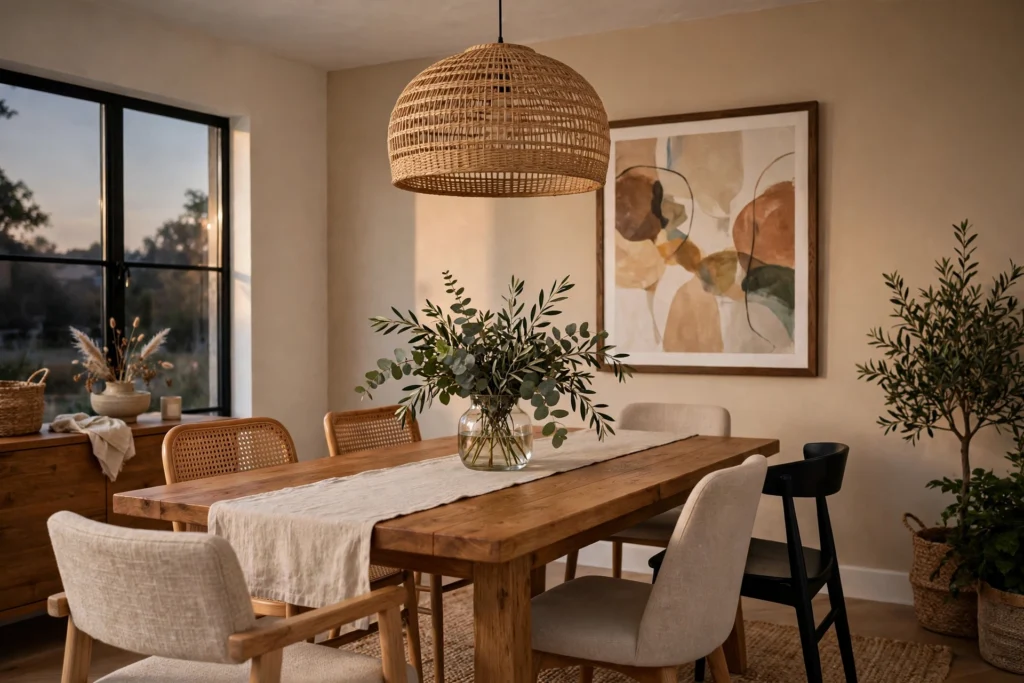
Color is doing the heavy lifting in dining room decor this year, and the shift is clearly toward warmth. Cool gray walls and all-white rooms are fading, replaced by soft clay, warm greige, oatmeal, and toasted almond tones that feel grounded and cozy.
Nature-inspired accents are the second big move: muted sage, dusty blue, and terracotta on accent walls, upholstered chairs, and table linens. Because dining rooms are mostly used in the evening, they are also one of the few rooms where a deep, moody color genuinely works — forest green, ink blue, chocolate brown, and burgundy add drama after dark without feeling heavy during the day.
Statement Lighting Changes Everything
If you change only one thing in your dining room, change the light. A statement chandelier or a row of sculptural pendants draws every eye to the center of the table and sets the mood for the whole room. In 2026, designers favor woven rattan, mixed metals, curved glass, and oversized globes over the matched-set fixtures of the last decade.
Size matters more than style. A chandelier should be about one-half to two-thirds the width of your table and hang 30 to 36 inches above the tabletop. Too high and the room feels disconnected; too low and it blocks sightlines. For a long table, two or three smaller pendants spaced evenly often beat one large fixture.
Add a dimmer switch if you can. Bright light suits homework and board games, while a low warm glow turns the same table into a dinner-party setting. Layer in wall sconces or a small lamp on the sideboard so the room stops relying on a single overhead bulb. For more designer-approved ideas, see the Homes & Gardens guide to dining room ideas.
How to Decorate a Dining Room Table
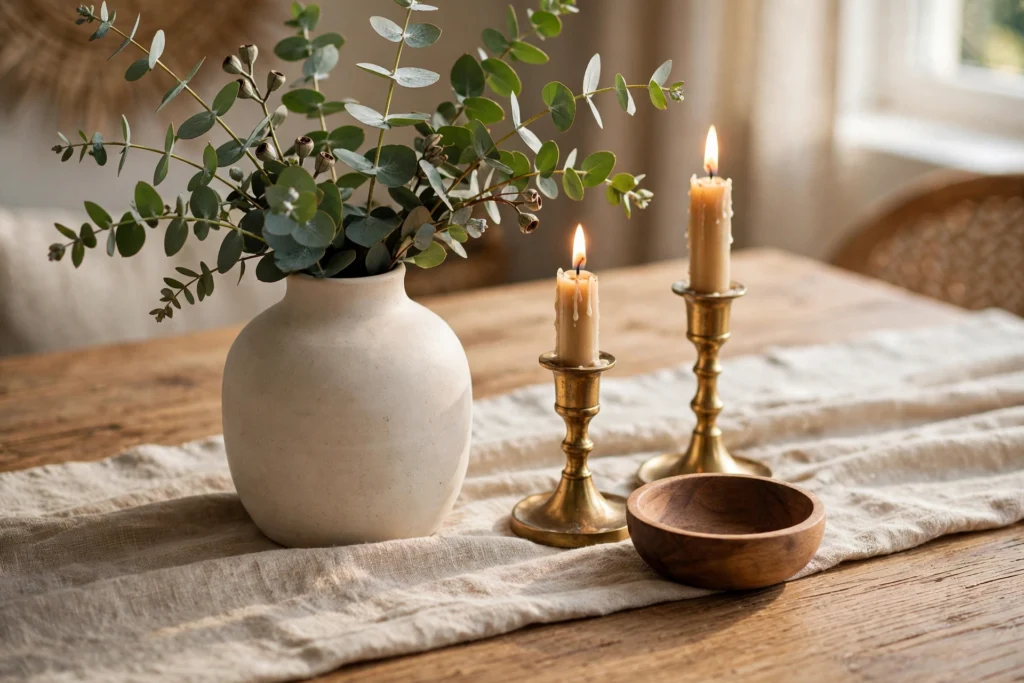
A well-dressed table starts with layering height, not just objects. Build in three levels: a low runner, a medium bowl or vase, and one taller element like candlesticks or a branch arrangement. The tallest piece should stay low enough that people can still see each other across the table.
Use a runner instead of a full tablecloth for everyday styling. A runner down the center lets the wood grain or stone of your table show, and it is far easier to wash than a full cloth. A linen runner in a warm neutral works with almost every season, and you can swap it for holidays.
My neighbor swapped her matching dining set for mixed chairs last spring, and her once-formal dining room is now the room everyone gathers in. That is the spirit of modern dining room table decor: a collected look beats a showroom set. Mix chair styles in the same wood tone, or pair a bench on one side with chairs on the other, and the table instantly feels personal.
Dining Room Wall Decor Ideas
Walls are where dining room decor earns its personality, and the most common mistake is hanging art that is too small or too high. A piece above the sideboard should be roughly two-thirds the width of the furniture below it, with its center at 57 to 60 inches from the floor. One oversized canvas almost always looks better than four tiny frames scattered across a big wall.
Mirrors are the hardest-working piece of dining room wall decor. A large mirror across from a window doubles the light and makes the space feel bigger, which matters in rooms that only get evening use. Round mirrors soften a rectangular room, while a tall arched mirror adds height to a low ceiling.
A gallery wall works when it is planned as one shape, not a random scatter. Lay the frames on the floor first, keep 2 to 3 inches between them, and use one frame color to hold the group together. Our wall decor ideas for the living room show how the same rules scale up to larger walls.
For a more architectural look, try wainscoting, a picture ledge, or a large textile hanging behind the table. More budget-friendly wall ideas, from statement art to floating shelves, are in our wall decorations guide.
Small Dining Room Decor Ideas
Small dining rooms reward the same tricks that make small living rooms feel bigger: light colors, mirrors, and furniture that earns its footprint. A round or oval table is the single best move in a tight space — it removes hard corners, improves traffic flow, and usually seats one more person than a rectangular table of the same size.
Choose an extendable or drop-leaf table if you host occasionally but live small every day. It gives you a compact everyday footprint with the option to expand for guests. Pair it with chairs that tuck fully under the table, and the room stays walkable between meals. For more space-stretching layout rules, see our small living room ideas guide.
Buffet, Sideboard, and Seasonal Touches
A buffet or sideboard deserves more than a pile of mail. Style it in three layers: a tall vase with branches, a medium stack of books, and a low candle or small plant. Keep one stretch clear for serving, and store everyday tableware in the drawers nearest the table so setting it takes minutes.
Seasonal changes keep dining room decor fresh without a full redo. In fall, swap the runner for a warm rust or plaid one and add a bowl of mini pumpkins. For Christmas, a garland down the center of the table, a few pinecones, and warm white fairy lights beat a dozen store-bought decorations. Change only the top layer each season.
Dining Room Decor Mistakes to Avoid
The most common mistake is buying the matching set. Eight identical chairs in the same wood and fabric look like a showroom floor, not a home. Mix seating, vary the textures, and let the room look collected over time instead of purchased in one afternoon.
The second mistake is scale: art that is too small for the wall, a chandelier that is too small for the table, or a rug that ends before the chairs do. When in doubt, go one size larger than your first instinct. The third is a centerpiece so high nobody can see across the table, and the last is forgetting the lighting — a beautiful room under one harsh overhead bulb will never feel welcoming.
Frequently Asked Questions
How to decorate a dining room wall?
Start with scale: one large statement piece, a gallery wall planned as a single rectangle, or a large mirror, sized to roughly two-thirds the width of the furniture below it. Hang the center at 57 to 60 inches from the floor and keep one frame color across the group.
How to style a dining room table?
Layer three heights: a low runner, a medium bowl or vase, and one taller element like candlesticks, kept low enough to see across the table. A runner shows off the table surface better than a full cloth, and swapping it is the cheapest way to change the look.
What to put on dining room table?
A runner, a centerpiece, and one personal touch are enough for everyday use. Good centerpieces include a vase with greenery, a wooden bowl, a tray with candles, or a stack of books with a small plant. Avoid tall arrangements that block conversation.
How to decorate a round dining room table?
Use a round tray or circular centerpiece to echo the table’s shape, kept low and centered. A round rug underneath, slightly larger than the table, anchors the space. Skip the long runner, which fights the shape; use round placemats instead.
How to decorate a dining room buffet?
Style it in three layers: a tall vase with branches, a medium stack of books or framed print, and a low candle or small plant. Keep one stretch clear for serving during meals, and store everyday tableware in the drawers nearest the table.
Final Thoughts
Good dining room decor is not about spending the most money or following every trend. It is about making one room feel warm, personal, and ready for real life — weeknight dinners, homework, birthday candles, and long Sunday lunches alike. Start with the light, get the scale right, and let the table tell a story that is yours.
Pick one idea from this guide and try it this weekend. Swap the runner, hang the mirror, or mix in two different chairs. Small changes compound fast in a dining room, and once the room gets used every day, you will wonder why it ever sat empty. For more wall inspiration, see our wall decor ideas for the living room.