So you’ve made the decision that it’s time to get a dehumidifier for basement moisture control, but where do you begin? When the options are that plentiful, it can be very overwhelming to pick the right dehumidifier. Not all models are created equally, and the one that is best for your house is dependent on the unique needs of your basement. But don’t fret—I’ll explain everything you need to know to pick the best dehumidifier for the basement.
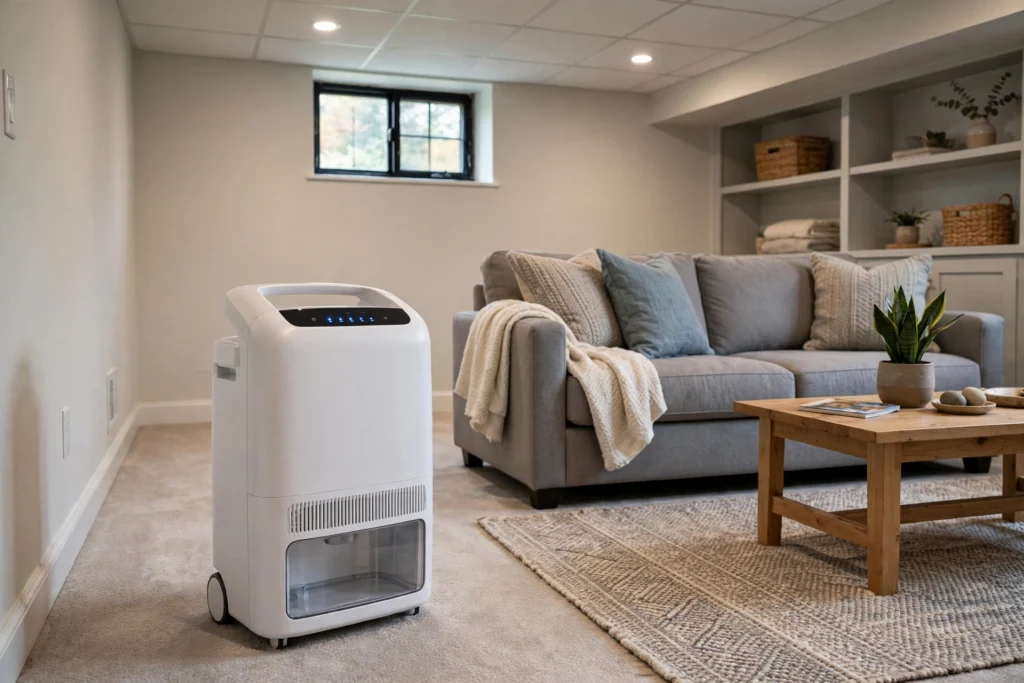
Primary Things to Consider Before You Buy A Basement Dehumidifier
If you’re in the market for a dehumidifier to prevent basement mold, you’ll want to consider the following tips to make sure the model you select is as efficient as possible. Here are a few things to think over:
Size and Capacity:
The size of your basement is a key factor in determining what type of dehumidifier you’ll need. If you have a small basement, a smaller model may be enough. But if you have a larger or particularly damp basement, you’ll need a larger capacity model. Because dehumidifiers are typically rated by how much moisture they can remove from the air per day. For example, a 30-pint dehumidifier is ideal for use in spaces up to 500 square feet, while a 70-pint model is best for larger areas.
Energy Efficiency:
If you intend to run your dehumidifier all year long, you may also want to consider efficiency. So choose models that are Energy Star-rated so you know you’re keeping energy costs low while keeping humidity in check. A high-efficiency dehumidifier is able to not only last for a long time but also help lower your energy bills.
Choose the Right Dehumidifier for Your Basement Auto-Humidity Sensors and Settings:
Higher-end models typically have auto-humidity sensors that adjust settings depending on the room’s current moisture conditions. This capability helps save energy by reducing waste of water and clogging. It also maintains constant humidity levels so the dehumidifier does not have to work as hard all the time.
Continuous Drainage:
There is also a convenient option to connect your dehumidifier to a continuous drainage setup. Instead of repeatedly emptying the water tank on the back of the unit, the water collected in this unit can be automatically drained from the system into a nearby sink or drain, saving you time and hassle.
Selecting the right dehumidifier for basement moisture control depends on your basement’s size, humidity levels, and preferred energy type. With the proper specifics — high-capacity, energy-efficient design and auto-humidity sensors — you can keep your basement dry and maintain a healthy, mold-free environment.
7 Dehumidifier Buying Tips: What to Check Before You Buy
1. Coverage area & size: Match the machine to your basement. Under 500 sq. ft. → 30–50 pints/day; 500–1,500 sq. ft. → 50–70 pints/day; over 1,500 sq. ft. → 70+ pints/day. When in doubt, size up slightly — an undersized unit runs constantly and wears out faster.
2. Humidity control: Look for an adjustable humidistat with auto shut-off at your target (45–50% is ideal for basements). This prevents both dampness and over-drying.
3. Energy efficiency: An Energy Star-rated model costs noticeably less to run year-round — important since basement units often run for months.
4. Drainage options: A continuous-drain hose (gravity or pump) beats emptying a bucket daily. If no floor drain is nearby, choose a model with a built-in condensate pump.
5. Quiet operation: Check the decibel rating — under 50 dB is comfortable for living spaces above the basement. Quieter models cost a bit more but are worth it.
6. Placement flexibility: The unit needs clearance on all sides for airflow. Models with caster wheels and long cords are far easier to position and move.
7. Easy-to-use controls: Digital controls with a clear humidity readout, timer, and filter-change indicator make ownership effortless.
Already own one? Keep it running strong with our dehumidifier maintenance guide.
Drain Hose vs Built-In Pump: Which Do You Need?
The smartest upgrade on a basement dehumidifier is continuous drainage. A dehumidifier for basement with drain hose runs the collected water straight into a floor drain, so you never empty a bucket and the unit never shuts off when full — essential in a damp basement. If your drain sits higher than the unit (like a sink or a drain across the room), choose a basement dehumidifier with pump instead: the built-in pump pushes water upward and across, up to 15 feet vertically.
No drain at all? A large bucket with an auto-shutoff and a full-bucket alarm is the fallback — but for a wet basement, plan a drain solution. It is the difference between a dehumidifier that works while you sleep and one that stops at 2 a.m. with a full tank.
Basement Dehumidifier FAQs
What size dehumidifier do I need for my basement?
For most basements up to about 1,500 square feet with moderate dampness, a 50-pint unit is the sweet spot. Very wet basements, or spaces over 1,500 square feet, do better with a 70-pint model. When in doubt, size up — an oversized unit reaches your target humidity faster and cycles less.
Will a basement dehumidifier help with mold?
Yes — mold needs moisture to grow. Holding basement humidity between 30–50% starves mold of the damp air it needs. If musty smells are your main problem, see our guide to dehumidifier for basement moisture control.