Intro
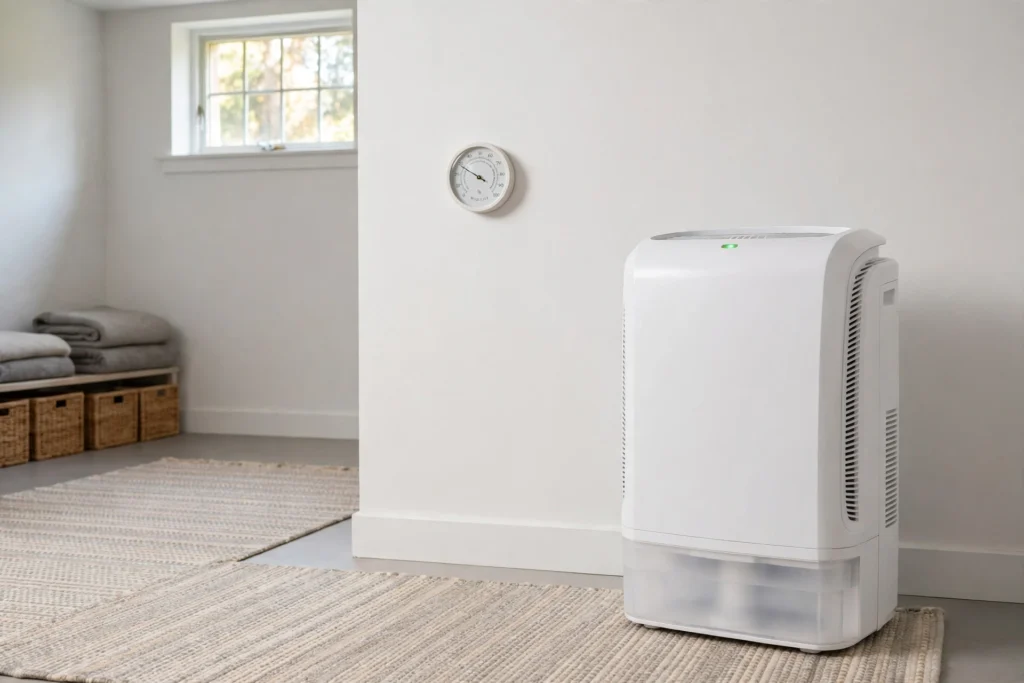
A dehumidifier for mold is one of the best tools you can buy for a damp home, and one of the most misunderstood. It will not scrub black spots off your basement wall or kill the colony behind the drywall. What it will do is take away the one thing mold cannot live without: moisture. Mold spores float in every home’s air, harmless until they land somewhere damp, and a dehumidifier keeps that dampness away. This guide covers what it can and cannot do, the humidity level that stops growth, and how to size and place one.
Does a Dehumidifier Help With Mold?
Yes, and the reason comes down to one number: humidity. Mold generally needs relative humidity above 60 percent to take hold. Keep the air drier than that, and the spores landing on your walls and floors simply cannot get going. A dehumidifier pulls moist air in, strips the water out, and returns drier air to the room. Run consistently, it holds a problem area in the safe zone of roughly 30 to 50 percent, below the level mold needs.
That makes dehumidifiers for mold prevention genuinely effective in damp basements, crawl spaces, and bathrooms. The honest limit is direction: a dehumidifier prevents mold, it does not cure it. Drying out mold makes it dormant, not dead, and dried mold can still release spores and allergens. If you can already see mold or smell it, clean it first, and let the dehumidifier keep it from coming back.
What Humidity Level Stops Mold?
Aim to keep indoor relative humidity between 30 and 50 percent. Once you climb past 60 percent, you are in mold territory. The EPA recommends staying below 60 percent, ideally 30 to 50 percent, and the CDC says to keep household humidity no higher than 50 percent all day. A practical sweet spot is 45 percent, which leaves a safety margin without over-drying the air.
Consistency matters more than the exact number. A basement that drops to 45 percent during the day but climbs to 70 percent at night still suits mold, so set the target once and let the machine hold the line. Check the real reading with a separate hygrometer at the far end of the room. In winter, lower the target to 30 to 40 percent if condensation forms on cold windows. And remember that a humidifier can push a room the wrong way, so if you run one in the same home, read our guide on how humidifiers can cause mold: https://smarttechiehome.com/humidifier-mistakes/
Can a Dehumidifier Kill Mold or Remove Mold Spores?
No. A dehumidifier will not kill mold, and it will not remove mold spores from the air. Drying out a colony only sends it dormant, and it can wake up the moment moisture returns. A dehumidifier’s filter is also a basic dust screen, so it will not meaningfully clear airborne spores.
For airborne spores and mold allergies, pair it with an air purifier that uses a true HEPA filter. The two machines do different jobs: the dehumidifier stops mold from growing by removing moisture, and the purifier captures the spores already floating in the air. Neither one replaces cleaning up existing mold.
Dehumidifier for Black Mold: What to Do First
Black mold gets the most worry, and the order of operations matters more than the machine. A dehumidifier for black mold only helps after the existing growth is dealt with. First, fix the moisture source: a leaking pipe, roof gap, or groundwater seepage will defeat any dehumidifier, because no machine can out-dry an active leak.
Second, clean up the mold itself. For a small area, under about 10 square feet, you can clean it yourself with detergent and water, wearing gloves, goggles, and an N95 mask, then dry the area completely within 24 to 48 hours. The EPA notes that wet materials dried within that window usually do not grow mold at all. Anything larger, mold inside HVAC ductwork, or mold after sewage or floodwater is a job for a professional. For the EPA’s own mold and moisture guidance, see the U.S. EPA guide to mold, moisture, and your home: https://www.epa.gov/mold/brief-guide-mold-moisture-and-your-home
My neighbor spent a whole winter wiping black spots off her bathroom ceiling before she realized the real problem was the damp air, not the paint. Once she fixed a slow shower leak and ran a small dehumidifier, the spots stopped coming back. That is the pattern in most homes: fix the water, clean the growth, then keep the air dry.
How to Choose a Dehumidifier for Mold Prevention
When you compare dehumidifiers for mold prevention, start with size, and size for your dampness level, not just square footage. The Association of Home Appliance Manufacturers sizing method uses both room size and moisture severity: a wet 500 square foot basement needs the same capacity as a moderately damp 1,500 square foot space. As a rough guide, a 30-pint unit suits a damp bedroom or small basement, and a 50-pint unit fits a wet basement up to about 1,000 square feet.
Since the 2019 Department of Energy standard, capacity is measured at 65 degrees and 60 percent humidity, which reflects real basement conditions. Look for a built-in humidistat so you can set 45 to 50 percent and let the unit cycle on its own. Continuous drainage, either a gravity hose or a built-in pump, is not optional for long-term mold prevention, because a unit that stops on a full bucket leaves the room damp again. Energy Star certification matters too, since the unit runs year-round.
Where to Put a Dehumidifier for Mold
Mold grows wherever damp air lingers, so place the unit where the moisture actually is, not where it is convenient. Basements are the most common spot, because cool air holds moisture against cold walls and floors. Bathrooms come next: shower steam can keep a small room above 60 percent for hours, as our guide to a dehumidifier for bathroom moisture explains: https://smarttechiehome.com/dehumidifier-for-bathroom/
Crawl spaces are the hidden third spot: damp air under a house rises into the living rooms above, carrying mold spores and musty smells, and a low-profile unit on a sealed vapor barrier is the right fix, as our dehumidifier for crawl space guide explains: https://smarttechiehome.com/dehumidifier-for-crawl-space/
Wherever you put it, keep it a few inches from the wall, keep doors and windows closed while it runs, and do not hide it behind storage boxes. A blocked intake is one of the most common reasons a unit seems to do nothing.
How to Clean a Dehumidifier
A dirty dehumidifier can grow mold inside the unit itself, which defeats the whole purpose, so cleaning it is part of mold prevention. Empty and rinse the water bucket every few days, or set up continuous drainage so the bucket never sits full. Wash or vacuum the air filter every two to four weeks. Wipe the coils and bucket with mild soap a few times a year, and let everything dry before reassembling.
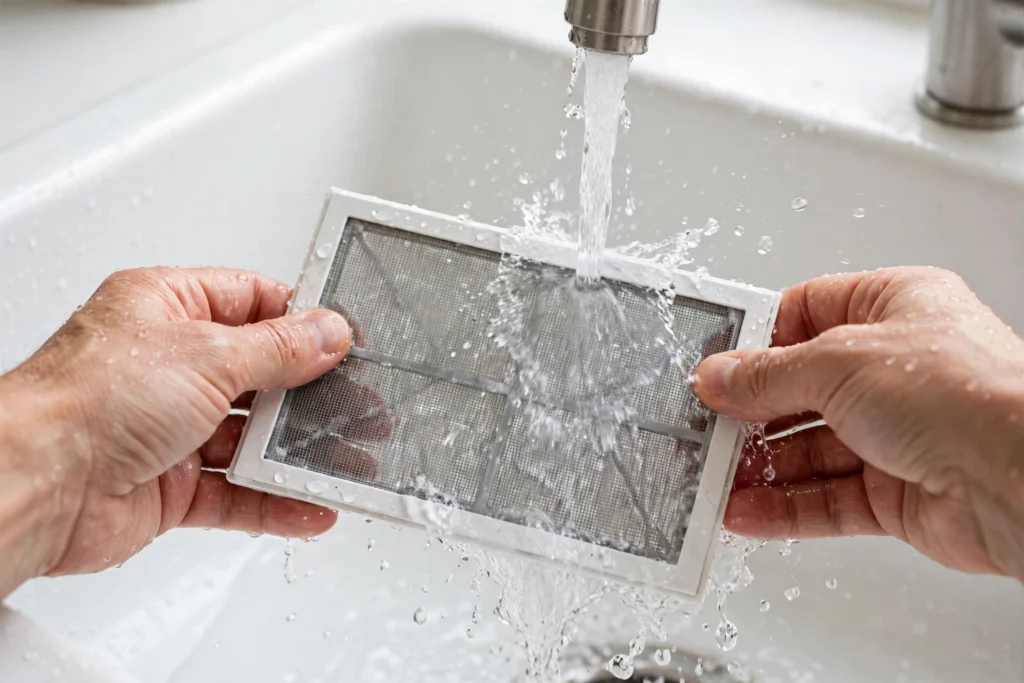
Never use bleach inside the tank or coils unless the manual says so, and never run the machine with a clogged filter, which ices up the coils and stops dehumidifying. A clean machine also lasts longer: most dehumidifiers last 5 to 10 years, and regular filter cleaning is the single biggest factor in reaching the long end of that range.
When a Dehumidifier Is Not Enough
A dehumidifier manages moisture; it is not a remediation tool. Call a professional if visible mold covers more than about 10 square feet, if mold is inside the HVAC system, if the moisture comes from sewage or floodwater, or if anyone in the home has a respiratory or immune condition and mold is suspected. A unit in a basement with an active foundation leak will also run continuously and never hit its target, which is a sign the water source needs fixing first, not a bigger machine.
Frequently Asked Questions
Does a dehumidifier help with mold?
Yes, for prevention. A dehumidifier keeps indoor humidity between 30 and 50 percent, below the 60 percent level where mold grows, so spores cannot germinate on walls, floors, and ceilings. It will not kill mold that is already growing, so clean that first, then let the dehumidifier keep it from coming back.
Will a dehumidifier help with mold?
Yes, over time. It stops new colonies from forming and keeps existing growth from spreading, as long as it runs consistently and the moisture source is fixed. Results are gradual: damp rooms usually feel and smell drier within a week or two, and the musty smell fades as the surfaces dry out.
Can a dehumidifier kill mold?
No. A dehumidifier removes moisture from the air, which stops mold from spreading and prevents new colonies, but it does not kill or remove mold that has already grown. Dried mold goes dormant and can still release spores. Existing mold has to be physically cleaned or remediated.
Will a dehumidifier get rid of mold?
No, not on its own. It will stop mold from spreading, help the area dry after cleanup, and keep new growth from starting, but the colony already growing on a wall or inside drywall stays there until it is physically removed. Think of it as the guard that keeps mold out after the cleanup, not the cleanup itself.
How long do dehumidifiers last?
Most dehumidifiers last 5 to 10 years with regular care. Cleaning the filter every few weeks, emptying the bucket or using continuous drainage, and keeping the coils clean are what push a unit toward the long end of that range. A unit that runs constantly in a very wet space wears out faster than one that cycles in a sealed, moderately damp room.
Final Thoughts
A dehumidifier for mold is one of the best prevention tools you can own, as long as you buy it for what it actually does. It will not kill mold, remove spores, or fix a leak. It will hold your home’s humidity in the 30 to 50 percent range where mold cannot grow. Fix the water source, clean up what is already there, size the unit to your space, and let it run.
If dampness is a basement problem specifically, the same rules apply on a bigger scale, as our basement moisture control guide explains: https://smarttechiehome.com/dehumidifier-for-basement-moisture-control/