Monkey grass plants are the quiet workhorses of the American garden. They edge walkways, fill bare spots under trees, and hold slopes together — all with almost no help from you. If you have ever seen a neat row of deep-green, grass-like leaves topped with lavender flower spikes in late summer, you have seen monkey grass, even if you did not know its name. This guide covers what monkey grass plants really are, which types to plant, how to grow them, and the one type you should avoid unless you want it everywhere.
Monkey Grass Plants at a Glance
- What it is: an evergreen, grass-like perennial, usually Liriope muscari, also called lilyturf.
- Height: 12 to 18 inches tall for most types; spreading types stay a little lower.
- Spread: clumping types widen slowly, 12 to 24 inches across; spreading types run much farther.
- Sun: full sun to partial shade; morning sun with afternoon shade is ideal in hot regions.
- Water: medium; keep soil moist the first season, then water only in dry spells.
- Soil: moist, well-drained soil; pH 5.5 to 7.5.
- Hardiness: USDA zones 5 to 10 for most liriope; some types survive zone 4.
- Bloom time: late summer, with lavender or purple flower spikes, followed by black berries in fall.
- Best uses: borders, edging, ground cover, erosion control, under trees, and containers.
- Pets: liriope is generally considered safe around pets, unlike true lilies.
That is the short version. The sections below explain each part, starting with the naming confusion that causes most monkey grass mistakes.
What Are Monkey Grass Plants?
Here is the first surprise: monkey grass is not a grass at all. It is a common name for plants in the Liriope genus, evergreen perennials in the asparagus family (Asparagaceae), native to East Asia. The name “monkey grass” is a nickname garden centers use, not a botanical term, and it gets applied to more than one plant — which is where the trouble starts.
The plant most people mean when they say monkey grass is Liriope muscari, also called lilyturf or blue lily turf. It grows in tidy clumps of arching, strap-like leaves and sends up spikes of lavender flowers in late summer. Liriope and monkey grass are the same plant in everyday speech, and liriope muscari is the species behind most of the monkey grass plants sold in the United States.
But the same nickname is also used for Liriope spicata, a close cousin that spreads by underground runners, and for mondo grass (Ophiopogon japonicus), a smaller, darker plant that is not a liriope at all. These three look alike in a nursery pot, yet they behave very differently in a garden. Before you buy, check the Latin name on the tag. A tag that only says “monkey grass” tells you almost nothing. The botanical name is what decides whether the plant will stay where you put it or take over the whole bed.
My mother planted a row of it along her front walk years ago, after a neighbor gave her a few clumps from a divided plant. She did almost nothing to it after that first summer, and it still looks neat every year — green through winter, purple spikes in August, and not a weed in sight between the clumps.
Types of Monkey Grass
Not all monkey grass plants are the same. The main types differ in size, color, and — most importantly — how far they spread. Pick the type to match the job, and most problems never happen.
Liriope muscari ‘Big Blue’
Big blue liriope is the classic. It forms dense clumps 12 to 18 inches tall and about 12 to 24 inches wide, with broad, dark-green leaves and tall spikes of lilac-purple flowers in late summer. Hardy in zones 5 to 10, it is the best choice for neat borders and edging because it stays in a clump and does not send runners into the lawn. Space plants 12 to 18 inches apart and they will fill in within two to three years.
Variegated liriope
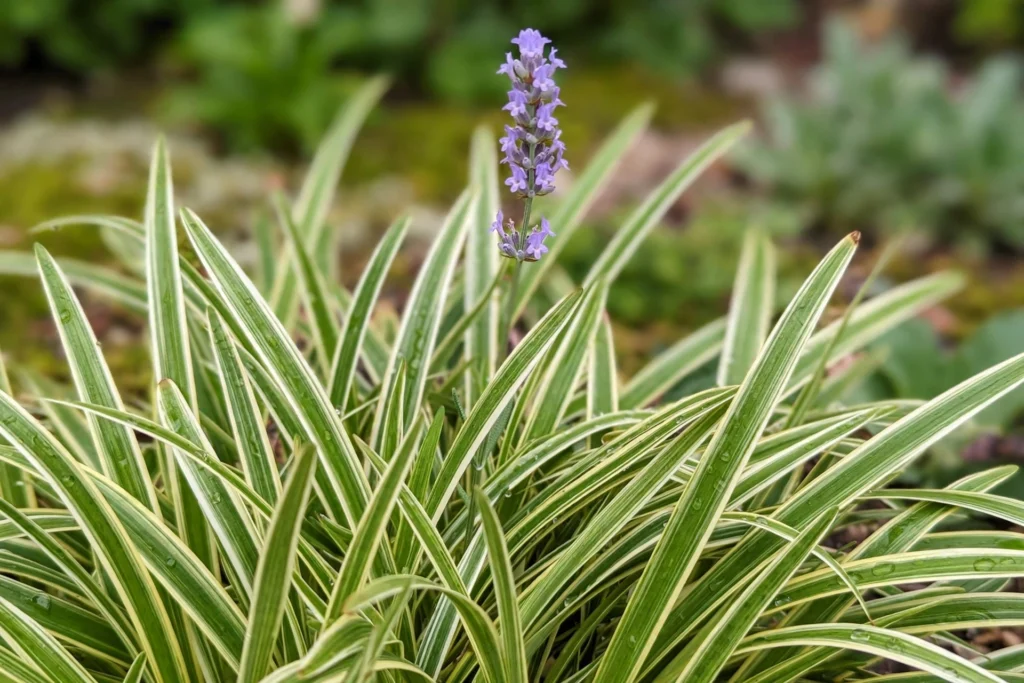
Variegated liriope, sold as Liriope muscari ‘Variegata’, is the same plant with a brighter look. Its narrow, arching leaves are striped green and creamy white, which lights up a shady corner where plain green would disappear. A variegated liriope plant grows 12 to 24 inches tall and wide, flowers with purple spikes in late summer, and stays in a loose clump like Big Blue. It is the least aggressive of all the types, which makes it the safest pick for small beds and mixed borders.
Liriope spicata (creeping lilyturf)
Liriope spicata, or creeping lilyturf, is the spreading type. It grows a little shorter, 10 to 14 inches, with finer, narrower leaves and pale lavender or white flowers. Instead of clumping, it sends out underground rhizomes and forms wide colonies, which makes it excellent for covering a slope or a large bare area fast — and a real headache in a small bed. It is hardier than muscari, surviving down to zone 4, and it is listed as invasive in some southern states. Use it only where it has room to run, or where a root barrier keeps it in place.
Mondo grass (often mislabeled as monkey grass)
Mondo grass, Ophiopogon japonicus, is the plant most often confused with liriope. It is shorter, 6 to 10 inches, with finer, darker leaves, and it prefers shade and steady moisture. It does not tolerate hot sun or drought the way liriope does. Black mondo grass, a near-black form, is grown for contrast in rock gardens and Japanese-style beds. If your “monkey grass” came from a shady garden center display and stays very short, you may actually own mondo grass — treat it differently, with more shade and more water.
Where to Plant Monkey Grass
Monkey grass plants earn their keep in the spots where other plants struggle. Use liriope as edging along walkways, driveways, and patio borders, where its tidy clumps draw a clean line that needs no trimming. Use it as a ground cover plant under trees, where lawn grass thins out in the shade and the roots of the tree drink most of the water. Liriope handles dry shade better than almost any other ground cover.
It also works on slopes. The dense, fibrous roots of a liriope ground cover plant hold soil in place, which is why landscapers plant it on banks and around the edges of landscape islands. And it works in containers: a single clump in a large pot by the front door looks good all year, since the foliage is evergreen in most of the country.
One place not to plant it: in the middle of a lawn as a grass substitute. Lilyturf liriope muscari looks like grass, but it is not a turfgrass. It cannot take foot traffic, and it will not survive mowing. Treat it as a border or ground cover plant, not as a lawn.
How to Plant Monkey Grass
Plant monkey grass in early spring, after the last frost, or in early fall, at least six to eight weeks before the first hard freeze. Spring is best in cold regions, because the plants get a full season to root before winter. Avoid planting in the heat of summer unless you can water reliably for the first three weeks.
Dig a hole twice as wide as the root ball and the same depth as the nursery pot. Set the plant so the crown — the point where the leaves meet the roots — sits level with the surrounding soil, or a touch above it. Planting too deep is the most common mistake: a buried crown stays wet, and wet crowns rot. Backfill with native soil, firm it gently, and water slowly until the soil is soaked through, about a gallon per plant.
Space clumping liriope muscari 12 to 18 inches apart for solid coverage in two to three years. Spreading liriope spicata can go a little closer, since it fills in fast. Add a two-inch layer of mulch — shredded bark or leaf mold — around the plants, keeping it an inch away from the crowns. Water weekly through the first growing season if rain is scarce. After that, established monkey grass is drought-tolerant and usually needs water only in long dry spells.
Light: How Much Sun Does Monkey Grass Need?
Monkey grass is flexible about light, which is part of why it is so popular. In cooler regions, zones 4 to 6, liriope grows well in full sun all day. In warmer regions, zones 7 to 10, it does best in morning sun with afternoon shade. Hot afternoon sun can scorch the leaves in the deep South, especially on variegated types, whose white stripes burn more easily.
In deep shade, monkey grass survives but changes: the leaves grow long and thin, the clumps loosen, and flowering drops off sharply. For the best balance — dense foliage and reliable late-summer flowers — give it partial shade or dappled light, the kind you get under a high tree canopy or on the east side of a house. If your plant has plenty of leaves but no flowers, light is the first thing to check.
Watering and Soil
Water is simple once the plant is established. Keep the soil evenly moist during the first season, then water only when the top few inches feel dry. In a normal year, that means watering during hot, dry spells and leaving the plant alone the rest of the time. Overwatering causes far more trouble than underwatering: soggy soil invites root rot and crown rot, the two problems that actually kill liriope.
The soil matters more than the watering can. Monkey grass needs soil that drains well. It tolerates clay only if the clay is not compacted and drains within a few hours after heavy rain. In heavy soil, work in two to three inches of composted pine bark before planting, and never plant liriope in a spot where water stands after rain. It grows in a wide pH range, about 5.5 to 7.5, so most garden soils suit it without adjustment.
Feeding is a small job. A light scattering of balanced, slow-release fertilizer in spring is enough for most gardens. Skip heavy feeding: overfed liriope grows soft, floppy leaves and flowers less. A top dressing of compost each spring feeds the plant and improves the soil at the same time, and that is all most clumps ever need.
Cutting Back Monkey Grass
When should you cut back monkey grass? In late winter, just before new growth starts. That one annual cut is the whole pruning routine, and it is what keeps the plant looking fresh instead of ragged.
In late winter, the old leaves are often tattered from cold and wind. Cut the whole clump back to about two to three inches above the ground with sharp shears or a string trimmer, before the new leaves emerge in spring. Do not cut in fall: the old foliage protects the crown through winter, and cutting too early leaves the plant exposed. Do not cut in late spring either, once new growth has started — you will chop off the fresh leaves along with the old ones.
For small plantings, hand shears are enough. For a long border, a string trimmer set high works, as long as you keep the cut above the crown. Some gardeners mow their liriope beds on the highest mower setting in late winter, and that works too. After the cut, rake away the debris and let the fresh green spears come up clean.
Dividing and Propagating Monkey Grass
Monkey grass plants multiply by division, and division is the easiest way to get free plants. In early spring, lift a mature clump with a spade and cut it into pieces with a sharp knife or spade, making sure each piece has three to five shoots and a good handful of roots. Replant the pieces at the same depth, water them well, and they will settle in within a few weeks.
Divide clumping liriope muscari every three to five years, or when the center of a clump starts to thin out. Spreading liriope spicata rarely needs dividing — it divides itself, sometimes too well. Thin it by digging out unwanted sections from the edges in spring, and replant them where you need cover or give them away.
Monkey grass also makes seeds. The black berries that follow the flowers contain seeds, but growing from seed is slow and the seedlings may not match the parent, especially for variegated types. Division is faster, and it keeps the variety true.
Is Monkey Grass Invasive?
It depends on the type, and this is the question to settle before you plant. Clumping liriope muscari is not invasive. It spreads slowly, widening a few inches a year, and it stays where you planted it. Big blue liriope and variegated liriope are both safe choices for ordinary garden beds.
Liriope spicata is a different story. It spreads by underground rhizomes that can run two feet a year, pop up in the lawn, creep under edging, and invade neighboring beds. In moist, fertile soil it can take over a border within two to three years, and several southern states list it as invasive. If you plant spicata, use it only in a contained bed with a root barrier sunk at least 12 inches deep, or on a slope where its spread is the point, not the problem.
To tell them apart in the nursery, look at the growth habit: muscari grows in tight, fountain-like clumps, while spicata grows in looser, running patches. When in doubt, ask for the botanical name, and choose muscari unless you specifically need a fast ground cover for a large area.
Common Problems and How to Fix Them
Monkey grass has few enemies, and most problems trace back to water or planting depth. Brown leaf tips are the most common complaint. They usually mean too much water, overhead watering that keeps the leaves wet, or a fungal infection called anthracnose, which follows the same wet conditions. Fix it by watering at the base instead of overhead, improving drainage, and cutting away the damaged tips in late winter.
Slugs and snails sometimes chew the leaves, but they rarely do serious damage. Pick them off by hand, and set out slug traps if the chewing gets heavy. Deer and rabbits mostly leave liriope alone, which is one more reason it survives under trees where other plants get eaten.
If a clump turns yellow and soft at the base, that is crown rot, and it usually means the plant was set too deep or the soil stays wet. Lift the plant, cut away the mushy parts, and replant it higher in better-drained soil. A healthy clump rarely needs spraying or any chemical treatment — good drainage and a late-winter cutback prevent nearly all of it.
Monkey Grass in Containers
A liriope plant in a pot is an easy win for a porch or patio. Choose a pot at least 12 inches wide with drainage holes, fill it with a loose potting mix, and set the crown level with the soil surface. Water when the top inch feels dry, and feed lightly once in spring. In zones 5 and warmer, a potted liriope can stay outside all winter if the pot is large and sheltered. In colder zones, move the pot to a garage or against the house wall for the coldest weeks. A single variegated liriope plant in a terracotta pot, with its striped leaves spilling over the edge, looks good all year and asks for almost nothing.
Final Thoughts
Monkey grass plants are a rare combination: tough enough to survive under trees, tidy enough to edge a formal walkway, and pretty enough to earn their place with late-summer flowers. The whole secret is choosing the right type. Plant clumping liriope muscari — Big Blue or the variegated form — for borders and beds you want to stay put. Save the spreading spicata for slopes and big areas where coverage matters more than control. Give it well-drained soil, morning sun, a late-winter haircut, and a division every few years, and it will look after itself for a decade or more.
For the full planting and care details from a trusted garden source, see HGTV’s guide to growing liriope: https://www.hgtv.com/gardening/flowers-and-plants/how-to-grow-liriope
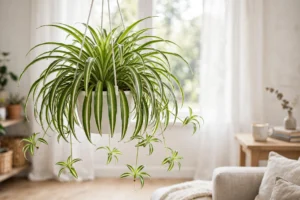
If you want more easy-care plants for the same kind of low-effort garden, our spider plant care guide covers a houseplant that forgives a missed watering just as readily: https://smarttechiehome.com/spider-plant-care/
For a bolder plant that loves the same bright light, our bird of paradise plant care guide walks through a tropical favorite step by step: https://smarttechiehome.com/bird-of-paradise-plant-care/
And for a flowering plant that divides into free plants the same way liriope does, our calla lily care guide shows how division works: https://smarttechiehome.com/calla-lily-care/
Is monkey grass invasive?
Clumping liriope muscari, including Big Blue and variegated types, is not invasive — it spreads slowly and stays where you plant it. Liriope spicata, the creeping type, is aggressive: its underground rhizomes can spread two feet a year and take over beds within two to three years, and it is listed as invasive in some southern states. Always check the botanical name before you buy, and choose muscari for ordinary garden beds.
When should I cut back monkey grass?
Cut monkey grass back in late winter, just before new growth starts in spring. Trim the whole clump to about two to three inches above the ground, before the fresh leaves emerge. Do not cut it back in fall — the old foliage protects the crown through winter — and do not cut once new spring growth has started, or you will remove the new leaves along with the old.
Does monkey grass spread fast?
It depends on the type. Clumping liriope muscari spreads slowly, widening only a few inches a year, and takes two to three years to fill a border. Spreading liriope spicata grows fast through underground rhizomes and can fill a large area in a single season. If you want quick ground cover, spicata is the fast one; if you want a plant that stays put, muscari is the right choice.