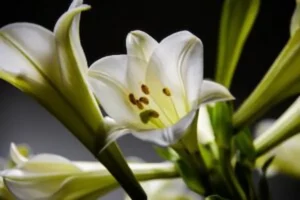
Calla lily care is simpler than the plant’s elegant looks suggest. A calla lily flower rises on a clean, straight stem above glossy, arrow-shaped leaves, and the whole plant looks like it belongs in a wedding bouquet. Yet calla lilies are sturdy, fast-growing plants that reward basic care with weeks of blooms. This guide covers how to care for calla lilies indoors and outdoors: the right light, watering, soil, feeding, dormancy, and how to fix yellow leaves, drooping, and a plant that refuses to bloom.
Calla Lily Care at a Glance
- Light: bright, indirect light indoors (at least 6 hours); full sun to partial shade outdoors.
- Water: keep soil evenly moist, never soggy; water when the top inch feels dry.
- Soil: rich, loamy, well-draining mix; pH 6.0 to 6.5.
- Temperature: 65 to 75°F while growing; keep above 50°F.
- Humidity: 40 to 60 percent; average household humidity is fine.
- Feeding: balanced liquid fertilizer at half strength, every 2 to 4 weeks in spring and summer.
- Bloom time: 6 to 12 weeks in summer, about 2 to 3 months after planting.
- Dormancy: 2 to 3 months of rest each year — required for reblooming.
- Pets: toxic if eaten; keep away from cats, dogs, and small children.
That is the whole routine. The sections below explain each part, including how to grow calla lilies from rhizomes and what to do when the leaves start telling you something is wrong.
What a Calla Lily Really Is
First, a surprise: a calla lily is not a true lily at all. Calla lilies belong to the genus Zantedeschia, in the arum family (Araceae), which makes them close relatives of peace lilies and philodendrons, not of true lilies. They grow from rhizomes, not bulbs, and they come from the wetlands and grasslands of southern Africa, where they evolved around seasonal rain followed by a dry rest.
The “flower” is not quite a flower either. What looks like a single elegant trumpet is a spathe, a modified leaf that curls around the spadix, the finger-like spike in the center. The real flowers are tiny and sit on that spadix. Knowing this helps you understand the plant: the spathe is why a calla lily flower lasts for weeks, and the rhizome is why the plant needs both steady moisture and a yearly rest.
My sister bought a white calla lily as an Easter gift plant and nearly threw it out when the leaves faded a few weeks later. She had not done anything wrong. The plant was simply going dormant, which is exactly what calla lilies do after blooming. Once she learned the rhythm, the same plant came back and bloomed again the next year.
Types and Colors of Calla Lilies
Calla lily colors go far beyond white. The classic white calla lily is Zantedeschia aethiopica, the tallest and hardiest species, growing 2 to 3 feet tall with large white spathes. The colored calla lilies come mostly from Zantedeschia rehmannii and Zantedeschia elliotiana and their hybrids, which stay more compact at 18 to 24 inches.
The range of calla lily varieties is wide: pink calla lily, purple calla lily, red calla lily, yellow calla lily, orange calla lily, and near-black blooms such as the black calla lily cultivar ‘Black Star’. Named varieties make choosing easier: ‘Purple Sensation’ is a rich royal purple with a light gold spadix, ‘Morning Sun’ fades from orange to red like a sunrise, and ‘Red Alert’ is a bold fire-truck red. Calla lilies are often sold in mixed packs, so you can pick a palette that suits your beds or your patio pots.
When you shop, remember that the white calla tolerates lower light and wetter soil than the colored hybrids, and it is the most forgiving choice for a first plant. The colored types need brighter light and stricter dormancy, but they reward you with the most striking flowers.
Light: Bright and Filtered
How much light do calla lilies need? More than most houseplants. Give calla lily care indoors at least 6 hours of bright, indirect light a day. An east- or west-facing window is ideal. A south-facing window with a sheer curtain also works, and the Old Farmer’s Almanac notes that the sunny southern window that would scorch a philodendron is just right for a potted calla lily. Like the bird of paradise plant, which also loves bright filtered light, calla lilies do their best work when they can see plenty of sky. Read our bird of paradise plant care guide here.
Outdoors, calla lilies enjoy full sun in cool regions and partial shade where summers are hot. Afternoon shade protects the leaves from scorch in warm climates. Too little light is the most common reason a calla lily grows leaves but no flowers, so light is the first thing to check when blooms fail to appear.
Rotate an indoor pot a quarter turn each week so the growth stays even. A plant left facing one way leans toward the window, and the leaves end up crowded on one side.
Watering: Evenly Moist, Never Soggy
Watering is where most calla lily care fails, and the rule is simple to state and easy to get wrong: keep the soil evenly moist, but never soggy. Calla lilies love moisture. In the wild they grow beside streams and in boggy ground. But a rhizome sitting in waterlogged soil rots fast, and overwatering is the number one cause of calla lily failure.
Check the soil before you water. Push your finger about an inch deep. If the top inch feels dry, water thoroughly until it drains from the bottom, then empty the saucer. During active growth that usually means watering once or twice a week for a potted plant. In a garden bed, a deep watering every few days is enough, and mulch helps keep the moisture even.
Water sparingly right after planting, until a few leaves have sprouted. A rhizome with no leaves yet cannot drink, and watering too often at that stage invites rot. Once several leaves are up, water more freely. Always use a pot with drainage holes. Room-temperature water is kinder than cold water straight from the tap.
Soil, Pot, and Planting Rhizomes
Calla lilies want a rich, loamy soil that holds moisture yet drains well, with a pH between 6.0 and 6.5. A good mix is equal parts potting soil, peat moss or coir, and perlite, with a handful of compost worked in. Avoid heavy garden soil in pots, and avoid mixes that stay wet for days.
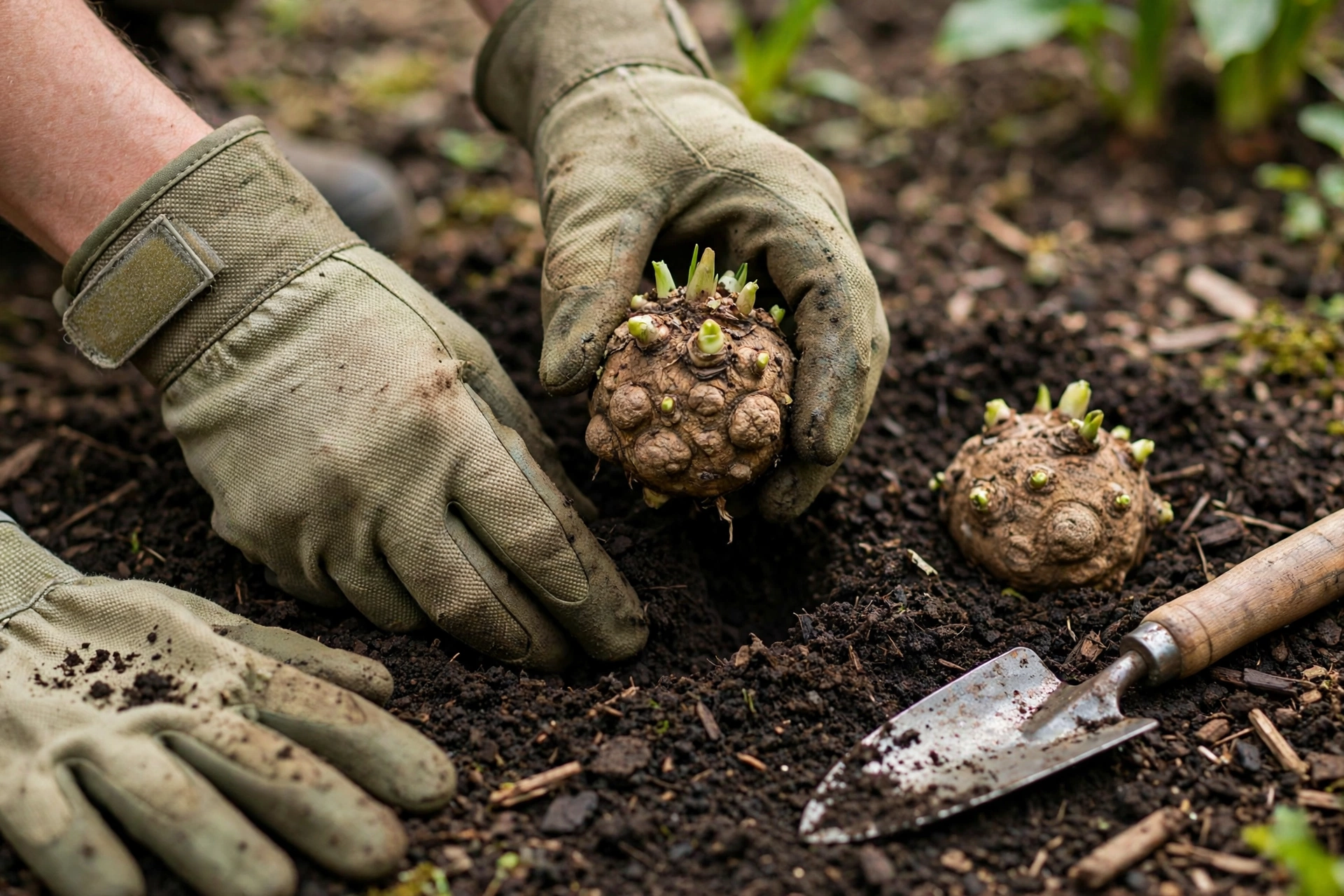
Plant a calla lily rhizome in spring, after the last frost has passed and the soil has warmed to about 65°F. The rhizome looks like a lumpy, round cookie that fits in your palm, with small growing points, or eyes, on top. Set it eyes-up, 2 to 3 inches deep, and space rhizomes 12 to 18 inches apart so the leaves have room to spread. In a container, choose a pot at least 10 to 12 inches wide with drainage holes, and do not bury the rhizome deeper than 3 inches. Shoots usually appear within about 2 weeks, and the first flowers follow 2 to 3 months later.
You can start rhizomes indoors in pots 6 to 8 weeks before the last frost, then move them outside once nights stay warm. Harden them off first: a few days of gradually longer outdoor time keeps the leaves from shocking in sun and wind.
Temperature and Humidity
Calla lilies are happiest between 65 and 75°F while they are growing. They tolerate days up to about 85°F if the soil stays moist, but they dislike cold. A temperature below 50°F can trigger dormancy early, and a frost of 25°F will usually kill the leaves and damage the rhizome. Keep indoor plants away from cold drafts near doors and windows in winter, and away from hot, dry air blowing from heating vents.
Humidity of 40 to 60 percent suits them well, and most homes provide that without extra effort. In a very dry winter home, set the pot on a saucer of pebbles with water, or run a nearby humidifier. Misting helps a little, but it is no substitute for moist soil and decent room humidity.
Feeding for Big Blooms
Calla lilies are hungry plants. To produce their large, colorful blooms, they need plenty of nutrients, but like Goldilocks, just the right amount. Feed with a balanced liquid fertilizer, such as 10-10-10, diluted to half the strength on the label, every 2 to 4 weeks from spring through midsummer. A liquid fertilizer for calla lilies works well because it feeds fast and washes through before salts can build up.
Start feeding when new growth appears in spring. Switch to a bloom-boosting fertilizer higher in phosphorus as flower buds form if you want the biggest spathes. Stop feeding in late summer as the plant prepares for dormancy. Fertilizer given to a resting plant can burn the roots, and a plant fed too much nitrogen grows leaves at the expense of flowers.
Calla Lily Care Indoors
Calla lily care indoors follows the same rules as outdoors, with two differences: light and dormancy. Indoors, place the pot within a few feet of your brightest window and rotate it weekly. A potted calla lily kept in a dim corner will grow leaves and sulk, so do not hide it at the back of the room.
How long do potted calla lilies last? One potted plant blooms for 6 to 12 weeks, depending on the variety, and the flowers themselves last for weeks. After blooming, the leaves yellow and die back as the plant enters dormancy. That is normal, not failure. A potted calla that gets its yearly rest can live and rebloom for 3 to 5 years, and many last far longer with good care.
Do not repot a calla lily while it is blooming. Wait until growth resumes in spring, and move it only one pot size up. Calla lilies like a slightly snug pot, and a pot far too large holds wet soil that invites rot.
Dormancy: The Rest That Makes Them Bloom Again
Dormancy is not optional for calla lilies. It is the part most people miss, and skipping it is the main reason a calla lily fails to flower after its first season. After blooming, usually in late summer or fall, the leaves yellow and fade. That is the plant telling you it is ready to rest.
Ease off watering gradually as the foliage fades, then stop almost entirely. Cut back the dead leaves once they have dried. Move the pot to a cool, dark place around 50 to 60°F for 2 to 3 months. For plants in the ground in cold zones (Zone 7 or colder), dig up the rhizomes before the first frost, cure them in a cool, dry place for 3 days, then pack them in slightly moist sawdust or pine shavings in a cool, dark spot.
After the rest, bring the plant back into the light and begin watering again. New leaves should sprout within a few weeks, and flowers follow in 2 to 3 months. The Old Farmer’s Almanac gives the same advice for Easter gift plants: after blooming, rest the plant dark and dry for about 2 months, then bring it back out, and it should sprout and bloom again. For the full planting and overwintering guide, see the Almanac’s calla lily page.
When Do Calla Lilies Bloom?
When do calla lilies bloom? Planted in spring, they bloom in early to midsummer, roughly 60 to 90 days after planting, and the flowers last 6 to 12 weeks. In warm climates (Zones 8 to 10), white callas can bloom from late spring into fall. Indoors, a potted calla bought in bloom will flower for several weeks, then rest.
If your calla lily has leaves but no flowers, check three things in order: light, dormancy, and fertilizer. Too little light is the most common cause. A skipped rest period is next. And a diet heavy in nitrogen grows leaves instead of blooms. Fix those three, and most callas flower on schedule.
Propagating: Dividing the Rhizomes
Calla lilies propagate by dividing their rhizomes, and a healthy clump makes this easy. In spring, as new growth begins, lift the clump and gently pull or cut it apart so each piece has at least one growing eye. Let the cut pieces dry for a day, then replant them 2 to 3 inches deep, 12 to 18 inches apart.
Do calla lilies spread? Yes, slowly. One rhizome spreads to about a foot wide in a season, and a clump thickens year by year in warm climates. That is why dividing every 2 to 3 years keeps the plant vigorous and gives you free plants to share. Like a spider plant, which hands you plantlets on long runners, a calla hands you new rhizomes to pass along. See our spider plant care guide for another generous propagator.
Troubleshooting: Yellow Leaves, Drooping, and No Flowers
Why are my calla lily leaves turning yellow? Yellow leaves are the most common worry, and the cause depends on timing. Yellow leaves during active growth usually mean overwatering or rhizome rot: the soil stays wet, the roots suffocate, and the leaves yellow from the edges in. Ease off watering, confirm the pot drains freely, and let the top of the mix dry between waterings. Yellow leaves in late summer or fall are different: the plant is entering dormancy, and the yellowing is normal. Let those leaves dry fully before cutting them back.
Why is my calla lily drooping? A calla lily drooping in summer usually means it is thirsty. The leaves are large and lose water fast, so a drooping plant often perks up within hours of a deep watering. But drooping with wet soil means the opposite problem: root rot. If the soil is wet and the plant is drooping, stop watering, check the drainage, and let the mix dry out before watering again.
Why is my calla lily not blooming? See the three checks above: light, dormancy, and fertilizer. A plant kept in low light, never rested, or fed only nitrogen will stay leafy and flowerless. Move it to a brighter spot, give it its winter rest, and switch to a balanced or bloom-boosting feed in spring.
Pests and Diseases
Indoor calla lilies are not prone to many pests, but they can pick up aphids, spider mites, and mealybugs. Check the undersides of leaves when you water, and wipe off any cottony clusters or tiny webs with a damp cloth or a cotton swab dipped in rubbing alcohol. Outdoors, slugs and snails sometimes nibble the leaves.
The disease to watch for is root rot, which is almost always a watering problem rather than bad luck. Soggy soil, a pot without drainage, or watering a dormant plant all invite it. A rhizome that feels soft and mushy, or smells sour, is rotting. Cut away the soft parts, let the firm remainder dry for a day, and replant it in fresh, well-draining mix.
Safe Around Pets and Kids?
This one matters: calla lilies are toxic if eaten. All parts of the plant contain insoluble calcium oxalate crystals, which cause intense burning and swelling of the lips, tongue, and throat, plus stomach upset. They are not true lilies, so they do not carry the severe kidney risk true lilies pose to cats, but they are still unsafe to chew.
Keep calla lilies out of reach of cats, dogs, and small children, and wear gloves when handling rhizomes or dividing a clump, since the sap can irritate sensitive skin. If a pet or child chews any part of the plant, call your veterinarian or poison control right away.
What Calla Lilies Mean
The calla lily meaning is part of why the flower shows up at weddings, funerals, and Easter. In the language of flowers, calla lilies stand for purity, rebirth, and resurrection, which is why white calla lilies are a classic wedding flower and a traditional Easter plant. Calla lily symbolism shifts with color: white means purity and innocence, pink means admiration, purple means passion and royalty, yellow means gratitude, and red means courage. That is also why calla lilies appear so often in sympathy arrangements: they carry a quiet, dignified message without a word.
Calla Lilies as Cut Flowers
Calla lilies make long-lasting cut flowers, and they are in high demand for weddings and bouquets. Do not cut the stems the way you would a rose. Instead, grasp the stalk at its base and pull gently to remove the whole stalk and flower from the plant. Harvested this way, calla blooms last up to 2 weeks in a vase. Change the water every few days and trim the stem ends to keep them drinking.
Final Thoughts
Calla lily care comes down to three habits: bright light, evenly moist soil, and an honest winter rest. Give a calla those three things and it will give you weeks of trumpet-shaped blooms, year after year. Start with a white calla lily if you are new to the plant, and try the colored hybrids once you have the rhythm down. If you enjoy plants that multiply and share well, our spider plant care guide covers another generous propagator — and if you want a bigger statement plant for the same bright window, the ficus tree care guide is a good next read.
Are calla lilies perennials?
Yes, in warm climates. Calla lilies are tender perennials in USDA Zones 8 to 10, where they can live outdoors year after year. In colder zones they are grown as annuals, or the rhizomes are dug up in fall and stored indoors over winter, then replanted in spring.
Do calla lilies come back every year?
Yes, if they get their yearly dormancy. A calla lily that rests for 2 to 3 months in a cool, dark place after blooming will sprout new leaves and bloom again the following year. In Zones 8 to 10 they come back on their own in the garden; in colder zones they come back if you lift and store the rhizomes, or keep the potted plant through its rest indoors.
How long do potted calla lilies last?
One potted calla lily blooms for 6 to 12 weeks, and the individual flowers last for weeks. The plant itself can live and rebloom for 3 to 5 years or more if it gets bright light, steady moisture, and a 2 to 3 month dormancy each year. If the leaves fade after blooming, the plant is resting, not dying.