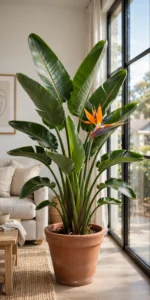
A sansevieria trifasciata flower is one of the quiet surprises of houseplant life. Most people buy a snake plant for its tall, sword-shaped leaves and its habit of thriving on neglect. They never expect flowers. Then one winter morning, a thin green stalk pushes up from the base of the plant, and within a few weeks it opens into small, creamy-white blooms that smell sweet enough to fill a room. This guide covers what the flowers look like, why they are so rare indoors, and how to give your plant the best chance of blooming.
Sansevieria Trifasciata Flower at a Glance
- What it is: a tall flower spike (raceme) rising 1 to 3 feet from the base of the plant.
- Flowers: small, tubular, creamy-white to pale green, in clusters along the spike.
- Scent: sweet, jasmine-like, strongest at night.
- When: most often late winter to early spring.
- How long: each flower lasts a few days; the whole spike blooms for 2 to 4 weeks.
- How often: once every 2 to 5 years indoors, if at all; more often outdoors in warm climates.
- Plant age: usually 3 to 5 years old at first bloom, often older.
- After bloom: cut the dried spike at the base; the plant is unharmed.
- Pets: mildly toxic if chewed, like the leaves.
That is the short version. The sections below explain each part, including the counterintuitive truth that a snake plant flowers when it feels mildly stressed, not when it feels pampered.
Do Snake Plants Flower?
Yes, snake plants flower. The snake flower plant is the same plant you already know as the snake plant, mother-in-law’s tongue, or mother in law’s tongue sansevieria trifasciata. Its scientific name is sansevieria trifasciata, though botanists reclassified it in 2017 as Dracaena trifasciata, so you will see both names on plant tags and in care guides. The plant belongs to the asparagus family, Asparagaceae, and comes from the dry, rocky regions of West Africa.
In its home range, a snake plant blooms fairly reliably once a year in the warm season. Indoors, it is a different story. Fewer than one in ten indoor snake plants bloom in a given year, and many never bloom at all. That is why so many owners do not even know the flowers exist. The plant is not broken, and you have not done anything wrong. Indoor life simply lacks the triggers that tell the plant it is time to reproduce.
A friend of mine texted me a photo at 10 p.m. one February night: a tall, skinny stalk had shot up from her snake plant, covered in tiny white stars. She had owned the plant for six years and thought it was a weed growing out of the pot. It was her first snake plant flower, and the whole kitchen smelled faintly of jasmine for a week.
What Do Sansevieria Trifasciata Flowers Look Like?
A sansevieria trifasciata flower does not look like a rose or a daisy. It looks like a small, wild lily on a stick. The bloom starts as a slim green stalk, called a flower spike or raceme, that pushes up from the rhizome at the base of the plant, usually from the center of a leaf cluster. The stalk grows fast, sometimes an inch a day, and can reach 1 to 3 feet tall.
Along the stalk, dozens of green buds form in clusters. Over two to four weeks, the buds open from the bottom up into small, tubular, waxy flowers, usually creamy white or pale green. The petals are thin and curl back, a little like a honeysuckle. The flowers open at night and close by morning, and they release their strongest scent after dark. In the wild, that night fragrance draws moths, which pollinate the plant.
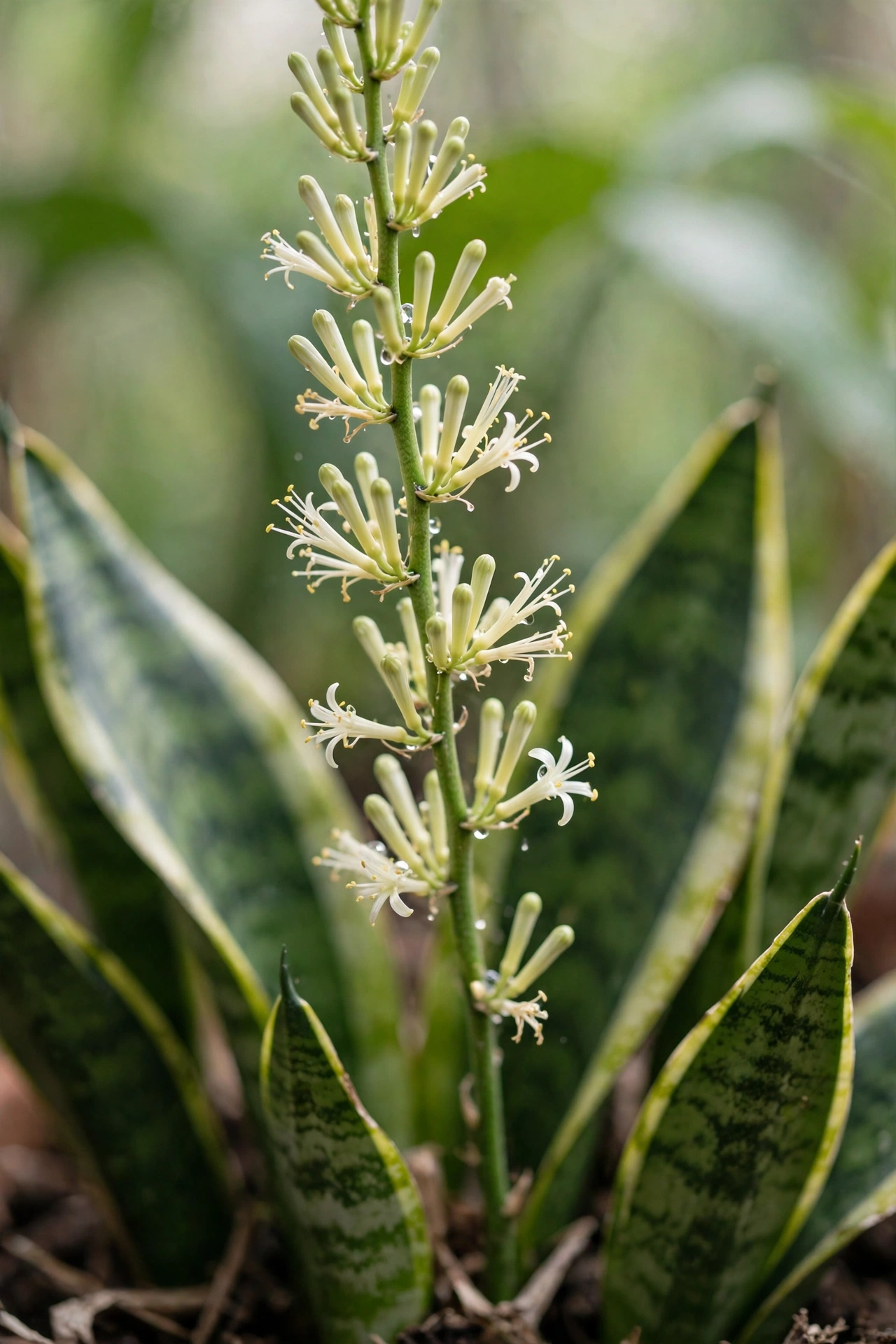
One detail catches new owners by surprise: the flowers drip. Each bloom produces tiny drops of sticky nectar that can fall onto the leaves, the pot, or the table below. It is harmless, and it is a sign the flowers are doing their job. Put a tray or a cloth under a blooming plant if it sits on wood, and wipe the leaves with a damp cloth once the bloom is over.
If the flowers are pollinated, they may set small orange-red berries after they fade. Berries are rare indoors, since there are no moths in your living room, but they do happen on outdoor plants in warm climates. The berries hold seeds, though most growers propagate by division instead, because it is faster and keeps the variety true.
Why Snake Plants Rarely Flower Indoors
A snake plant flower is rare indoors for four plain reasons. First, the plant must be mature. A young snake plant spends its energy growing leaves and roots. It usually needs 3 to 5 years before it can flower at all, and many plants take 5 to 7 years. A cutting you potted last spring will not bloom this winter, no matter what you do.
Second, indoor light is weak. A snake plant survives in a dim corner, but it will not flower there. Flowering takes bright, indirect light, ideally for most of the day, with a few hours of gentle morning sun. A plant kept several feet from a window rarely gets enough light to trigger a bloom.
Third, indoor life is too steady. In West Africa, the plant lives through a dry season followed by rain, and through cool nights followed by warm days. Those shifts tell it the seasons are changing. A living room kept at 70°F all year, watered on a fixed schedule, gives it no such signal.
Fourth, we repot too soon. A snake plant in a big, roomy pot feels comfortable, and a comfortable snake plant grows leaves. A plant whose roots have filled the pot completely feels crowded, and that mild stress flips the switch toward flowering. The same instinct that makes the plant a survivor also makes it bloom when it senses its space is running out.
How to Make a Snake Plant Flower
You cannot force a sansevieria trifasciata flower, and anyone who promises a guaranteed bloom is selling you something. But you can stack the odds in your favor. The method is simple, and it is the opposite of pampering: give the plant bright light, a dry rest, and a snug pot, then wait.
Give it bright light
Move the plant to your brightest spot. A south- or east-facing window is best, 2 to 4 feet back from the glass so the leaves get bright, indirect light most of the day. A few hours of direct morning sun helps; harsh afternoon sun can scorch the leaves, so ease the plant into a brighter spot over a week or two rather than moving it all at once. Light is the one trigger that matters most. A plant in low light will almost never flower, however old it is.
Let it dry out
Water is where most snake plant care goes wrong, and blooming is no exception. Let the soil dry out fully between waterings, then water deeply and let it drain. In summer, that usually means watering every 2 to 3 weeks. In winter, once a month or less is enough. For the full seasonal rhythm, see our guide on how often to water a snake plant: https://smarttechiehome.com/how-often-to-water-snake-plant/
To push toward a bloom, give the plant a dry rest in late fall or early winter: stop watering for 4 to 8 weeks while the days shorten. Then water deeply once. That dry spell followed by water mimics the natural drought and rain cycle of West Africa, and it is the signal many plants need. Never let the leaves wrinkle badly or the soil pull away from the pot for months. Mild stress helps; real damage does not.
Keep the pot snug
Do not rush to repot a snake plant. A slightly root-bound plant, with roots circling the pot and rhizomes pressing against the sides, is far more likely to flower than one with room to spare. Repot only every 3 to 5 years, or when the pot is so full the roots push out of the drainage holes or the pot starts to crack. When you do repot, go up just one size. A pot far too large holds wet soil, and wet soil causes root rot, which kills any chance of a bloom.
Feed lightly, and only in season
Feed with a balanced liquid fertilizer, such as 10-10-10, diluted to half strength, once a month from spring through midsummer. A plant that is underfed cannot afford to flower. But do not overfeed to force blooms. Heavy feeding grows leaves at the expense of flowers and risks burning the roots. Stop feeding in fall and winter, and never fertilize while the plant is blooming.
Let it feel the seasons
If your climate allows, move the plant outdoors for the summer once nights stay above 50°F. Outdoor plants bloom far more often than indoor ones: bright light, warm days, cool nights, and fresh air all help. Bring it back inside before the first cold night in fall. The shift from outdoor summer to indoor fall is itself a useful seasonal cue.
Which Varieties Bloom Best?
Not every snake plant is equally likely to flower. Sansevieria laurentii trifasciata, the classic tall type with yellow-edged leaves, is the most reliable bloomer and the one most people see flower. The plain green sansevieria trifasciata laurentii snake plant and the species type also bloom well. Sansevieria trifasciata moonshine, with its wide silver-green leaves, blooms less often but does flower on mature plants.
The dwarf bird’s nest type, ‘Hahnii’, rarely blooms at all. It stays small and compact, and its flowers, when they appear, are easy to miss at the base of the rosette. If blooms are your goal, start with a tall Laurentii. And remember that dracaena trifasciata plants, the same species under its newer name, follow the same rules. The name on the label changed; the plant did not.
What to Do When Your Snake Plant Blooms
When a snake flower appears, enjoy it, and change almost nothing. Keep the plant in the same spot. Do not move it to a darker corner to show it off, and do not start watering it more. The bloom lasts 2 to 4 weeks. Water on the same let-it-dry schedule, keep it away from heating vents, and do not fertilize while it is flowering.
Wipe nectar drops off the leaves with a damp cloth so they do not attract dust or ants. If the scent is strong at night and bothers you, move the plant to another room for the evening, then put it back in its bright spot in the morning. The fragrance is sweet and jasmine-like, and most people love it, but a small bedroom can feel overwhelmed by it.
When the flowers fade, the stalk will dry and turn brown. Cut it off at the base with clean scissors. Do not pull it out, since pulling can damage the rhizome. Flowering does not harm the plant, and it does not mean the plant is dying. A snake plant is a perennial that can flower several times over a 10 to 25 year life. After blooming, the plant usually pauses leaf growth for a few weeks, then carries on as before. Some growers even report stronger growth after a bloom.
Why Is My Snake Plant Not Flowering?
If your plant is healthy but has never flowered, run through this short checklist. How old is it? If it is under 3 years old, it is simply too young. Give it time. How much light does it get? If it sits in a dim corner, move it closer to a window and wait a full season. When did you last repot it? If you repotted into a big pot last spring, the plant is busy filling that pot with roots, and it will not flower until the pot feels snug again.
How often do you water? A plant watered every week stays comfortable, and a comfortable snake plant rarely blooms. Let the soil dry fully between waterings. And did it get a winter rest? A plant kept warm, watered, and fed all year never feels the seasons change. A cool, dry winter rest is often the missing piece.
One honest note: some plants never bloom, even when every condition is right. Genetics, the variety, and plain chance all play a part. A plant that never flowers is still a healthy, beautiful plant. The flowers are a bonus, not the point.
Sansevieria Trifasciata Care After Blooming
After the bloom, sansevieria trifasciata care goes back to basics. Keep the bright light, keep the watering sparse, and let the plant rest. If you want more plants, spring is the time to divide the rhizomes: lift the clump, cut it into pieces with at least one leaf cluster each, let the cuts dry for a day, and pot them in fresh cactus or succulent mix. That is sansevieria trifasciata propagation at its simplest, and each division carries the same chance of blooming once it matures.
Check the leaves while you are at it. Yellow, mushy leaves at the base mean overwatering, not blooming trouble. Cut them away and let the soil dry. A plant that flowered is a mature plant, and a mature plant in a snug pot may bloom again in a year or two. Keep the routine steady, and the next flower spike may surprise you sooner than you expect.
For the full background on the plant itself, read our guide on what is sansevieria: https://smarttechiehome.com/what-is-sansevieria/ — and if you are unsure whether your plant even counts as a succulent, the truth about sansevieria, not a succulent, clears that up: https://smarttechiehome.com/the-truth-about-sansevieria-not-a-succulent/ — for the complete care rules behind everything in this guide, including light, soil, and temperature, The Spruce’s snake plant care guide is a solid reference: https://www.thespruce.com/snake-plant-care-overview-1902772
Final Thoughts
A sansevieria trifasciata flower is a small reward for patience. It asks for a mature plant, bright light, a dry winter rest, and a pot that feels just a little too small. Give it those things, and one winter night you may walk into a room that smells faintly of jasmine and find a tall white spike where yesterday there was only leaves. If your plant never blooms, you still have one of the toughest, most forgiving houseplants there is. And if it does, you will know exactly what it is, why it happened, and what to do next.
How often do snake plants bloom?
Indoors, a mature snake plant blooms once every 2 to 5 years, if it blooms at all. Many indoor plants never flower. Outdoors in warm climates (USDA zones 9 to 11), the same plant may bloom once a year in spring. Each bloom lasts 2 to 4 weeks, and a plant usually needs to be at least 3 to 5 years old before its first flower.
What does it mean when a snake plant blooms?
It means the plant is mature and has felt the right mix of triggers: bright light, a dry rest, and a snug, root-bound pot. Blooming is a sign of a healthy, mature plant, not a dying one. In the wild, flowering is how the plant reproduces, and it happens when the plant senses seasonal change and mild stress, such as drought or crowded roots.
Should I cut off snake plant flowers?
No, not while they are blooming. Let the flowers open and enjoy them for 2 to 4 weeks, and wipe away any sticky nectar drops. Once the flowers fade and the stalk dries and turns brown, cut the stalk off at the base with clean scissors. Do not pull it out. Flowering does not harm the plant, and cutting the spent spike keeps the plant tidy and lets it put energy back into leaf growth.